Get Full Government Meeting Transcripts, Videos, & Alerts Forever!
Get email alerts on the Telecommunications Transition topic
No spam. Unsubscribe anytime.
Committee hears hours of testimony on AB 470, a proposal to replace carrier-of-last-resort duties and allow telecom transition; members and unions sharply split
Summary
AB 470 commanded the longest debate of the Senate Energy Committee hearing as supporters from AT&T, business groups and public safety officials urged modernization while labor unions, AARP and some counties warned the bill could let carriers abandon customers or erode emergency calling safeguards.
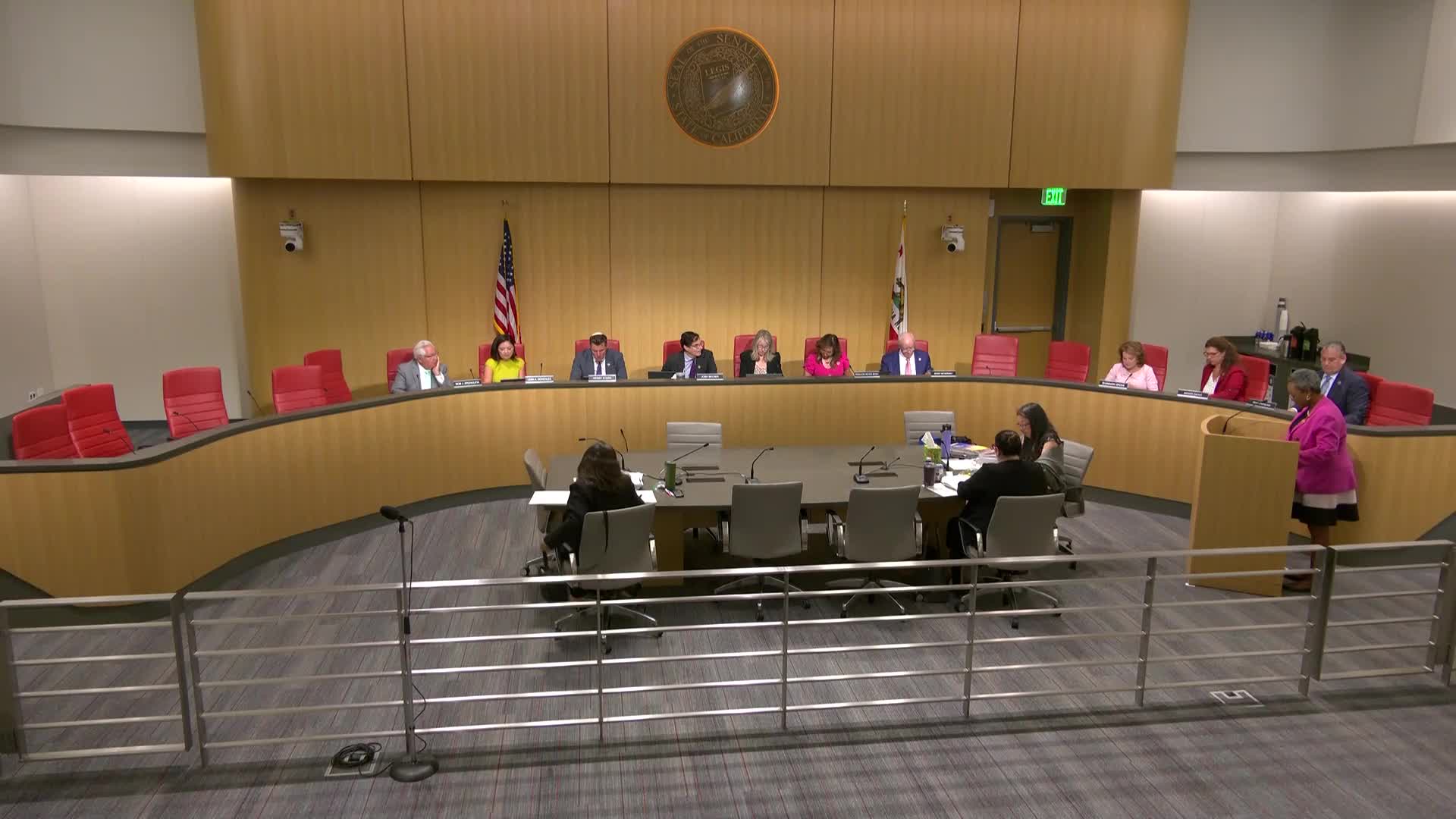
The Senate Energy Committee held more than two hours of testimony and member questioning on AB 470, a bill that would create a process for transitioning legacy copper landline service in well‑served areas and otherwise update carrier-of-last-resort (Kohler) obligations.
Assemblymember McKinner (author) described the bill as a "framework to facilitate the largest union-built private investment in advanced fiber optic networks" and stressed consumer protections the bill would require: interoperability, backup power compatibility, affordability safeguards and a CPUC-supervised transition process. She said the bill is designed to enable private investment in fiber while ensuring that no one is left without reliable voice and emergency 9-1-1 access.
Support came from AT&T, public safety officials and a broad coalition of business, community and ethnic-advocacy groups (including many small-business speakers who said fiber would benefit customers). AT&T urged reform of the century-old Kohler framework to reflect the competitive marketplace where multiple providers can serve an area. Retired CHP commissioner Stanley filled in for other witnesses and emphasized public safety and modernization needs.
Opposition and intense concerns came from the Communication Workers of America, numerous local CWA locals, AARP, several counties, 9-1-1 stakeholders and consumer advocates. Labor testified that Kohler requirements guarantee service and union jobs; union leaders and workers detailed instances they say show carriers have stopped repairing copper in low-profit areas. Consumer advocates warned the bill could allow carriers to withdraw service in certain neighborhoods and leave residents dependent on wireless or VoIP solutions that may offer inferior 9‑1‑1 location capability or backup power.
Key amendments read on the floor: the author accepted numerous changes to address labor and public safety concerns — including commitments about maintaining Lifeline service for three years while transitioning customers, workforce retraining and prevailing-wage requirements for certain buildouts, requirements that at least two other comparable providers be present in a market before a carrier can be relieved of Kohler obligations, and a "rainy-day" clause requiring a carrier to return if all alternatives fail. Even with the changes, unions said they remained opposed and urged a no vote; AT&T and other telecom providers said the bill, as amended, is a balanced path forward.
Committee action: the committee took up AB 470 and ultimately debated the measure and amendments. Members asked detailed questions about maps, data sources, affordability, lifeline protections and the ability of public agencies to step in if private providers fail to serve an area.
Status: The committee left the bill on the suspense/appropriations track for further consideration; record votes in committee were split earlier and the measure drew the most sustained public testimony of the day.
Why it matters: The bill touches the transition from legacy copper networks to modern fiber and wireless services, 9‑1‑1 location and backup power protections, and the future of telecom jobs. The issue combines consumer protection, public safety, labor and infrastructure policy and the committee’s discussion highlighted tensions among those goals.