Get Full Government Meeting Transcripts, Videos, & Alerts Forever!
Get email alerts on the Open Meetings Law topic
No spam. Unsubscribe anytime.
Lennox city and school boards review South Dakota open-meetings rules, executive-session limits
Summary
At a joint meeting in Lennox, officials reviewed state open-meetings requirements including agenda posting, public comment, teleconference access, executive-session grounds and penalties; the session included examples from recent Attorney General findings and closed with a motion to adjourn.
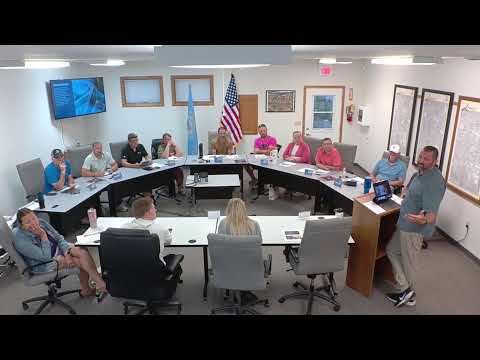
Lennox City Council and the Lennox School Board met jointly in Lennox for a required annual review of South Dakota open-meetings laws and best practices, officials said. The presentation covered agenda-posting requirements, public-comment rules, allowed grounds for executive session and penalties for violations.
The review matters because state law requires governing bodies to hold an annual meeting on open-meetings obligations, and violations can carry criminal penalties. "This is actually a crime to violate this law," the presenter said, adding that under "South Dakota code, 1 dash 25" a violation can be a class 2 misdemeanor with "possible 30 days imprisonment or $500" fine.
During the meeting presenters advised that public agendas and related materials for open items must be available to the public at least 24 hours before meetings and that teleconference participation requires a publicly accessible listening option. The presenter said public-comment opportunities are now required at most meetings and noted local practice at Lennox typically limits speakers to two minutes.
The presentation outlined the statutorily defined reasons a body may go into executive session, including discussion of employee qualifications and performance, student discipline for school boards, consulting with legal counsel on pending litigation or contracts, preparing for contract negotiations, and discussion of certain security or emergency-response plans. "You can't take votes in executive session. All action must be taken in open session," the presenter said.
Officials reviewed recent findings and public reprimands posted by the state Attorney General's Open Meetings Commission, citing examples involving Roberts County, the City of Tripp and Watertown as illustrations of violations such as failing to post agendas, holding action in executive session or not making minutes available. The presenter noted the Open Meetings Commission is appointed by the attorney general and that its recent activity has increased.
The joint meeting concluded after a motion to adjourn was moved and seconded, and the governing bodies adjourned.
Votes at a glance: A motion to adjourn was made and seconded; no roll-call tally was recorded in the transcript and the meeting ended following the motion.