Get Full Government Meeting Transcripts, Videos, & Alerts Forever!
Get email alerts on the Traffic Safety topic
No spam. Unsubscribe anytime.
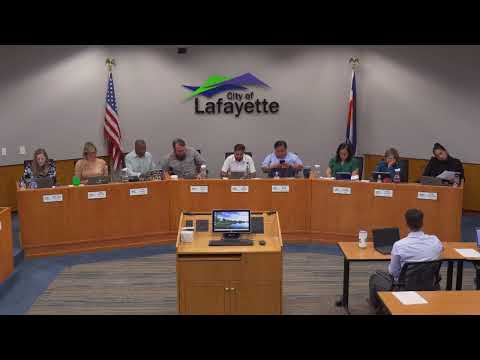
Lafayette council adopts Vision Zero action plan to guide street-safety work
Summary
The Lafayette City Council unanimously approved Resolution 2025-39 to adopt the Vision Zero action plan, directing staff to prioritize crash-data collection, near-term intersection projects and a combination of infrastructure and non-infrastructure safety strategies.
The Lafayette City Council unanimously approved Resolution 2025-39 on July 15, 2025, accepting the City of Lafayette Vision Zero action plan and directing staff to move forward with prioritized safety projects and data improvements.
The plan, presented to council as the final Vision Zero action plan, lays out a threefold approach: identifying high-injury corridors in partnership with regional agencies, prioritizing city-owned high-injury segments where Lafayette funding can be applied, and pairing project segments with a menu of infrastructure and non-infrastructure strategies, staff said. "We're here tonight to talk about the final presentation on the vision 0 action plan," a staff member told the council during the presentation.
Why it matters: Councilors said the plan gives the city a consistent method to identify safety priorities and to support grant applications. Staff emphasized near-term priorities including creating a local crash database so the city can analyze up-to-date collision data rather than relying solely on Colorado Department of Transportation (CDOT) datasets.
Key details: The plan identifies the top city segments and narrowed three segments for initial work, including two on South Boulder Road and North Public Road between Baseline and South Boulder Road. Recommended strategies include signal-timing changes, targeted infrastructure for specific modes, crosswalk visibility improvements, and education and outreach measures. Staff said near-term work will also include standard operating procedures and policy updates to support implementation.
Council questions focused on the equity mapping used for prioritization. Staff said multiple equity layers were used — including the Colorado Department of Public Health and Environment (CDPHE) disadvantaged communities layer — so roadways adjacent to or within those boundaries received points during prioritization. A councilor who reviewed the plan described it as comprehensive and praised the combined use of national standards, local data and public input.
The council member moved to approve the resolution and the motion passed unanimously with the mayor and council voting in favor.
The council will rely on the plan to pursue funded safety initiatives for high-priority segments and to incorporate opportunistic changes tied to other maintenance and capital work.