Get Full Government Meeting Transcripts, Videos, & Alerts Forever!
Get email alerts on the Public Safety Labor topic
No spam. Unsubscribe anytime.
Leavenworth firefighters seek city recognition for IFF Local 64 after petition; council discusses options and next steps
Summary
IAFF Local 64 asked the city to formally recognize Leavenworth firefighters as a bargaining unit after a petition the presenters said included 44 of 46 eligible firefighters, and the commission asked for further information and an anonymous survey before pursuing recognition.
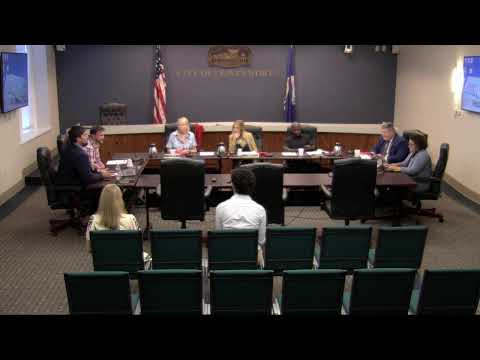
Representatives of the International Association of Fire Fighters (IAFF) Local 64, including Carrie Eldridge (business manager), Mike Minard (local business agent) and Chris Wing (Kansas State Council), asked the Leavenworth City Commission to formally recognize the city’s firefighters as a bargaining unit and to designate Local 64 as the firefighters’ representative.
Eldridge described a membership petition she said produced signatures from 44 of 46 eligible Leavenworth firefighters (96% support) and outlined the union’s case for recognition. She recommended two legal paths: (1) recognition under Kansas’ Public Employer‑Employee Relations Act (PURA, K.S.A. 75‑43‑25), which would place the city under the statute for collective bargaining across eligible bargaining groups, or (2) a home‑rule ordinance the city could draft to define recognition and bargaining units locally (the presenter said the home‑rule option can be customized to recognize only firefighters if the city so chooses).
Eldridge and Local 64 representatives argued recognition would improve safety, retention and operational stability, and provide formalized grievance procedures and safety/equipment committees. She cited research and departmental studies broadly supporting improved safety and reduced injuries where collective bargaining exists and said Local 64 aims for fiscally responsible contracts, citing other Kansas municipalities represented by Local 64.
Fire department members who spoke at the meeting said turnover and recruitment have been ongoing concerns; speakers said Leavenworth has lost many firefighters in recent years and that a union voice would help address recruitment, retention, transparent promotion processes and safety concerns. One captain described the department as currently “a 6 or 7” on a 1–10 scale of organizational health, attributing that rating primarily to staff inexperience and turnover rather than present chief‑level leadership.
Commissioners pressed for specifics and asked the union to help design an anonymous survey of department members so the city can better understand concerns before taking formal action. City manager and staff noted that the city already has channels for employee feedback (HR, an employee advisory group and department chains of command) but acknowledged some employees may feel uncomfortable using those channels and said they would review current practices.
Legal pathways, costs and coverage were discussed: under PURA the statute would apply to all eligible employee bargaining units; a home‑rule ordinance would allow the city to define which groups are covered. Commissioners and staff asked city attorneys to research legal implications and costs, and asked the union and department leaders to provide an anonymized membership survey and additional documentation of concerns and priorities prior to any formal recognition decision.
No formal council action or vote on recognition occurred at the meeting.