Get Full Government Meeting Transcripts, Videos, & Alerts Forever!
Get email alerts on the Transit Vta topic
No spam. Unsubscribe anytime.
VTA CEO briefs Cupertino council on Measure B funding, BART extension and SR-85 projects
Summary
Carolyn, CEO of the Santa Clara Valley Transportation Authority, updated Cupertino council on ridership recovery, funding from Measure B and major regional projects including the BART Silicon Valley Extension and SR‑85 improvements, and answered council questions about noise mitigation and local project coordination.
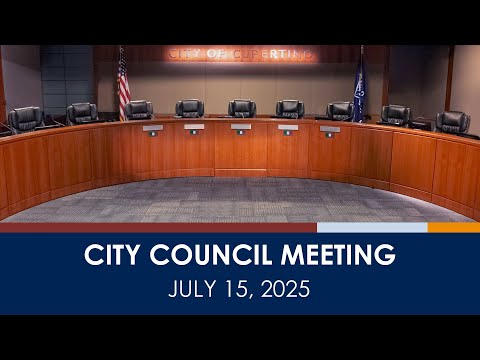
Carolyn, chief executive officer of the Santa Clara Valley Transportation Authority, told the Cupertino City Council on July 15 that VTA is working to restore ridership and to use Measure A and Measure B revenues to support regional transit projects and local mobility improvements.
Carolyn said weekday bus ridership is about 69,000 — roughly 76% of pre-pandemic levels — while weekend bus ridership has recovered to or exceeded pre-pandemic numbers. Light-rail weekday riders are lower, at about 12,200 (around 42% of pre-pandemic levels), and paratransit access riders total about 1,200. "We're responsible providing solutions that meet the evolving mobility needs of the residents and commuters here," Carolyn said, summarizing VTA's role as bus, light-rail and paratransit operator and as the county's congestion management and discretionary-funding agency.
Why it matters: VTA funding and project decisions affect local congestion, bicycle and pedestrian funding allocations and transit service that Cupertino residents use. VTA also delivers highway interchange and express-lane projects that change traffic patterns near the city.
Key program and funding details
- Measure programs: Carolyn said VTA manages funds from voter-approved sales taxes including the 2000 Measure A and the 2016 Measure B. She said about $2.0 billion had been collected through March 2025, $2.3 billion allocated through June 2025 and roughly $1.1 billion spent through the end of the month shown in VTA's online Measure B project tracker.
- SR‑85 corridor: As part of Measure B, VTA has $350 million allocated for SR‑85 improvements. Carolyn said about $21 million has been allocated to projects in the corridor to date, leaving roughly $329 million still available for programmatic work and future projects identified in corridor studies.
- Express lanes and toll revenue: VTA operates express (toll) lanes and is using revenue from those lanes to support maintenance and, increasingly, transit operations and bicycle/pedestrian projects. Express Lanes Phase 4 construction recently broke ground, and earlier phases opened on SR‑237, I‑880 and parts of US‑101 and SR‑85.
- BART Silicon Valley Extension: Carolyn described the six-mile BART extension segment as a major regional project with an estimated cost of about $12 billion for the remaining 6 miles (5 miles are planned as subway). The Federal Transit Administration has committed $5.1 billion contingent on a strong financing plan and executed agreements. VTA is the local design–build–owner partner while BART will operate the system.
- Noise pilot on SR‑85: VTA has begun a pilot using a pavement surface intended to reduce tire–pavement noise, and preliminary estimates discussed at the meeting suggested a potential noise reduction up to about 13 decibels for vehicles traveling up to 60 miles per hour. Carolyn said VTA will monitor pilot results and report back.
Council questions and local coordination
Council members asked how Cupertino should request noise mitigation for locations such as the Lucille/Blaney area on I‑280 and whether parking or other local impacts are expected from VTA work. Carolyn and her staff directed council members and city public-works contacts to work directly with VTA staff (chief of staff Scott Haywood and government-affairs lead Beverly Green were introduced) to initiate site studies. VTA staff described an established city–VTA process that begins with an inspection, assessment of when nearby residences were built and potential eligibility for mitigation treatments.
VTA also outlined partnerships on transit-oriented development (VTA said it manages a TOD portfolio of more than 20 sites and more than 2,000 affordable housing units either built or in progress across the county) and noted that VTA sometimes designs and constructs highway projects for Caltrans in Santa Clara County.
What comes next
Carolyn urged city staff and elected officials to provide feedback on SR‑85 studies and noted VTA will return with pilot results and project updates. She said VTA is evaluating state and regional funding proposals, including an option in pending state legislation (Senate Bill 63) that could allow Santa Clara County to opt into a multi-county sales tax measure for transit operating and capital support.