Get Full Government Meeting Transcripts, Videos, & Alerts Forever!
Get email alerts on the Education Policy topic
No spam. Unsubscribe anytime.
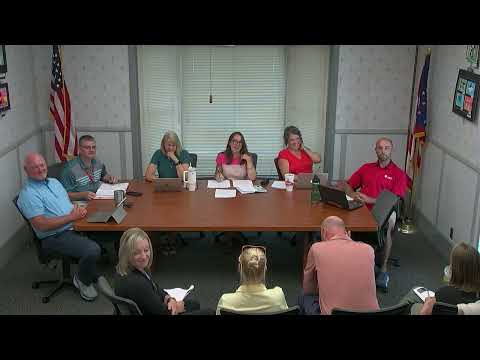
Troy School District board approves updated administrative handbook, including AI and K–2 grading changes
Summary
The Troy School District board approved revisions to the administrative handbook that update grading language for early elementary grades, clarify the district's approach to student use of artificial intelligence, and provide a mechanism to notify parents of future handbook changes.
The Troy School District Board of Education approved revisions to the district's administrative handbook during its meeting, adopting changes that include a new K'2 grading approach for kindergarten through second grade and clarified language on student use of artificial intelligence.
Board members said the handbook edits are intended to reflect current statutes and to give staff a process for notifying families when handbook changes occur. A district representative told the board that changes "indicate if we need to make changes in the handbook, then we certainly would communicate that with parents." The board voted to approve the handbook at the meeting.
The most substantive content in the revision addresses elementary grading for kindergarten through second grade. The handbook moves away from a strict standards-based format toward language intended to report whether students "can exceed, meet, or [are] progressing toward" state-driven standards. A district representative said primary-level staff "feel like that's a more reflective way to share with parents" about students' skills and learning progression.
The handbook also adds language in the plagiarism section explicitly addressing artificial intelligence. As the district explained to the board, the change frames AI use around assignment expectations: "if a student is unclear on the expectations, the expectations are on this assignment, yes, you can use AI. If there's an expectation, this is going to be completely original work, we don't want you to use AI." The district said those decisions remain at teacher discretion and that teachers are expected to communicate assignment expectations to students and families.
Board members and staff discussed enforcement and detection of AI use. The district said it has assembled an "AI task force" and that staff are testing several software tools (including longstanding products used for academic integrity checks) but had not selected a single districtwide tool at the time of the meeting. District staff emphasized that detection often begins with classroom checkpoints and teacher conversations with students.
Following discussion, the board moved and approved the administrative handbook revisions. The board also discussed distributing notifications to families—through back-to-school letters and open houses—so parents understand any changes before report cards are issued.
The board did not announce additional immediate policy changes tied to the handbook vote; district staff said the handbook edits provide a mechanism to update families should further statutory or operational changes become necessary.