Get Full Government Meeting Transcripts, Videos, & Alerts Forever!
Get email alerts on the Fuel Excise Tax topic
No spam. Unsubscribe anytime.
Matanuska-Susitna Assembly pauses vote on 7¢ fuel excise tax after hours of public opposition
Summary
The Matanuska‑Susitna Borough Assembly postponed action on Ordinance 25‑076, a proposed 7¢ per gallon area‑wide fuel excise tax, to its Aug. 5 meeting after extensive public comment and multiple amendments.
The Matanuska‑Susitna Borough Assembly postponed action on Ordinance 25‑076, a proposed 7¢ per gallon area‑wide fuel excise tax, to its Aug. 5 meeting after a long staff presentation, public hearing and multiple amendments.
Borough manager Mike Brown presented the ordinance as a “proposed solution” to rising debt service and voter‑approved transportation and school projects whose debt payments will increasingly drive the area‑wide mill rate. Brown said the county’s debt service portion of the mill rate could grow substantially as state participation tapers off and that a pay‑as‑you‑go excise tax could reduce pressure on property taxes and limit future bond sales. "If not this, then we will continue to service annual debt payments with property taxes," Brown said during his staff report.
Brown described two prefiled amendments being considered alongside the ordinance: a sunset clause to require periodic reapproval, and an exemption for motor fuel sold to businesses with dedicated onsite storage for exclusive non‑road use (for example, heavy equipment). He also noted a companion resolution directing staff to show how any excise tax revenue would be incorporated in future budgets.
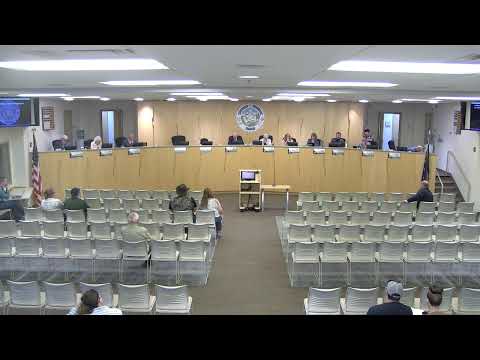
Public comment filled the chamber and continued online. More than three dozen residents and business owners testified; nearly all expressed opposition or urged changes. Frequent concerns included the cost to commuters and low‑income and fixed‑income households, uncertainty about how revenue would be used, and the burden on local small businesses that already face high transportation and goods costs.
"We don't need any more taxes," said several speakers during public comment. Some urged deeper budget cuts and alternative revenue sources — suggestions included targeted surcharges (tourism‑linked fees, rental car taxes, license surcharges) or capturing other local revenue streams rather than a broad excise tax.
Supporters and some assembly members urged that the proposal start a public discussion about long‑term funding for roads and noted a possible equity argument: property taxes fall mainly on residents and landowners, while a fuel excise would capture some out‑of‑area users. Michelle Hune, a small business owner, said a modest excise collected transparently could be reasonable and proposed a reduced starting rate or a sunset clause. "Start at 7¢, negotiate down to 4 or 3¢. Include a 3‑ to 5‑year sunset clause," she said.
Assembly debate produced two successful amendments before the postponement vote. The assembly voted to add a sunset provision (the adopted language sets the ordinance to expire on June 30, 2027 unless the assembly affirmatively extends it) and to limit a business‑tank exemption to diesel fuel deliveries for exclusive off‑road use, to reduce a potential loophole. The assembly also amended definition language and the small personal‑container threshold used in enforcement (from 10 gallons to 119 gallons) to align with hazardous materials and transport practices discussed at the meeting.
After debate, an assembly motion to postpone consideration to Aug. 5 carried. The clerk recorded the result and stated the motion passed with two assembly members noted in opposition in the record. The postponement will allow staff time to publish clarifying materials, including a public FAQ and revenue calculator, and to return with administrative estimates for exemptions, implementation costs and modeled revenue for the assembly and public to review before the next hearing.
What happens next: the ordinance and associated resolutions will return to the assembly on Aug. 5. Staff said it will prepare clearer cost estimates, samples of administrative burden to implement exemptions and a web calculator so residents can estimate household impact using miles driven and vehicle fuel economy.
The meeting record shows heavy turnout and sustained public participation on the proposal; assembly members repeatedly cited public concern and the need for clearer numbers as reasons to take more time. The postponement preserves the assembly’s option to adopt, amend further or reject the tax at the scheduled Aug. 5 hearing.