Get Full Government Meeting Transcripts, Videos, & Alerts Forever!
Get email alerts on the Housing Affordable topic
No spam. Unsubscribe anytime.
Spokane Valley council declares surplus property, clears way for Habitat for Humanity development
Summary
Council approved Resolution 25‑014 declaring certain city property surplus, a final step to transfer sites to Habitat for Humanity for affordable homeownership; vote passed 5‑1 after brief debate.
The Spokane Valley City Council voted 5-1 to declare specified city-owned parcels surplus and proceed with the conveyance needed for Habitat for Humanity to develop affordable housing, officials said.
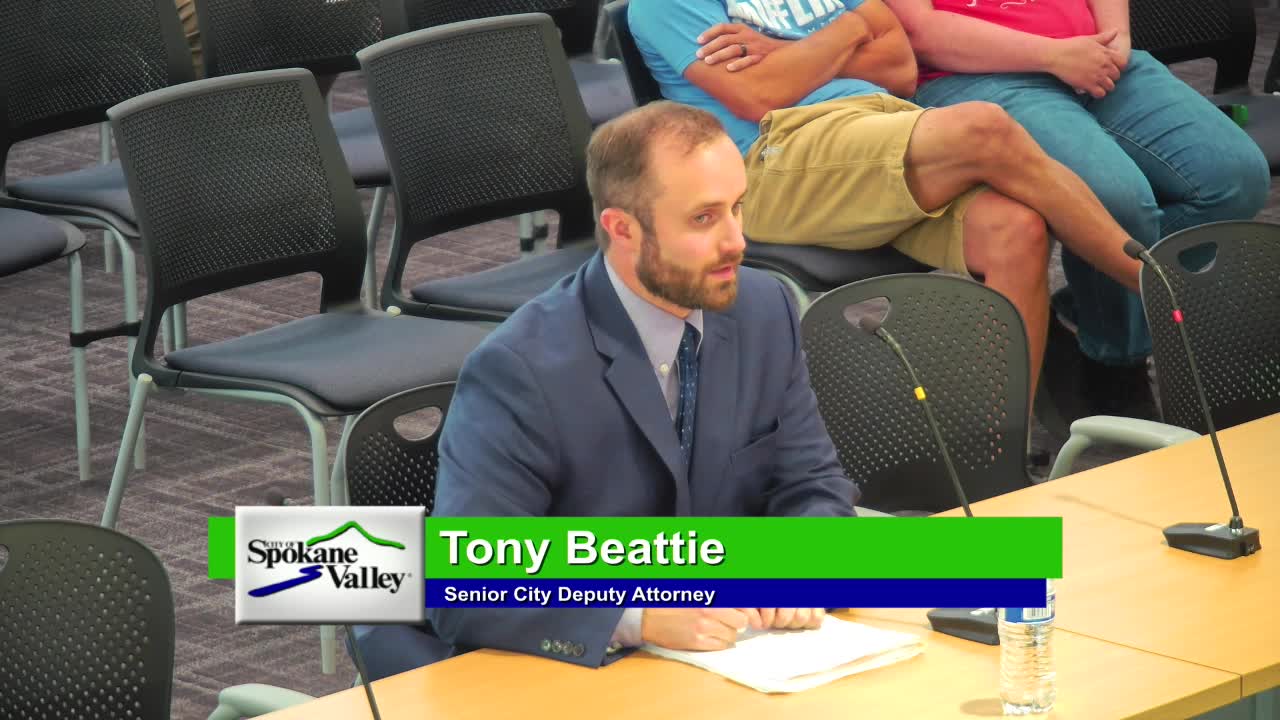
Tony Beatty, senior deputy city attorney, told the council the resolution is the “final logistical step” before the city can complete the award to Habitat for Humanity in Spokane. Council previously awarded the grant opportunity earlier this year, Beatty said.
Councilmember Werkle said she would oppose the measure because she views the city as “acting like real estate developers” and questioned whether the project was the right use for the parcels. Councilmember Yeager spoke in favor, describing Habitat’s model as producing “generational, lifetime ownership by low income families” and noting Habitat’s practice of working with a waiting list of eligible buyers.
After discussion, the council approved Resolution 25‑014. The resolution places the identified parcels into surplus status to enable transfer and development by Habitat for Humanity as part of an affordable housing initiative.
Beatty said the action is procedural and follows prior council direction and grant award; he answered council questions on the record. No dollar amounts for the parcels or the development budget were provided at the meeting. Councilmembers did not amend the resolution beyond the motion on the floor.
The resolution passed 5‑1; individual roll‑call votes were not read into the audio record.