Get Full Government Meeting Transcripts, Videos, & Alerts Forever!
Get email alerts on the Tax Abatement topic
No spam. Unsubscribe anytime.
Universal City council approves resolution to establish tax-abatement eligibility and criteria
Summary
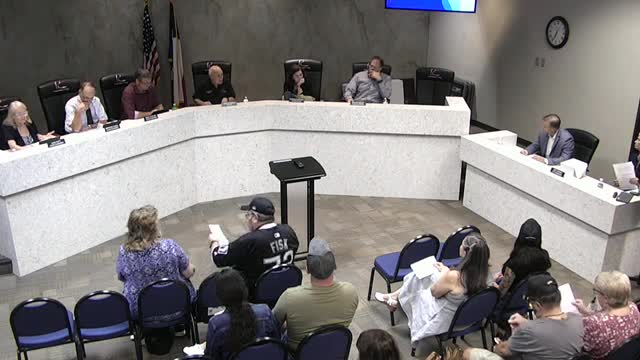
At its July meeting, the Universal City City Council adopted a resolution to establish eligibility and criteria to consider tax abatement requests; council members debated revenue, fairness and precedent and staff said reinvestment-zone ordinances will return to council on Aug. 5.
Universal City City Council on a July meeting adopted a resolution establishing eligibility and guidelines for the city to consider tax abatement requests and said ordinances to create reinvestment zones will return to the council on Aug. 5.
The guidelines set a framework for how Universal City will receive and evaluate requests, but they do not obligate the council to approve abatements, City staff member Ms. Turner told the council. "A tax abatement program is, at the will of the city council," Turner said, and stressed that approving the resolution only opens the city to consider requests, not to grant them.
The resolution lays out several features staff described in the hearing: guidelines must be reauthorized every two years; reinvestment zones (which staff said are typically commercial or industrial) last five years; abatement agreements may be handled confidentially until council approval and typically will be discussed in executive session; abatements may be limited to tangible personal property or structured to treat property owners and leaseholders the same; and state law caps any abatement period at 10 years. Turner also noted the city must notify other taxing entities — staff cited Bexar County, Guadalupe County and the Edwards Aquifer Authority — and that approved abatements are posted to the Texas Comptroller’s website.
Council members debated the merits and risks. Council member Mr. Veil said the city should weigh lost near-term revenue and fairness to businesses that would not receive abatements, and cited the Economic Development Corporation’s recent infrastructure investment in the Reunion project: "There can be tremendous gains, but there can also be tremendous losses with regard to revenue issues," Veil said, adding he was "very reluctant to move forward with this resolution at this time." Several other council members argued the policy is a negotiating tool the city lacks and that each request would be evaluated on its own merits; staff said there is no automatic precedent because every abatement request must be approved individually.
Turner and other staff gave operational clarifications in response. She said abatement criteria can be amended by council (amendments and reauthorizations require a three‑fourths vote), reinvestment zones and criteria use different durations and timelines, and the city would provide documentation in advance of any executive-session discussion. She summarized: "When it comes down to it, what we're doing today just opens the door for us to consider." The council voted to adopt the resolution establishing eligibility and guidelines; the city manager and staff will return with ordinances to designate reinvestment zones for further public hearings and formal consideration.
The resolution and the future reinvestment-zone ordinances will determine whether particular projects receive abatements; council members noted they can approve, deny or negotiate terms of any application when it is presented.
Ending details: Staff reiterated that school districts may not grant tax abatements under state law and that proposals approved by the council must follow state posting and notification requirements. The council did not approve any specific abatement agreement at the meeting — only the eligibility and criteria framework.