Get Full Government Meeting Transcripts, Videos, & Alerts Forever!
Get email alerts on the Juvenile Justice Casa Pilot topic
No spam. Unsubscribe anytime.
Lone Star CASA to pilot guardian ad litem program for justice-involved youth in Kaufman County
Summary
Lone Star CASA told the commissioners court it will launch a court-ordered guardian ad litem pilot on Sept. 1 to serve justice-involved youth, aiming for 25 participants in year one and seeking roughly $95,000 in private funding.
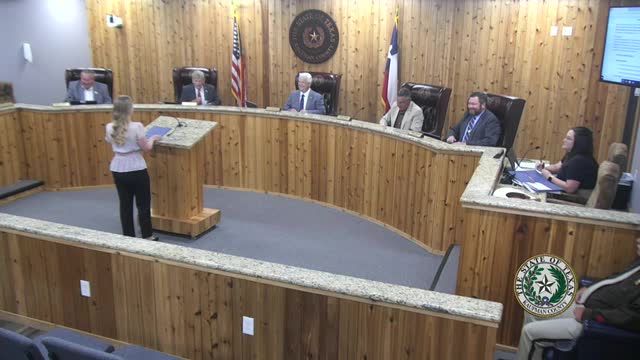
Lauren Rowe, executive director of Lone Star CASA, told the Kaufman County Commissioners Court in July that the nonprofit will launch a court‑ordered guardian ad litem pilot for justice‑involved youth on Sept. 1 and hopes to serve at least 25 young people in its first year.
Rowe said the program will pair trained CASA volunteers with youth adjudicated in juvenile court, and that volunteers already serving CASA child‑welfare cases will receive additional training led by the probation department. “Our goal is to work with at least 25 youth during our first year to pilot it,” Rowe said.
The nut of the proposal, Rowe told commissioners, is to provide advocacy and connection to services so youth complete probation successfully, avoid new charges and access school or mental‑health supports. Rowe said Lone Star CASA has served Kaufman County for more than 20 years as guardian ad litem for children in child‑welfare cases and is adapting that model to juvenile cases; the organization cited a 121% increase in youth involvement in the justice system in Kaufman County between 2020 and 2023.
Rowe described program specifics: CASA will use experienced volunteers who have completed at least 30 hours of training and who have previously carried cases; volunteers will receive extra juvenile‑justice training and instruction on trust‑based relationship building. The organization will track outcomes and solicit feedback from partners including the county probation office, the district attorney’s office and Judge Russell, Rowe said.
Rowe said the pilot’s first‑year operating cost is about $95,000 and that Lone Star CASA has secured roughly $20,000 in individual commitments and is pursuing additional private grants. A probation department representative told the court the program would be an additional resource to help youth and families comply with probation and access needed services. Several commissioners and other officials expressed support and urged community outreach to recruit volunteers and local funding.
Rowe said the model has been used elsewhere, including Montgomery County, and that CASA aims to evaluate outcomes before expanding services in Kaufman County and, later, to neighboring jurisdictions. The presentation did not include a formal request for county funding; rather, Rowe asked the court to be aware of the planned launch and the agency’s partnership with probation, the district attorney and the juvenile court.
If the pilot proceeds as described, CASA staff will report back on metrics and recommended adjustments after the first year.