Get Full Government Meeting Transcripts, Videos, & Alerts Forever!
Get email alerts on the Opioid Response topic
No spam. Unsubscribe anytime.
Burke County panel advances plan for post‑overdose response team, naloxone distribution and peer navigator; four provider proposals to be refined
Summary
The Burke County Opioid Advisory Committee approved moving county‑led proposals for a post‑overdose response team (PORT), expanded naloxone distribution and a peer community navigator to the next development stage and asked staff to refine four outside provider proposals for presentation in August.
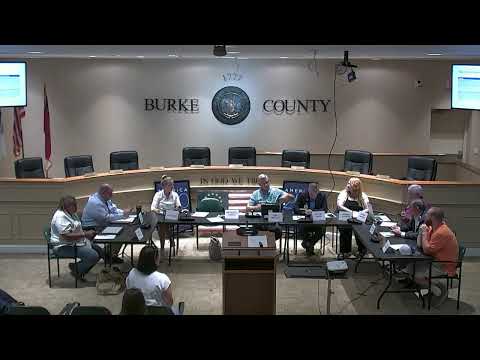
Burke County — The Burke County Opioid Advisory Committee voted on July business to advance a county‑led plan to establish a post‑overdose response team (PORT), expand naloxone distribution and hire a peer community navigator, and directed staff to work with four outside providers to refine proposals for possible funding.
The committee also heard operational updates, including that the county has received a naloxone “community health” vending machine funded by a Blue Cross Blue Shield grant and sited at Catawba Valley Healthcare.
The committee’s motion, carried by voice vote, authorized staff to develop implementation and contracting details for three county initiatives — a PORT with co‑responding community paramedics and peer specialists, a county‑led naloxone distribution program and a field‑based peer community navigator — and to prepare performance‑based contracts for consideration by the Burke County Board of Commissioners.
Why it matters: Committee members said the three county initiatives form a funnel from emergency response to longer‑term recovery services. The committee endorsed an initial, one‑year funding timeline with automatic extensions if stated performance benchmarks are met, and it asked staff to build measurable reporting into any contract.
County initiatives and targets
Katie (opioid response staff) presented the county‑led package and the draft performance indicators staff will use to judge success in a first year. The plan asks for approximately $880,000 in the first year to stand up the PORT, stock naloxone and fund the peer navigator; the figure includes start‑up costs and is expected to decline over time as programs scale. Katie described the proposed benchmarks for year one: at least 60% engagement with peer support services; a 15% reduction in repeat 9‑1‑1 calls for nonfatal overdoses; a 10% increase in availability for high‑priority calls; at least 150 referrals to treatment, harm‑reduction, housing or supports; and a PORT follow‑up visit within 72 hours for at least 60% of nonfatal overdose cases.
The peer community navigator was described as a neutral, field‑based case manager who would accept referrals from the PORT, hospitals, jail and community agencies and provide longer‑term linkage to treatment and social supports. Katie said the navigator’s indicators would include greater than 70% initial engagement and greater than 60% retention among active clients; staff also proposed that 100% of people served be connected to at least one recovery, medical, housing or social service.
Naloxone and vending machine
Dr. Samuels (coordinator) reported that the county has received a naloxone vending machine funded by a Blue Cross Blue Shield grant and will locate it at Catawba Valley Healthcare. “We have our first ever community health vending machine in Burke County,” Dr. Samuels said, adding that the machine will be stocked with naloxone provided by partner agencies and the state and may also carry hygiene items and school supplies.
RFP submissions and staff recommendations
Staff said an open solicitation produced 11 submissions. After an internal prescreening involving finance, health, DSS and the sheriff’s office, staff recommended moving four provider proposals forward for budget and scope refinement: Caring Alternative (intensive outpatient treatment), Good Samaritan Clinic (bilingual licensed clinical social worker to provide SBIRT screening and linkage), High Country Community Health (expanded low‑barrier MOUD/MAT services) and Spark (family‑centered treatment aimed at preventing foster care placements and supporting reunification). Several other proposals were recommended for revision or not recommended at this time because they did not fit the Option A strategies in the NCMOA or appeared duplicative.
Committee direction and next steps
Committee members stressed sustainability and performance metrics. Jeff (county staff) and others pointed to prior examples of performance contracting used for recovery court and described a process of negotiating value‑engineered budgets and contract terms with providers before bringing resolutions to the Board of Commissioners. Johnny (committee member) and Dr. Frank (committee member) asked for clearer sustainability plans from providers and regular reporting.
The committee set an extra meeting for August 12 to hear from the four recommended providers and to review refined metrics and sustainability plans; staff will use those discussions to finalize performance contracts and present resolutions to the Board of Commissioners. The committee also approved advancing the county‑led PORT, naloxone distribution and peer navigator work so staff can begin implementation preparations.
What the motions did and did not do
The committee’s actions authorized staff to negotiate budgets, scopes of work and performance contracts and to bring final resolutions to the Board of Commissioners; they did not authorize final contracts or spending. Board of Commissioners approval remains required before programs launch and funds are committed.
Context and background
Committee members noted local context: recovery court programs currently report active participants and recent graduations, and staff said overdose deaths in the most recent reporting period were down roughly 50% compared with earlier years — trends that staff attributed in part to wider naloxone availability. Staff also said some services requested in provider proposals were not allowable costs under opioid settlement rules and that several proposals need budget reengineering.
Committee members asked staff to include clear, measurable reporting requirements in contracts and to present periodic updates to the advisory committee and the Board of Commissioners.
Ending
Staff will meet with the four recommended providers in July and August to refine budgets, scopes and performance measures; the advisory committee will reconvene on August 12 to hear those providers and review the proposed metrics. Final contracts and any fund draws will require Board of Commissioners approval.