Get Full Government Meeting Transcripts, Videos, & Alerts Forever!
Get email alerts on the Water Infrastructure topic
No spam. Unsubscribe anytime.
Woodfin Water Authority outlines $22 million capital plan, seeks state funds after storm damage
Summary
Seth Eckard, executive director of the Woodfin Water Sanitary District, reported on service area, storm damage from Hurricane Hilleen, system stats and a 10-year capital plan that anticipates $22 million in investments and an application for a $5 million state revolving fund loan with potential principal forgiveness.
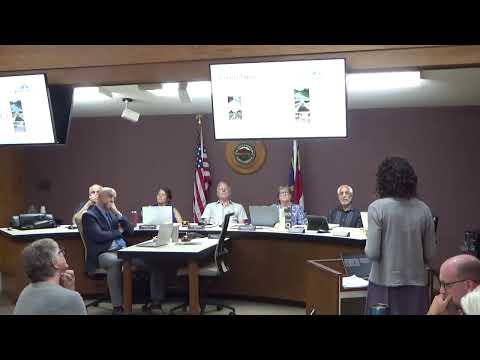
Seth Eckard, executive director of the Woodfin Water Sanitary District, told the Woodfin Town Council on July 15 that the utility serves “a population of just over 10,000” with about 4,000 residential and 150 commercial connections and has an operating budget of roughly $2.8 million.
Eckard described the district’s water sources and infrastructure: the utility owns about 2,000 acres of protected watershed, a reservoir with approximately 51 million gallons of storage and a water treatment plant built in 1995 that currently produces about 800,000 gallons per day. He said roughly 20% of the district’s supplied water is purchased from the city of Asheville to meet demand in parts of the service area.
Storm damage and recovery: Eckard said Hurricane Hilleen caused more than 27 leaks and breaks, erosion at the dam’s spillway, and generator failure; the district estimated nearly $5 million in storm-related damage, mostly for debris removal. Eckard credited mutual-aid partners and NC Water WARN participants — including crews from Durham and other utilities — for rapid help during recovery.
Capital plan and financing: The district recently completed a 10-year capital improvement plan with McGill Associates that identifies roughly $22 million in capital investments over the next decade. Eckard said the district currently carries no debt and expects to finance most work through state and federal grants, FEMA mitigation, and loans; he estimated about 80% of the plan could be covered by grants if funding is available.
Eckard said the district has applied for or will apply for a $5 million North Carolina State Revolving Fund loan that can include principal forgiveness under recent federal funding allocations aimed at storm recovery. He listed criteria that influence principal forgiveness decisions, such as median income and poverty metrics, and said the district and town likely meet two of the program’s qualifying metrics.
Operational notes and rates: The district bills bimonthly and uses four rate zones; Zone 1 customers pay the lowest rates in the comparison Eckard presented (about $19 per month, pre-July 1 changes). He explained a high bill runout this month stemmed from a vendor issue that delayed mailings, producing two months’ worth of charges on a single bill; the utility waived late fees while resolving the vendor problem.
Planned near-term work: Eckard said the district plans repairs to the dam’s spillway and the access bridge, generator and SCADA upgrades, pump and filter replacements within a ten-year horizon, and potential transmission-line work. He said the district will pursue state revolving funds, FEMA mitigation dollars and other grants, and noted no lead service lines were found in the district’s infrastructure during recent testing.
Council context: Several council members and residents asked technical questions about the transmission line under Craggy Bridge, connections to the west side of the river, and how purchased Asheville water is allocated; Eckard said geography and capacity determine water purchases and that expansion options may favor extending existing west-side mains rather than repairing an old under-bridge line.