Get Full Government Meeting Transcripts, Videos, & Alerts Forever!
Get email alerts on the Public Works Ditches topic
No spam. Unsubscribe anytime.
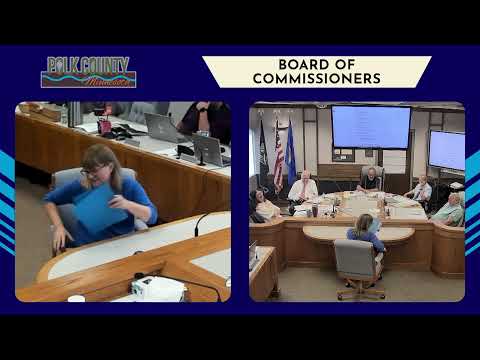
Polk County Commissioner Holy says he will step down as chair and urges ditch redetermination to address maintenance shortfalls
Summary
Commissioner Holy announced he will step down as Polk County board chair because of health issues but not resign; he urged the board to pursue redetermination of county ditches to address maintenance backlog and potential tax impacts.
Commissioner Holy announced to fellow commissioners that he will step down as chair because of health issues that will require treatment and travel, though he said he is not resigning from the board. At the same time he urged the board to move forward on redetermination of county ditches to shore up maintenance funding and more fairly allocate costs to users.
Holy said he has had significant recent medical issues, including “4 herniated discs on my neck” and ongoing gastric problems, and he reported a diagnosis of amyotrophic lateral sclerosis (ALS) that will require ongoing care. He said he plans to step down as chair and arrange his schedule to attend meetings when he can, and he asked colleagues to respect his family’s privacy regarding personal health details.
On ditch policy, Holy told the board that Polk County has “750 some miles of county ditches” and that many ditches were built in the 1930s and 1940s and have never been redetermined. He said ditch redetermination — which he described as a process that should occur every 15 to 20 years — could replenish ditch funds and allow more predictable maintenance. Holy said he supports redetermination but raised a caution: the board must decide how the added costs would be levied and whether landowners should be given options to pay assessments over time (for example, five or 10 years).
Why it matters: redetermination would change how maintenance costs are assessed to landowners and could raise tax bills for some property owners as projects are completed and assessments placed on tax rolls. Holy framed the issue as especially important to agricultural constituents and to landowners at outlet ends who suffer recurring flooding because upstream systems are in disrepair.
Board members responded with thanks to Holy for his service and with offers of support for his medical needs. Several commissioners noted they will discuss the redetermination timing and the budget implications during upcoming budget deliberations.