Get Full Government Meeting Transcripts, Videos, & Alerts Forever!
Get email alerts on the Municipal Finance topic
No spam. Unsubscribe anytime.
Ione council hears delayed 2021 audit update, reviews 2025–26 revenue and directs staff on CFDs and budget workshops
Summary
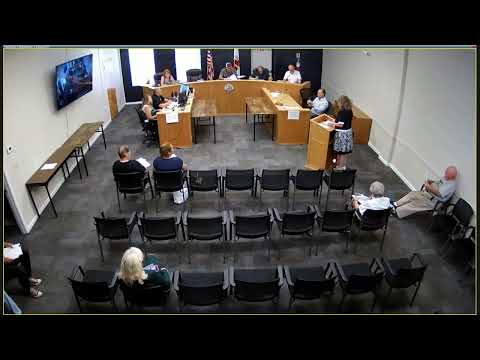
Ione City Council met in a special budget workshop on July 10, 2025, to receive an update on the incomplete fiscal year 2021 audit and to review revenue and expense reports for the current year and a draft revenue plan for fiscal year 2025–26.
Ione City Council met in a special budget workshop on July 10, 2025, to receive an update on the incomplete fiscal year 2021 audit and to review revenue and expense reports for the current year and a draft revenue plan for fiscal year 2025–26. Interim Finance Manager Andrea Bonham presented the audit status and highlighted reconciliation items city staff must address before the audit is finalized.
Why it matters: The unresolved audit and several accounting irregularities the finance team flagged affect the city’s year-end reporting, require follow-up work before audit signoff and inform the council’s decisions about whether to contract outside services for the budget book. Council members also sought options for Community Facilities District (CFD) rate adjustments that could affect hundreds of property owners.
Bonham told the council the city’s external auditor is still working through document requests and that some requested backup cannot be located. “The first item agenda is the update on the, 2021 audit. What I did is I included the email directly from the auditor since it was pretty detailed,” Bonham said, explaining she forwarded the auditor’s timeline and request log rather than paraphrasing it for council. Bonham reported one payable-related request will take the auditor roughly 15 hours once invoices are received and said, based on the hours the auditor listed, completion likely will extend into late July or early August.
Council members and staff described a recurring problem: the auditor asks for records, the city provides documents, and months later the auditor again requests the same items. Bonham summarized the practical limit of staff’s search: “At some point, we're gonna have to take the hit, take the finding,” she said, referring to missing older records that cannot be located despite extensive searches.
Public comment echoed the frustration. Resident Susan Bridal urged the city to seek duplicate invoices from vendors: “I don't know why the vendor can't provide a duplicate copy of the invoice,” she said.
Audit follow-up items Bonham identified included: missing payroll backup for a firefighter, missing payables tied to the Train Depot project, and a stipend record for a council member. Bonham said staff exhausted many avenues to recover historical files — including contacting former vendors and employees — and that some files appear to have been removed from the payables boxes in prior years and not returned.
On the city’s financial statements, Bonham walked council through a number of account-level issues that produce misleading line items on summary reports: a double-recorded golf course lease ($80,000 showing as two invoices rather than a corrected $40,000); long-unreconciled developer reimbursement accounts that have not been reconciled for about four years; small payroll and fringe-benefit journal-entry errors; and a donated asset that had been recorded as an $18,000 cash outlay rather than as a noncash donation. She also called out a bank charge tied to a PERS fine for delayed reporting of retired annuitants.
Bonham recommended a structured approach to year-end budget adjustments: rather than one large, catch‑all amendment, staff will compile documentation for each approved charge and make monthly adjustments backed by council approvals so the audit trail is clear.
Revenue review and proposals
Staff presented a draft revenue plan for fiscal year 2025–26 and line-by-line notes explaining the assumptions. Bonham highlighted items that depress current-year actuals or require accounting cleanups: misposted marketing reimbursements, miscellaneous revenue mixed with rental income, sales-tax allocations routed to suspense accounts, and CFD (bond) funds that were previously misnamed and are fiduciary in nature.
Tertiary wastewater revenues were discussed specifically: Bonham noted three significant customers are billed quarterly (ARSA, the California Department of Corrections and Rehabilitation (CDCR), and Portlock) and that reported amounts through May 31 do not include the final quarter billing. She said ARSA’s receipts to date are about $20,000 and CDCR’s are about $55,000 through May, while Portlock’s final quarter billing will move its total closer to budget when posted.
Council members pressed for clearer, regular reporting. One council member said the large variance in legal costs (budgeted $126,000, with current spending substantially higher year to date) should trigger interim notifications to the council so members can request budget amendments earlier. Bonham said the plan is to deliver this report monthly or quarterly at the second meeting following quarter-end.
Tools, formatting and outside vendors
Bonham described an invoice from ClearGov, the vendor that produced the city’s previous “pretty” budget book, and asked whether council wanted staff to continue with that vendor or prepare the book in-house. She said last year’s ClearGov work included a $4,833 setup plus an $11,000 subscription (about $15,000 total last year); the current-year invoice under discussion was $11,000. Bonham asked for direction: whether to pay the $11,000 subscription for the formatted product or produce budget charts in-house using current financial software and Excel.
Council members expressed a preference to keep the work in-house and asked staff to produce a format similar to the prior bound budget that included capital projects, narrative, and a three-year comparison of actuals; Bonham agreed to prepare that format if feasible within staff capacity.
CFDs, Measure M and fund reclassifications
Bonham and staff reviewed Community Facilities District mechanics and asked whether council wanted staff to present multiple CFD-rate scenarios. Bonham said staff could return with either (a) the full code-authorized increase (about 2.39 percent for this cycle) or (b) the smaller, partial increase the council adopted last year. Council direction was to return with two options: the full code-allowed increase and the approach used last year.
Staff also proposed moving police and fire revenues that are now routed into general‑fund suspense accounts into separate police and fire revenue accounts so those program revenues are easier to track. Bonham described Measure M as being intended for personnel and training costs; she recommended renaming or marking Measure M accounts to emphasize “personnel only” and placing a “do not use” flag on accounts that should not be charged to Measure M going forward.
Governance and schedule issues
City Manager George (surname not provided in the transcript) cautioned council that there is not yet an adopted FY2025–26 budget and warned that, “currently, the expenditures are being made, without authority.” He said payroll and other routine expenditures continue and recommended the council adopt an interim solution so staff has clear authorization to incur necessary expenses until the budget is adopted. Council members asked staff to place a roll‑forward of the FY2024–25 budget on the upcoming Tuesday meeting agenda so the city has budget authority while final numbers are prepared.
Next steps and direction
Council directed staff to: - Return with two CFD-rate scenarios (full code-allowed increase and the smaller increase used last year). - Post the full budget packet online and schedule at least one additional workshop (council expressed Thursday as a preferred day) to review the full 50+-page packet and the draft FY2025–26 budget before final adoption. - Reconcile developer reimbursement accounts and provide a plan to resolve long‑outstanding reimbursables that have not been billed or tracked for several years. - Prepare monthly budget adjustments with documentation for council approval to improve the audit trail. - Separate police and fire program revenues out of the general fund for clearer tracking.
What didn’t happen
No ordinances, appropriations or budget adoptions were approved at the workshop. The meeting produced direction for staff work and requests for follow-up presentations rather than final policy decisions.
Ending note
Bonham told council she will bring the requested scenarios, documentation and a proposed workshop schedule back to council in the coming weeks so members can review the full-year draft and supporting materials before formal adoption of the FY2025–26 budget.