Get Full Government Meeting Transcripts, Videos, & Alerts Forever!
Get email alerts on the Economic Development topic
No spam. Unsubscribe anytime.
School board approves 90%/20‑year PILOT for Agristo plant after 6‑3 vote
Summary
The Grand Forks School Board on July 14 approved a city request for a payment‑in‑lieu‑of‑taxes (PILOT) that would exempt 90% of property taxes for Agristo’s phase‑1 facility for 20 years by a 6–3 vote.
The Grand Forks School Board on Monday, July 14 approved a city request for a payment‑in‑lieu‑of‑taxes (PILOT) that would exempt 90 percent of the property tax on the Agristo phase‑1 plant for 20 years, by a 6–3 roll‑call vote.
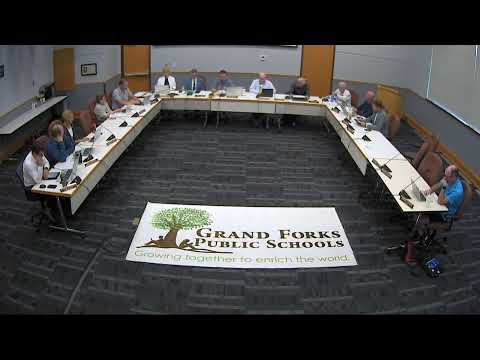
The PILOT was presented by city staff, including City Administrator Todd Phelan and Business Manager Brandon Bambach, who summarized the city’s analysis of projected tax revenues, job creation and estimated student enrollment impacts. The board voted after a public presentation and discussion; the motion to approve the 90%/20‑year PILOT passed 6 yes, 3 no.
Why it matters: Agristo is a large frozen‑potato processor that city officials and regional agricultural leaders said would be a major industrial investment for Grand Forks and the region. Supporters argued the combined incentives (state forgivable loan plus the local PILOT) were needed to close a competitiveness gap with a Wisconsin site and to secure roughly 450–500 million dollars in capital investment, hundreds of construction jobs and hundreds of ongoing jobs.
City presentation and projections: Phelan told the board the phase‑1 build is estimated at roughly $450–$500 million with a current assessed real estate valuation figure used for modeling of about $186 million (he said $11 million of that is land value and remains taxable). The city’s materials estimated roughly 660 direct and indirect jobs related to the project and 4,000 construction‑job years across the build period. Bambach and city materials estimated that 15–25% of new employee households could include school‑age children, producing an enrollment increase the district modeled at 59–99 students; the district’s per‑pupil state aid figure cited in the packet was $11,349 per student.
Financial case: The city said the state had approved a $30 million forgivable loan to help close a competitiveness gap with Wisconsin and that the 90% PILOT is designed to make the project financially feasible for Agristo while still generating some near‑term local tax revenues. City estimates the school district would receive modest tax receipts in the early years as the project becomes taxable during construction and then substantially higher annual receipts after the PILOT step‑down ends.
Board discussion and concerns: Several board members tested assumptions about whether the student yields would materialize (private schools, homeschooling, and uncertain household composition were cited), and whether projected tax and enrollment gains fully offset additional school costs. Dr. Cheryl Hodak and other members emphasized stewardship of taxpayer dollars and questioned some external vacancy and market data the city relied on for other projects, but ultimately the motion to approve the Agristo PILOT carried.
Vote record (roll call as recorded): Josh Anderson — yes; Amber Flynn — yes; Jay Cleven — yes; (record lists “Podak” — no); Bill Palmisino — yes; Dr. Lund — yes; Jeff Manley — no; Joel Larson — no; Dave Berger (president) — yes. Tally: 6 yes, 3 no.
What happens next: City staff said the project still requires final land purchase and permitting steps, additional development agreements and city council approvals; the PILOT structure will be reflected in a development agreement negotiated between the developer, the city and taxing entities.
Evidence spans from the meeting transcript are below; the city presentation and the roll call vote are recorded in the board packet and the July 14 meeting transcript.