Get Full Government Meeting Transcripts, Videos, & Alerts Forever!
Get email alerts on the City Budget And Dispatch topic
No spam. Unsubscribe anytime.
Council directs plan to eliminate a 16% budget gap; examines dispatch consolidation, library district and new revenues
Summary
After the budget committee recommended narrowing the city’s 16% structural budget gap, the council voted to require the city manager to present a plan to eliminate the gap over three years and discussed contracting dispatch services, forming a library district and a law-enforcement utility fee as potential options.
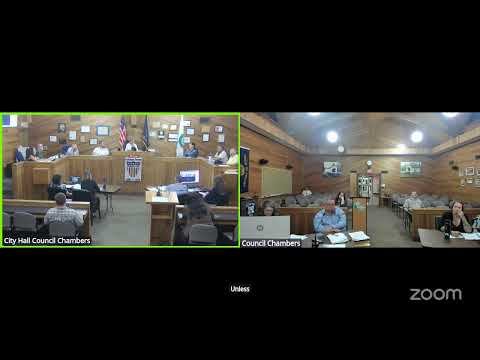
The Cottage Grove City Council on July 29 adopted a council-level directive that the city manager return with a plan to eliminate a council-identified 16% gap between revenue and expenditures over the next three years, with at least one-third of that gap closed in the first year.
The direction followed a budget committee recommendation that staff present options to reduce the gap. Council amended that recommendation to require full elimination of the gap within three years and carried the amended motion unanimously.
Staff and council discussed both expenditure and revenue strategies, including larger operational changes and revenue proposals:
- Dispatch consolidation: City staff and the police chief reported ongoing conversations with Lane County about contracting county dispatch services. Staff said the city currently receives about $180,000 in 911 tax revenue but spends roughly $775,000 a year on dispatch and communications; contracting could reduce the city’s net cost but would not eliminate dispatch expenses entirely. City staff estimated potential savings of roughly $200,000 a year as a planning figure but cautioned the estimate is uncertain. The police chief emphasized operational complexity — equipment, call routing (public-safety answering points), radio channels and staffing — and said detailed conversations with the sheriff and county are required before any commitment. The city’s dispatch radio equipment also faces end-of-life replacement needs, with vendor estimates in the low hundreds of thousands of dollars for replacements.
- Library district: Staff noted formation of a library district is a common local funding model in Oregon and reported staff work to identify consultants, grant support and partner organizations to study the feasibility. The council framed a district as a possible multi-year revenue solution but emphasized it requires public outreach and a formal feasibility process.
- Law enforcement utility fee and other revenues: Staff revisited earlier proposals for a law-enforcement utility fee and said other revenue levers (franchise fees, room taxes, permit fees) and more-accurate revenue forecasts could also reduce the gap; staff said they will review revenue estimates and potential short-term measures.
Council requested follow-up information including: estimated savings from dispatch contracting (with detailed cost comparisons and contract length scenarios), the effect of equipment replacement schedules and ownership of 911 equipment, feasibility and costs for forming a library district, and revenue modeling for a potential law‑enforcement fee and other revenue sources.
Ending
Council’s motion to have staff return with a concrete plan to eliminate the budget gap over three years (one-third reduction in year one) passed unanimously. Staff indicated further analysis will involve county dispatch stakeholders, state emergency‑management rules around 911 equipment, and outreach and feasibility work for a library district and other revenue options.