Get Full Government Meeting Transcripts, Videos, & Alerts Forever!
Get email alerts on the Pedestrian Safety topic
No spam. Unsubscribe anytime.
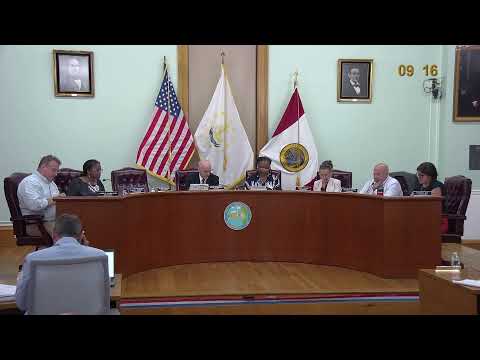
Woonsocket council hears pleas for safer streets after child’s death; officials pledge actions, point to CDBG funds
Summary
Residents pressed the Woonsocket City Council on July 14 for speed mitigation, crosswalks and enforcement after a 3-year-old was killed June 26. Council members and the mayor said steps — including signage, speed-limit signs and potential use of CDBG funds — are planned while the city studies longer-term measures.
Dozens of residents urged the Woonsocket City Council on July 14 to act on pedestrian and traffic safety after a 3-year-old boy was killed June 26 while riding a bicycle.
Chelsea Fernandez, a Fairmount neighborhood resident who organized a petition after the death, told the council she wants permanent traffic-calming changes including raised crosswalks, “drive slow/children at play” signage at key entrances and a formal traffic safety study by Public Works or the state Department of Transportation. “I would hate for another child to be lost,” Fernandez said.
The appeal drew several other Fairmount-area speakers who described frequent speeding, limited sightlines because of cars parked on both sides of narrow streets and requests for stop signs at intersections they said have none. Valerie Curtis, a Fairmount resident of 53 years, said a light was removed decades ago at Fairmount and Second and that a four-way stop “never gets stopped at.” Marcel Laliberte and others asked for speed bumps on Roland and other streets.
Councilwoman Fox said the administration and council have heard the concerns and pledged concrete steps. Mayor Chris Beauchamp said the city will add speed-limit signage, “slow playground” signs and move the portable speed display around the city. Public Safety Director Eugene Gillette pointed to the monthly public safety report, detailing citations and parking-ticket activity, and said the police department is “as proactive as we can be.”
Fox and other council members linked some near-term fixes to federal Community Development Block Grant (CDBG) funding approved by council action at the same meeting. The city approved the 2025–26 CDBG/HOME/energy budget (ordinance 25 O 44) on first passage, and members said the DPW infrastructure line in that budget can be used for signage, curb and sidewalk repairs and other accessibility or safety upgrades in eligible neighborhoods.
Resident Sean Clark, citing the non‑profit Safe Streets for All study and local police data, urged directing speed‑camera revenue and other enforcement funds exclusively to pedestrian infrastructure. “If we're installing a piece of infrastructure meant to protect people, I want the benefits to go directly toward their growth and well‑being and nothing else,” he said.
Council members stressed the limits of municipal authority for some items (for example, state‑owned roads) and said some changes will require coordination with state agencies. Members also noted tradeoffs: Councilman Kenoyer and others said speed bumps help slow traffic but can affect emergency vehicle response and snow‑plow operations; the administration said those operational impacts are considered when siting traffic calming.
The council asked the administration to accelerate easy fixes such as additional signage and stop signs where warranted, examine placement of the city’s portable radar display, and to incorporate community requests into the forthcoming annual CDBG action plan and capital/improvement schedules. Officials said more detailed traffic studies and physical installations will follow based on budget, engineering analysis and available matching funds.
Residents at the meeting pushed for enforcement as well as engineering; some asked the council to consider reallocating part of speed‑camera revenue to neighborhood infrastructure and targeted enforcement. Gillette encouraged residents to request the monthly public safety report to track citations and enforcement activity.
The council did not adopt a single, final package of measures on July 14 but approved the CDBG budget on first passage and directed staff to return with implementation details and an action plan for prioritized safety improvements in affected neighborhoods.