Get Full Government Meeting Transcripts, Videos, & Alerts Forever!
Get email alerts on the Labor Ihss Bargaining topic
No spam. Unsubscribe anytime.
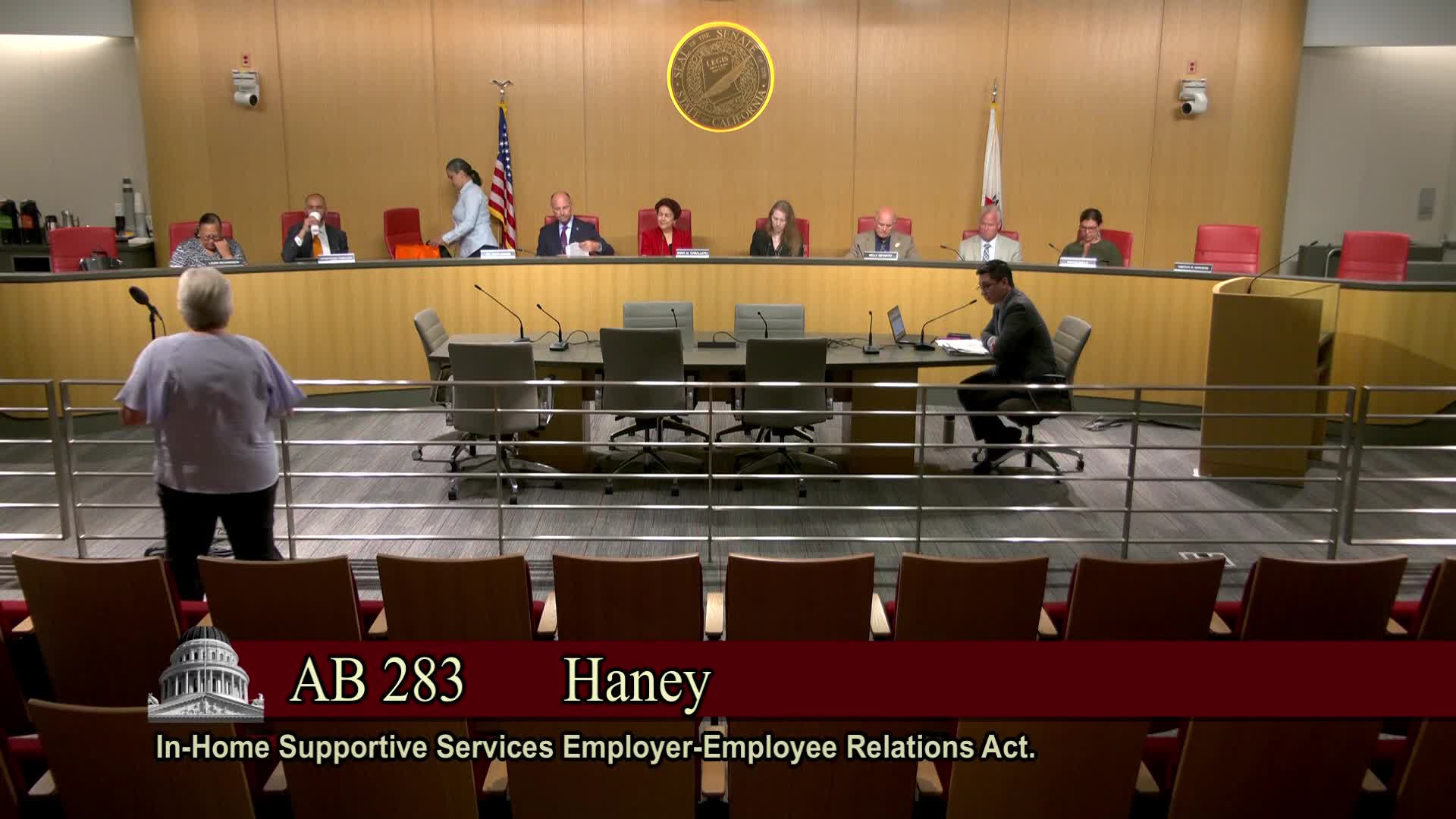
Committee moves AB 283 to suspense after heated fiscal testimony on statewide IHSS bargaining
Summary
AB 283, which would shift in‑home supportive services (IHSS) labor relations toward statewide bargaining, drew extended testimony from providers and unions on worker retention and service quality and strong fiscal warnings from the Department of Finance. The committee moved the bill to the suspense file for further fiscal review.
AB 283, authorizing changes to collective bargaining for California’s In‑Home Supportive Services (IHSS) provider workforce, was discussed at length before the Senate Appropriations Committee and moved to the suspense file for additional fiscal analysis.
Mary Sluder, an IHSS provider from Fresno County and a member of SEIU Local 2015, testified in strong support, saying statewide bargaining would provide “more equitable wages and benefits across the state” and could improve worker retention, reduce turnover and improve client outcomes. She told the committee IHSS providers are critical to maintaining families and communities.
The Department of Finance opposed the bill on fiscal grounds. Finance said the measure “will fundamentally change the collective bargaining structure for IHSS providers and result in substantial new general fund costs potentially in the billions of dollars annually.” Finance detailed prior program growth and projected costs, noting IHSS general fund costs grew substantially over recent years and projecting large future increases. Finance also said CalHR would incur state operations costs if selected to represent the state, citing an estimate of about $3.3 million in the first year and $3.1 million annually thereafter to fund 15 positions, and that the 2025 budget act included contingent funding related to AB 283.
Supporters argued the long-run benefits include reduced reliance on other social‑safety-net programs and more stable care for recipients. Opponents and county representatives raised structural and fiscal concerns, and the committee placed the measure on the suspense calendar for further fiscal review.
Why it matters: AB 283 would restructure labor relations for a large caregiving workforce that serves older Californians and people with disabilities, with potential fiscal implications for the state budget and program operations.
What’s next: The bill remains on the suspense file for additional fiscal analysis and discussions between the author, labor representatives and state fiscal staff.