Get Full Government Meeting Transcripts, Videos, & Alerts Forever!
Get email alerts on the Charter Amendments topic
No spam. Unsubscribe anytime.
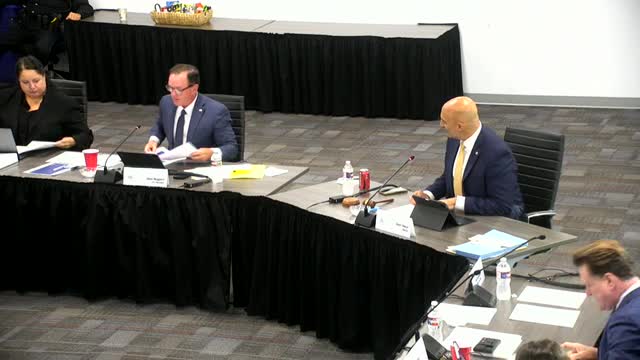
Richardson council reviews 47 proposed charter amendments, consensus on several key items
Summary
The Richardson City Council reviewed a draft package of roughly 47 charter propositions covering election timing, council compensation, petition thresholds and official insurance/bonding language, and directed staff to prepare final ballot language for consideration at a possible Aug. 11 election.
The Richardson City Council reviewed a draft package of roughly 47 charter propositions and asked staff and the city attorney to prepare final ballot language for consideration at a possible Aug. 11 election.
City Manager Don Magner and City Attorney Pete Smith led the briefing. Smith walked the council through the proposed propositions and legal constraints, and Magner outlined next steps and an estimated election cost of about $250,000.
The propositions include a mix of non‑substantive edits (grammatical and clarifying changes), and substantive items such as whether to change the city’s municipal election date to November under state Bill SB 1494, revisions to council compensation language, modification of petition thresholds for citizen initiatives and recalls, and a proposal to eliminate a required surety bond in favor of a citywide crime-insurance policy.
Why it matters: The charter review consolidates decade‑long housekeeping changes and several policy choices that will bind the city for the next 10 years if voters approve them. The council’s guidance will shape the final propositions that appear on the ballot and affect election timing, the petitions process, and internal controls for officials.
On election timing, Magner summarized SB 1494 and the council’s two options: adopt a charter amendment to move council elections to the November uniform election date in odd years (which would require terms to hold over until November 2027) or make the change by council resolution. Several council members said they prefer keeping Richardson’s nonpartisan May election date to avoid national and statewide partisan influence. Council Member Corcoran said, “The only justification I've seen for this ... was council members in some of the bigger cities wanting this to be more of a partisan election,” and added he favors May to keep Richardson’s nonpartisan tradition. Council Members Justice, Dorian and Mayor Pro Tem Hutchenrider echoed that view. Council Member Dan Barrios, appearing remotely, said he would support changing to the fall to boost turnout; he characterized himself as “the minority here.” No formal vote was taken; staff will prepare language consistent with the council’s direction.
On compensation, staff presented a proposal developed by the Charter Commission and staff that would revise council compensation. Magner said the Charter Commission’s work suggested a modest monthly equivalent if the council adopted an indexing approach; the formal proposition would set a per‑meeting stipend structure. The transcript shows staff presented language that reads in part as a per‑meeting stipend and scheduled phased amounts (the text presented included a per‑meeting stipend of $50 with a maximum of $7,800, rising on 01/01/2030 to $200 per meeting with a $10,400 cap). Council expressed no opposition to the way the item was written and asked staff to carry the language forward for ballot drafting.
On citizen petition thresholds for initiatives and referenda, the council reviewed comparative data from peer cities and discussed whether to keep the current 10% threshold of registered voters. Council Member Magner (Mayor) suggested lowering the percent of registered voters required for an initiative to make citizen petitions more achievable, proposing a mid‑range number between 5% and 10% (he suggested roughly 7.5%). Several members supported a compromise; after discussion the council asked staff to use 8% in the draft proposition language.
On official financial‑controls language, staff presented a memo from JoBeth Wells of Epic (the city’s insurance broker) advising that the city’s crime insurance policy covers the same risks as an individual surety bond and does so more comprehensively. Mayor Pro Tem Hutchenrider said, “I would actually say based on that letter ... I would actually say we do away with the surety bond and just require the ... crime policy,” and multiple council members agreed. Council Member Justice asked whether the charter’s language should say “shall” rather than “may” to make the requirement mandatory; council and counsel agreed to refine the draft to make the requirement to carry crime‑policy coverage clear to voters while preserving council discretion about exact coverage mechanisms.
City Attorney Smith explained the statutory constraint that ballot propositions cannot contain more than one subject and described efforts to consolidate and shorten propositions to reduce voter fatigue and cost. Smith and staff said some changes are purely grammatical, others clarify who can serve subpoenas or who may be subject to recall, and some relocate language for readability.
Next steps: Magner proposed returning a final ordinance with revised ballot language to council on July 28, allowing two weeks for review before a possible Aug. 11 decision to call the election. Staff estimated the election cost at approximately $250,000, driven largely by publication and ballot space for the high number of propositions. The council directed staff to prepare final draft propositions, to revise the surety‑bond language consistent with the conversation, and to use 8% as the initiative/referral petition threshold in the draft.
The council did not take any formal final votes on propositions during the session; staff will return with ordinance language and a formal call‑of‑election item for council action.
Looking ahead: If the council votes to change the municipal election date via charter amendment, the change must be completed by Dec. 31, 2025, under SB 1494 to move to November uniform election dates in odd years.