Get Full Government Meeting Transcripts, Videos, & Alerts Forever!
Get email alerts on the Urban Agriculture topic
No spam. Unsubscribe anytime.
Bellbrook council introduces zoning change to allow small livestock with permits and limits
Summary
Council introduced Ordinance 2025‑O‑12 to amend Article 18 of the Bellbrook zoning code by adding section 18.41 to permit small livestock in single‑family residential lots under a zoning permit with density, sheltering, setback and waste‑disposal requirements; definitions and animal code remain pending.
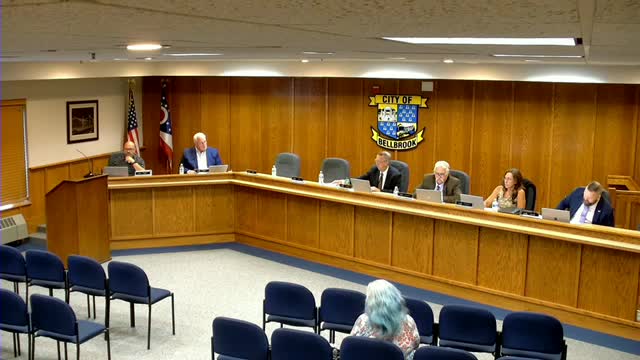
On July 14, 2025 the Bellbrook City Council voted to introduce Ordinance 2025‑O‑12, an amendment to Article 18 (General Provisions) of the Bellbrook Zoning Code that would add a new section 18.41, "Small Livestock." The proposed section allows keeping small livestock on single‑family residential lots with a zoning permit from the community development administrator and establishes limits, sheltering and waste rules.
Under the draft text, permitted densities are tiered by lot size: lots smaller than 0.5 acre — up to 3 small livestock; 0.5 to less than 1 acre — up to 6; 1 to less than 2.5 acres — up to 12; 2.5 to less than 5 acres — up to 15. The ordinance would require an outdoor covered, predator‑proof sheltering structure, ventilated and accessible for cleaning, with a minimum of 4 square feet per animal. Outdoor shelters must be located in the rear yard, at least 50 feet from other residential structures (other than the dwelling where animals are kept) and at least 25 feet from an abutting property line; shelters and accessory structures may not be in a front or side yard.
The draft prohibits keeping more animals than the lot allows, requires rodent‑proof storage of feed, and forbids animals from roaming at large. Keeping small livestock is limited to personal or household use; the sale of animal products in residential zones (including meat, eggs and fur) would be prohibited. The ordinance permits on‑site slaughtering only inside the primary structure, out of public view, and requires that all waste be bagged and disposed with household trash, composted in rodent‑proof containers at least eight feet from property lines, or applied directly on‑site in a manner that prevents nuisance and polluted stormwater runoff. The section also cross‑references the municipal nuisance provisions in the code.
Councilman Ashley read the ordinance text and said the item came back from the planning board "virtually unchanged" except for removal of a provision that had listed specific animals (roosters, geese, peafowl, turkeys, ostriches, emu); the planning board recommended moving specific animal definitions to Chapter 6.18 of the municipal code. Councilwoman Cyphers asked where the definition of "small livestock" appears; staff and the presenter explained that the animal definitions are in Chapter 6.18 and that the zoning amendment intentionally precedes the separate offenses/animal code updates.
Council members discussed outreach and education for applicants; staff said the city would reference external guidance (for example CDC and Ohio Department of Natural Resources materials) rather than producing original health‑safety pamphlets. Several members raised concerns about manure volume and nuisance complaints; staff said existing nuisance provisions would apply and the new section includes disposal options.
On a motion to introduce Ordinance 2025‑O‑12 for public hearing, the council recorded five affirmative votes and the motion carried. The ordinance was introduced for public hearing and will return for a second reading and possible adoption at a later meeting.