Lifetime Citizen Portal Access — AI Briefings, Alerts & Unlimited Follows
U.N. launches 2025 SDG report, says only 35% of targets on track and calls for urgent financing and ceasefires
Loading...
Summary
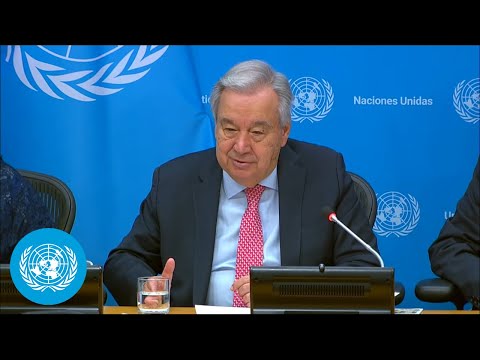
At a U.N. press briefing launching the Sustainable Development Goals Report 2025, Secretary‑General Lee and U.N. officials highlighted gains since 2015 but warned that only 35% of SDG targets are on track, pointed to rising debt and climate risks, and urged immediate ceasefires where conflict undermines development.
At a U.N. press briefing launching the Sustainable Development Goals Report 2025, Secretary‑General Lee said the world has made measurable gains since 2015 but is short of the pace needed to reach the 2030 agenda.
"We are now 10 years into our collective journey towards the 2030 agenda for sustainable development," Lee said, adding that "only 35% of SDG targets are on track or making moderate progress." The report, officials said, highlights progress in areas such as electrification and education but warns of mounting risks from conflict, debt and climate change.
The report documents gains and gaps. Officials noted that access to electricity has reached roughly 92% of the global population and internet use has increased to about 68%. Health gains cited included a near 40% decline in new HIV infections since 2010 and substantial lives saved by malaria prevention efforts; 45 countries have eliminated at least one neglected tropical disease. At the same time, the report finds about 800,000,000 people remain trapped in extreme poverty and that low‑ and middle‑income countries faced record debt servicing costs—reported in the briefing as about $1.4 trillion in 2023.
Lee and senior U.N. officials framed the financing gap as central to the shortfall on the SDGs. "Progress is impossible without unlocking financing at scale," Lee said, urging reforms to the international financial architecture, debt relief and increased lending capacity for multilateral development banks. Officials pointed to outcomes from the recent Financing for Development conference in Seville as steps toward restructuring debt and catalyzing investment at scale.
The briefing also tied development to peace. "We must keep working for peace in the Middle East. We need an immediate ceasefire in Gaza, the immediate release of all hostages, and any impeded humanitarian access as a first step to achieve the two‑state solution," Lee said. He called for a just and lasting peace in Ukraine "based on the U.N. Charter, international law, and U.N. resolutions," and said the U.N. seeks an end to the fighting in Sudan and escalations elsewhere that undermine development.
In a question‑and‑answer session, journalists pressed officials on specifics. Edith Lederer of The Associated Press asked which of the 17 SDGs are on track; Lee responded that 35% of targets are on target and pointed to areas of clear progress such as reductions in extreme poverty and child mortality, while emphasizing that the underlying economic and financial system limits countries' ability to implement the SDGs. When asked about recent policy shifts by major economies, officials said private‑sector investment and subnational action on renewables are accelerating a shift toward cleaner energy.
Technical staff highlighted demographic and reproductive‑health details from the report. Yonggi Min, chief of the SDG Monitoring Section at DESA, said the global average total fertility rate is about 2.2 children per woman and that roughly 77.2% of women use modern methods of contraception, leaving about one quarter without access. On climate commitments, U.N. staff offered to provide a technical note explaining how Nationally Determined Contributions (NDCs) were scored in the report and said regional breakdowns of several indicators are available upon request.
Officials acknowledged governance challenges that hinder progress. In response to a question about corruption, a senior U.N. official referred to estimates that 5–7% of public financing can be lost to corruption and pointed to anti‑corruption and illicit‑flows efforts discussed at the Financing for Development conference as integral to closing SDG financing shortfalls.
The report and briefing emphasized that the SDGs remain attainable only with urgent, coordinated action on financing, conflict reduction and systemic reforms to global economic rules. U.N. officials urged member states and financiers to use upcoming high‑level moments—the High‑Level Political Forum and other summits—to convert commitments into measurable financing and policy changes.