Get Full Government Meeting Transcripts, Videos, & Alerts Forever!
Get email alerts on the Historic Preservation topic
No spam. Unsubscribe anytime.
Planning board delays vote on Ferncliff garden-rail bridge after preservation concerns
Summary
The board continued review of a proposed garden-scale railroad bridge at Ferncliff, with reviewers and residents raising objections that the structure's scale and design intrude on the historic landscape. The application was placed on the July 21 agenda for further discussion.
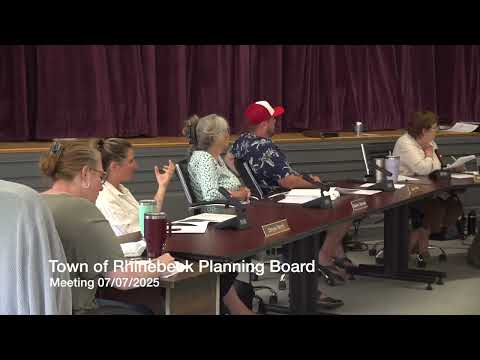
The Rhinebeck Planning Board continued its review of an application for phases 3–4 of a garden-scale railroad at Ferncliff after members and local preservation-minded speakers said a proposed signature bridge is too large and out of scale with the historic landscape.
Sam Stifel of Minsky/PELSPC, representing TCOR LLC and KPH 2 Management LLC, presented the application and recent materials, including a jurisdictional determination from the New York State Department of Environmental Conservation and field survey results. The project team said it had completed archaeological shovel testing and received sign-off from the local fire department on access and gates.
Board members and commenters questioned the design and siting of the planned signature bridge. One board member said the bridge ‘‘unnecessarily imposes on the landscape’’ because its massing and superstructure differ from historic trestles and earlier landscape features. Concerns centered on the bridge’s height and whether its structural elements should be above or below the rail; members noted that additional supports below the track would increase disturbance inside the valley and wetland buffer.
Members asked the applicant to consider alternatives that would reduce visual prominence, including changing the structural approach so that the rail-bearing elements are supported from beneath rather than by an above-track superstructure. Project representatives said that supports below the rail would require additional abutments and wetland-buffer impacts; board members requested clearer comparisons of the two construction methods and their relative impacts.
After debate the board voted to place the application on the July 21 agenda for continued review. A motion to put the item on the July 21 agenda passed without recorded opposition.
The application remains open pending additional visual-impact information, comparative structural designs and any Zoning Board of Appeals determinations about height or other variances.