UNAIDS warns funding cuts could reverse AIDS gains; report highlights new prevention tools
July 12, 2025 | United Nations, Federal
This article was created by AI summarizing key points discussed. AI makes mistakes, so for full details and context, please refer to the video of the full meeting. Please report any errors so we can fix them. Report an error »
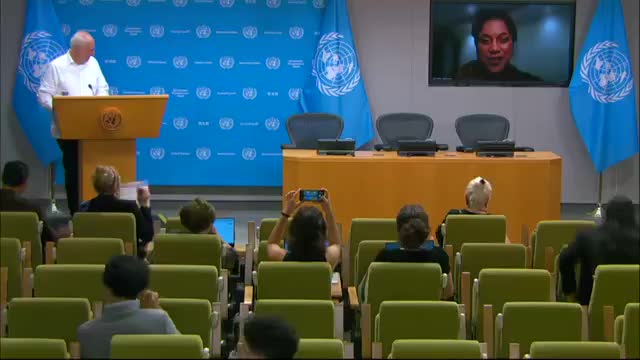
Angeli Atrekar, assistant secretary-general of UNAIDS, told reporters at a United Nations press briefing that the agency’s 2025 Global AIDS Update — titled “AIDS Crisis and the Power to Transform” — shows notable progress through the end of 2024 but warns that recent disruptions to funding put the global HIV response at grave risk.
Atrekar said the report’s data through December 2024 show major gains: new infections have fallen about 40 percent since 2010, AIDS-related deaths have dropped more than 54 percent, and roughly 31.6 million people living with HIV — about 77 percent globally — were on lifesaving treatment by the end of 2024. She said nearly 27 million lives have been saved by the global response and that an estimated 4.4 million children have been protected from acquiring HIV since February (figures in the report). "The end of AIDS as a public health threat by 2030 was indeed in sight," Atrekar said.
The report also models the consequences if international support and prevention services are not maintained. "If the world does not act to mitigate and really ensure that there is continuity of support and resources for HIV prevention and treatment efforts, an additional 6,000,000 HIV infections and an additional 4,000,000 AIDS deaths will occur by 2029," Atrekar said, describing a return to the epidemic’s deadliest years.
Atrekar attributed much of the current peril to recent funding shifts and to a broader global backlash affecting rights and policies. She said UNAIDS has, for the first time in its reporting, documented an increase in the number of countries criminalizing key populations, noting that bans on same-sex relations exist in 64 countries and criminalization of sex work in 168 countries. "This dangerous trend limits access to HIV prevention and treatment services," she said.
The report highlights signs of resilience and innovation. Atrekar said 25 of the 60 low- and middle-income countries included in the analysis indicated plans to increase domestic budgets for HIV responses in 2026. She cited South Africa as an example, saying it funds over 75 percent of its HIV response with domestic resources, and named Thailand and Namibia among countries increasing support.
Atrekar also pointed to new prevention technologies arriving on the market, including a suite of long-acting injectable pre-exposure prophylaxis (PrEP) medicines delivered by injections twice a year that she described as "nearly 100% effective at preventing and stopping HIV transmission." She said key barriers to rollout include price, supply volumes and equitable access.
Report authorship and modeling: Atrekar said UNAIDS led the modeling with its internal data scientists working alongside country teams and academic partners. The model scenario cited in the briefing included the impact if the U.S. bilateral program PEPFAR (the U.S. President’s Emergency Plan for AIDS Relief) were to cease its support for prevention and treatment; Atrekar said the model demonstrates the large potential harm of abrupt funding changes.
On PEPFAR’s status, Atrekar said the program "has not been abolished" and noted that, amid a review of foreign assistance, a waiver was issued to continue life-saving treatment services. She said the future extent and geographic scope of U.S. support remained uncertain and urged planned, methodical transitions so national gains are not eroded.
Journalists at the briefing asked about the status of an HIV vaccine, donor-country commitments and likely future scenarios. Atrekar said there is no vaccine or cure yet; researchers continue work while long-acting prevention and optimized treatment remain the best tools. She described worst-case projections as a return to high death rates and rising drug resistance if treatment is interrupted repeatedly, and best-case outcomes as maintaining global solidarity, rolling out innovations and closing treatment gaps so that AIDS can be ended as a public health threat.
The full 2025 Global AIDS Update and an executive summary are available on the UNAIDS website and were posted for press at the briefing. Atrekar concluded by urging renewed global solidarity and planned transitions to sustain and expand prevention and treatment services.
Atrekar said the report’s data through December 2024 show major gains: new infections have fallen about 40 percent since 2010, AIDS-related deaths have dropped more than 54 percent, and roughly 31.6 million people living with HIV — about 77 percent globally — were on lifesaving treatment by the end of 2024. She said nearly 27 million lives have been saved by the global response and that an estimated 4.4 million children have been protected from acquiring HIV since February (figures in the report). "The end of AIDS as a public health threat by 2030 was indeed in sight," Atrekar said.
The report also models the consequences if international support and prevention services are not maintained. "If the world does not act to mitigate and really ensure that there is continuity of support and resources for HIV prevention and treatment efforts, an additional 6,000,000 HIV infections and an additional 4,000,000 AIDS deaths will occur by 2029," Atrekar said, describing a return to the epidemic’s deadliest years.
Atrekar attributed much of the current peril to recent funding shifts and to a broader global backlash affecting rights and policies. She said UNAIDS has, for the first time in its reporting, documented an increase in the number of countries criminalizing key populations, noting that bans on same-sex relations exist in 64 countries and criminalization of sex work in 168 countries. "This dangerous trend limits access to HIV prevention and treatment services," she said.
The report highlights signs of resilience and innovation. Atrekar said 25 of the 60 low- and middle-income countries included in the analysis indicated plans to increase domestic budgets for HIV responses in 2026. She cited South Africa as an example, saying it funds over 75 percent of its HIV response with domestic resources, and named Thailand and Namibia among countries increasing support.
Atrekar also pointed to new prevention technologies arriving on the market, including a suite of long-acting injectable pre-exposure prophylaxis (PrEP) medicines delivered by injections twice a year that she described as "nearly 100% effective at preventing and stopping HIV transmission." She said key barriers to rollout include price, supply volumes and equitable access.
Report authorship and modeling: Atrekar said UNAIDS led the modeling with its internal data scientists working alongside country teams and academic partners. The model scenario cited in the briefing included the impact if the U.S. bilateral program PEPFAR (the U.S. President’s Emergency Plan for AIDS Relief) were to cease its support for prevention and treatment; Atrekar said the model demonstrates the large potential harm of abrupt funding changes.
On PEPFAR’s status, Atrekar said the program "has not been abolished" and noted that, amid a review of foreign assistance, a waiver was issued to continue life-saving treatment services. She said the future extent and geographic scope of U.S. support remained uncertain and urged planned, methodical transitions so national gains are not eroded.
Journalists at the briefing asked about the status of an HIV vaccine, donor-country commitments and likely future scenarios. Atrekar said there is no vaccine or cure yet; researchers continue work while long-acting prevention and optimized treatment remain the best tools. She described worst-case projections as a return to high death rates and rising drug resistance if treatment is interrupted repeatedly, and best-case outcomes as maintaining global solidarity, rolling out innovations and closing treatment gaps so that AIDS can be ended as a public health threat.
The full 2025 Global AIDS Update and an executive summary are available on the UNAIDS website and were posted for press at the briefing. Atrekar concluded by urging renewed global solidarity and planned transitions to sustain and expand prevention and treatment services.
View the Full Meeting & All Its Details
This article offers just a summary. Unlock complete video, transcripts, and insights as a Founder Member.
✓
Watch full, unedited meeting videos
✓
Search every word spoken in unlimited transcripts
✓
AI summaries & real-time alerts (all government levels)
✓
Permanent access to expanding government content
30-day money-back guarantee
