Get Full Government Meeting Transcripts, Videos, & Alerts Forever!
Get email alerts on the Fire Services topic
No spam. Unsubscribe anytime.
Sutter LAFCO hears countywide fire and EMS review; commissioners continue public hearing to Sept. 11
Summary
YUBA CITY — The Sutter Local Agency Formation Commission heard a countywide municipal service review and sphere‑of‑influence update for fire and emergency medical services on July 10 and voted to continue the public hearing to Sept. 11 with the record left open for additional comments.
YUBA CITY — The Sutter Local Agency Formation Commission on Thursday heard a countywide municipal service review and sphere-of-influence update for fire protection and emergency medical services and continued the item to the commission’s Sept. 11 meeting with the public hearing left open.
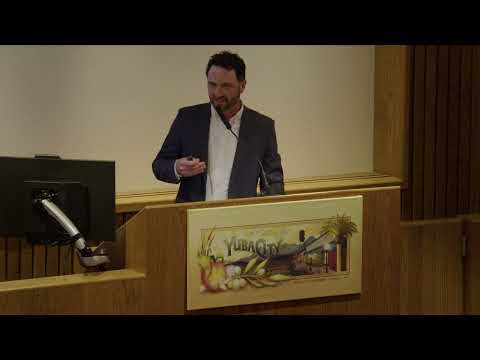
RSG and PlanWest Partners presented the draft MSR and SOI update, describing it as a countywide snapshot of eight fire and EMS providers and several county service areas including CSA C, D, F and G, the cities of Live Oak and Yuba City, Meridian and Robins fire districts, Sutter Basin Fire Protection District and the county ambulance provider. Brandon Fender, senior associate with RSG, emphasized that the document under consideration is a public review draft and recommended more time for agencies and the public to submit comments and for staff to work with the consultant on edits.
The report found that most providers are delivering services that meet current needs but identified localized capacity and fiscal stress points. Fender said the MSR did not identify “red flags that need to be addressed immediately,” but noted several specific concerns: Yuba City’s CSA G shows an annual operating deficit (presented as roughly $400,000), some stations lack modern space or apparatus, equipment is stored off-site for some districts, and parts of the county expected to grow under the CenterPoint specific plan will require additional stations and resources.
Why it matters: the MSR and SOI are LAFCO tools required under the Cortese‑Knox‑Hertzberg Local Government Reorganization Act of 2000 to guide decisions about government boundaries and service delivery. The draft’s recommendations could lead to follow-up studies or local actions — but the report itself does not change boundaries or transfer authority.
Key consultant findings and recommendations
- Growth and disadvantaged communities: RSG identified six disadvantaged unincorporated communities (DUCs) in Sutter County, four of them classified as severely disadvantaged. The consultants said existing fire and EMS infrastructure currently covers those areas but recommended monitoring capacity as development proceeds. Fender noted that some planned developments, including the CenterPoint specific plan, are not fully reflected in current census-based forecasts.
- Stations and apparatus: The MSR raised capacity issues at several stations — including a need for new apparatus and staffing at Yuba City Station 1, undersized facilities at Bridal Station 65 located in a flood plain, and space shortages at a Robins station that require off‑site apparatus storage. RSG suggested that station relocation or additional stations may be needed in southern parts of the county as growth occurs.
- Staffing and volunteer recruitment: Meridian and Robins districts show volunteer recruitment challenges and signs of fiscal strain. The consultants flagged that CSA F did not receive a SAFER grant and is reviewing staffing levels.
- Finance and funding tools: RSG reported that most providers can fund near-term operations but have limited financial flexibility. The draft cites parcel assessments, special taxes (some without cost‑of‑living adjustments), federal grants and county funds as funding sources. The report recommends exploring zones of increased benefit, special assessments or other revenue mechanisms for areas such as CSA D and CSA G to match service demands, and suggested consolidation or shared administrative services as possible long‑term options but not immediate actions.
- Ambulance and dispatch: The report recommends initiating a competitive bid for the county ambulance transport contract, which ends in 2026, and continued progress toward consolidation of public safety answering points (dispatch centers) in southern Yuba County per a 2023 Federal Engineering study.
Public comment and agency responses
Public commenters and local officials largely praised volunteers and urged caution about consolidation and data accuracy. Lindsay Moore, legal counsel for the Pleasant Grove Fire Association, asked that the record be corrected where agency call volumes appeared inaccurate and requested continued agency participation in any future consolidation discussions. Moore said, “Any decision to consolidate, modify, or change any of those CSA areas directly impacts those two communities that they’ve been serving for such a long time,” and asked that those communities retain a seat at the table.
Marsha Fritz and other residents urged clearer funding plans and pointed to the local reliance on volunteers. Steve Smith, Sutter County’s county administrator, said he had submitted comments and called the draft “helpful,” while urging caution before consolidation and noting community pride in local volunteer departments.
Commissioner questions and next steps
Commissioners pressed consultants on future growth assumptions, financial risk if grants expire, and the role of a standards-of-response coverage (SORC) study to translate MSR findings into operational recommendations. Commissioner Munger described an SORC as “a comprehensive analysis… to ensure the right resources are in the right place at the right time,” adding it is data-driven and useful if jurisdictions consider consolidation, station relocations or accreditation.
Staff recommended continuing the item to allow agencies and the public to submit written comments and for the consultant to prepare revisions and responses. The commission voted to continue the MSR and SOI item to Sept. 11 with the public hearing left open to permit additional testimony and for staff and the consultant to incorporate corrections and agency feedback.
Votes at the meeting and formal actions
The commission took three formal votes related to agenda business that afternoon: approval of minutes; appointment of a voting delegate for the CALAFCO annual conference; and continuance of the MSR public hearing to Sept. 11 with the hearing left open. All three motions passed unanimously according to the meeting record.
What’s next
LAFCO staff and RSG will review written comments from affected agencies and the public, revise the draft MSR and prepare responses for the commission’s Sept. 11 meeting. The report recommends follow‑up technical studies — including a standards-of‑response coverage study, possible financial analyses for zones of increased benefit, and a competitive procurement for ambulance service to take effect when the current agreement ends in 2026.
The draft MSR, SOI maps and related materials remain posted as a public review draft on the Sutter LAFCO website; the commission asked staff to return with a revised document and responses to comments on Sept. 11, 2025.