Get Full Government Meeting Transcripts, Videos, & Alerts Forever!
Get email alerts on the Housing topic
No spam. Unsubscribe anytime.
Regional housing assembly urges multi-pronged approach as Stafford faces growth surge
Summary
A regional advisory group told the Stafford County Board of Supervisors that the county needs more housing across the price spectrum — from preserved lower‑cost homes to additional market‑rate units and preservation programs — to handle forecast growth and ease traffic pressures linked to housing location.
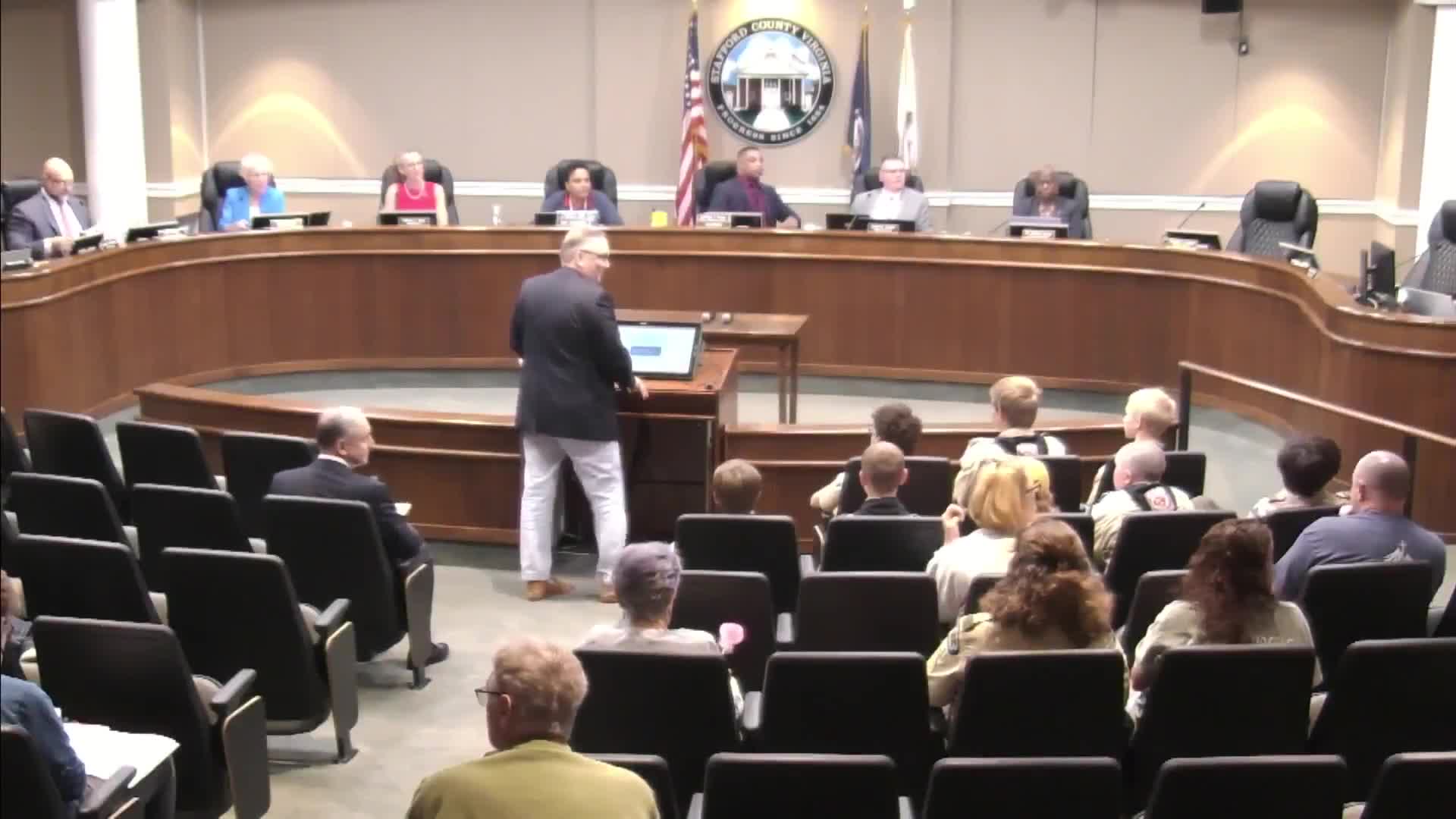
Chip Boyles, executive director of the George Washington Regional Commission, told the Stafford County Board of Supervisors on June 17 that the commission’s Regional Housing Assembly is pursuing a four‑part strategy — awareness, a one‑stop housing resource, home‑repair programs and comp plan support — to address a regional housing shortfall.
Boyles said population models his staff used show Stafford County growing from roughly 156,000 people in 2020 to about 211,000 by 2040, which would require roughly 18,000 new housing units in the county to keep pace. "Affordable housing does not equal low‑income housing," Boyles told the board, saying affordability should be measured by whether households pay more than 30 percent of income for housing and utilities.
Why it matters: County and regional planners emphasized that housing location is tightly linked to transportation. Stuart Schwartz, executive director of the Coalition for Smarter Growth, urged sitting supervisors to pair more housing with better walkability, parking‑reduction measures and transit so households do not shoulder large combined housing and transportation costs. "Housing in the right locations is the key solution to our transportation problems," Schwartz said.
The assembly’s short list includes a public awareness push, exploring a regional ‘‘one‑stop’’ housing resource (not a traditional housing authority), targeted funds for property maintenance and septic repairs and technical help for local comprehensive plan updates. Boyles said the GWRC’s housing work is currently supported by grant money from Mary Washington Health System Foundation and partnerships with local health agencies, and the commission is working to prioritize among 42 strategies identified in a 2019 regional housing plan.
Board members pressed presenters on timing and practical next steps. Boyles said the housing assembly is writing a strategic plan that will reprioritize work and provide timelines; he also said the group is available to participate in local comprehensive plan update processes. Schwartz suggested tools including accessory dwelling units, form‑based zoning, density bonuses tied to inclusionary units and community land trusts as options that can increase housing diversity without expanding sprawl.
The board did not take formal action; the item was presented as a work session update. Several supervisors said they would like a follow‑up work session to identify concrete actions the county can take as it updates its comprehensive plan.
Ending: Presenters said the assembly will return with a strategy and timeline for next steps; supervisors asked staff to coordinate follow‑up briefings as the county’s comp‑plan update proceeds.