Get Full Government Meeting Transcripts, Videos, & Alerts Forever!
Get email alerts on the Small Well Nitrate Issue topic
No spam. Unsubscribe anytime.
Small Boardman-area well with rising nitrates prompts requests for help; consortium to research funding options
Summary
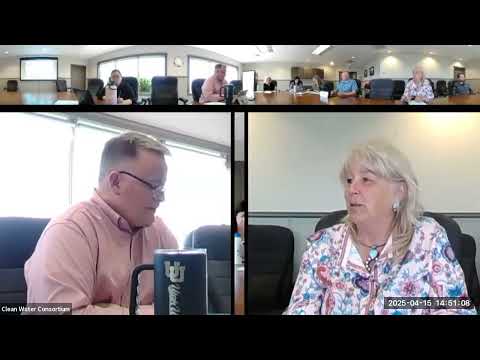
A private small-water system serving seven housing units near Herrera Park reported rising nitrate readings; the board discussed options including city hookup, SDC waivers or payment plans, state grant programs and possible acquisition of the well for testing.
Board members heard about a small community well near Herrera Park in the city limits of Boardman with nitrate readings approaching the state concern level and discussed options to help the seven affected housing units remain served with safe water.
Kelly (board member) described the situation: the well’s nitrate level reached about 9.7 parts per million in 2022 and the owner was quoted roughly $20,000 to $21,000 to connect to city water. "They were quoted at 20 k," Kelly said, summarizing a city quote; board staff later cited similar estimates. The owner asked for assistance to avoid shutting down the well or paying substantial treatment or hookup costs.
Board members noted several possible responses. Brandon (City of Boardman representative) said Boardman can waive or offer payment plans for system development charges (SDCs) in some circumstances but that such waivers are not routine and create policy precedents. "We can waive the SDC fees. It's not… typical," Brandon said. Staff suggested the owner could pursue state funding sources — for example, the Oregon Health Authority (OHA) or the Clean Water State Revolving Fund — and recommended connecting the owner with state drinking-water staff for program options.
Board members also discussed alternative technical options: deepening or rehabilitating the existing well; converting the well to a research/test well for consortium monitoring or remediation; or allowing the city to offer financing with a payment plan. Matt Jensen said consortium staff could investigate funding paths and technical solutions and connect the owner with DEQ/OHA contacts. "Bill Goss is the person… he would be a really good resource to see if there's funding available," Jensen said, referring to state drinking-water staff.
The board directed staff to collect details (well log, actual costs for abandonment or hookup, and whether a water right is attached), pursue contacts at OHA/DEQ for potential grant or loan programs, and report back to the board. Staff noted the owner had indicated willingness to cover a portion of the cost (about $5,000 up front) and asked for help with the balance.
Board members cautioned about equity and consistency: waiving SDCs for one landlord could create a precedent for many others. The board did not adopt a policy but agreed to research technical options and funding pathways and to follow up in coming weeks.