Get Full Government Meeting Transcripts, Videos, & Alerts Forever!
Get email alerts on the Nonprofit Funding Neighborworks topic
No spam. Unsubscribe anytime.
NeighborWorks CEO and board members urge council to reconsider CDBG decision that would cut Financial Wellness Center funding
Summary
NeighborWorks Toledo Region's CEO and supporters told the Housing and Community Development Committee that the agency was recommended for no CDBG public-service funding in the department’s draft allocations despite a long record of performance; department staff cited performance metrics and funds "left on the table."
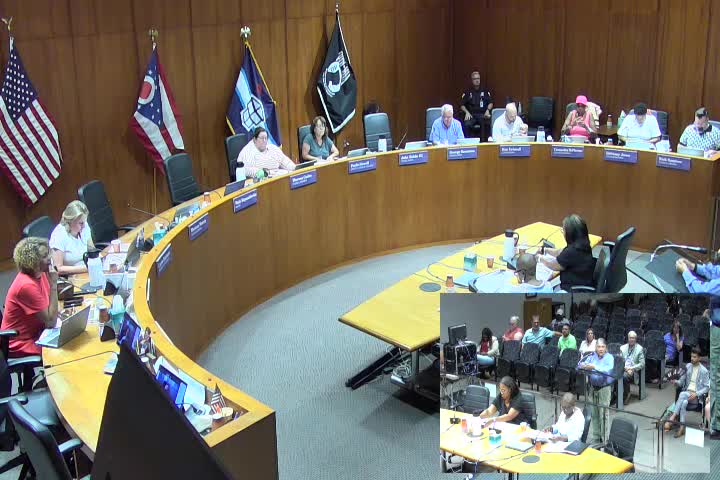
William Farnsell, CEO of NeighborWorks Toledo Region, told the Housing and Community Development Committee on July 10 that his organization — which operates a financial wellness center and other housing services — was recommended for zero CDBG public-service funding in the department’s draft allocations despite a decades-long local relationship.
"We were informed ... that NeighborWorks ... that has been in business since 02/2017 ... was recommended for 0 funding this year," Farnsell said at the meeting. He told council that NeighborWorks has been a grantee since 1982 (through predecessor organizations), provides tax preparation, job-search help, credit counseling and homeowner education, and argued the city should find a way to fund the financial wellness center.
Department response and fiscal concerns
Director Rosalyn Clemens acknowledged the organization's long partnership but said the department assesses applicants on multiple criteria — including performance metrics, timely invoicing and whether organizations leave federal grant dollars unspent. Clemens told council that the department is tracking a trend of unspent funds and reported roughly $32,000 left on the table last year and an estimated $43,000 this year across third-party partners. "We look at the performance metrics ... and who tends to leave the largest amount on the table," she said.
NeighborWorks representatives said invoicing timing and contract adjustments contributed to the shortfall. Farnsell said the organization had to lay off staff after funding changes and that invoicing for March–May remained unpaid, which complicated accounting and budget modifications.
Supporters urged partial funding
Tracy Britt, a NeighborWorks advisory-board member, asked council to consider a partial allocation rather than cutting the group entirely: "Let's not go from x to 0. Let's go x to somewhere in the middle and let them stand in the proving ground and show you that your money is not wrongly placed." Council members said they would review financial reconciliations and data; Clemens said staff can provide reconciliation information to demonstrate which organizations left funds unspent and why.
Context and next steps
Clemens and staff said the citizen review committees, internal review and the department’s monitoring process are intended to ensure fiscal compliance; the department also offers technical assistance and the Capacity Building Institute to help organizations improve grant readiness. Staff told council they are open to working with members to reallocate funds if council seeks adjustments but emphasized HUD compliance and fiscal discipline.
Ending: Councilmembers asked staff for follow-up data on carryovers, invoicing status and the performance comparisons Clemens referenced; staff said they would provide the requested reconciliations and meet with council leadership to consider any reallocations before the HUD submission deadline.