Get Full Government Meeting Transcripts, Videos, & Alerts Forever!
Get email alerts on the Cdbg Consolidated Plan topic
No spam. Unsubscribe anytime.
Toledo committee previews 2025–29 consolidated plan, recommends CDBG allocations prioritizing housing and parks
Summary
The Housing and Community Development Committee reviewed the draft 2025–29 consolidated plan and the 2025–26 action plan, proposing CDBG, HOME and ESG spending that emphasizes affordable housing, neighborhood parks and program administration amid federal funding uncertainty.
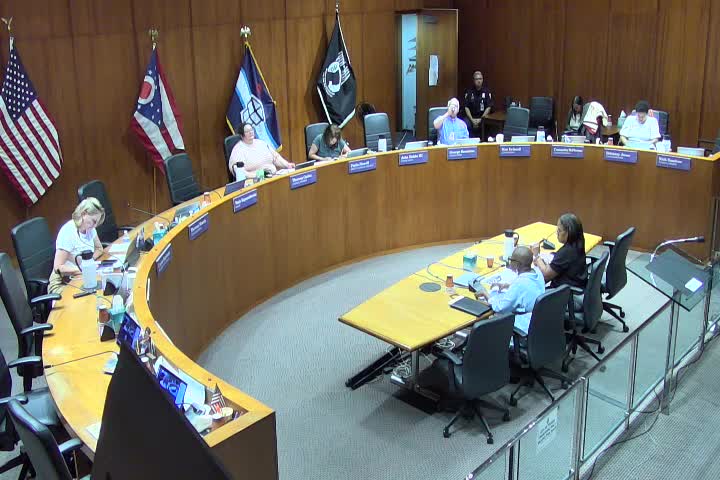
The Toledo City Council Housing and Community Development Committee reviewed the city’s draft 2025–29 consolidated plan and the 2025–26 annual action plan on July 10, with department staff recommending a budget that directs new and carryover Community Development Block Grant (CDBG) dollars primarily to affordable housing and neighborhood parks.
The plan, presented by Rosalyn Clemens, director of the Department of Housing and Community Development, Monica Brown, the department’s grants manager, and consultant Brian Hall, lays out how the city will allocate federal entitlement grants administered by HUD — CDBG, HOME and ESG — for housing and community development activities. "The funding that we get from these three programs support about 97% of the work that this city does for housing and community development," Clemens said.
Clemens told the committee the city faces an $87,638 reduction from last year in its 2025 CDBG allocation. The department reported a 2025 CDBG annual allocation of $7,046,960 and $728,007.99 in carryover, for total resources of $7,775,007.59. The HOME allocation was listed as $1,965,007.24 with a large carryover of $3,787,820; the ESG allocation was reported at $627,043 (a $19,386 reduction).
Why it matters: HUD entitlement grants fund most of Toledo’s housing programs, and the department said proposed federal cuts at the national level could make future planning more difficult. Clemens noted that HUD caps CDBG spending on public services at 15% of the annual allocation, forcing the department to choose among many applicants for limited funds.
Key priorities and proposed allocations
- Affordable housing: The department recommended dedicating the full carryover plus part of the annual allocation to affordable housing preservation and production. Staff proposed $2,300,000 of carryover dedicated to affordable housing (about 40% of available resources including carryover), a $396,821 rooftop repair program allocation, and a $300,000 annual allocation to launch a flexible "housing preservation fund" (staff combined the $300,000 with $728,799 carryover to describe a flexible preservation pot of $1,028,799). Clemens highlighted a committed project, the Thurgood Marshall School adaptive-reuse project, for which the department said it committed about $3,000,000 in HOME funds to bring 52 senior units online.
- Neighborhood parks and community facilities: Staff proposed $1,750,000 (about 23% of resources) for parks and playground upgrades in low- and moderate-income areas and related facility improvements, and $200,000 programmed for Section 108 debt service tied to previously closed loans for center upgrades.
- Planning and administration: About $1,400,000 (roughly 18%) was proposed for planning, administration and staffing for the department, which the director said supports monitoring, HUD reporting and technical assistance.
- Public services: The plan lists $1,056,247 (about 15% of allocation including carryover) for public services. Clemens reiterated the HUD public-service cap, explaining that the department received roughly 35 applications this year requesting about $4.7 million from CDBG public-service lines.
Identified public-service award recommendations (excerpt from staff list): Arts Commission $20,000; Cherry Street Mission $50,000; Compassion Health of Toledo $120,000; Connecting Kids to Meals $250,000; Grace Community Center $52,000; Legal Aid of Western Ohio $125,000; Martin Luther King Kitchen for the Poor $75,000; Neighborhood Health Association $154,647; Sofia Contero $145,000; The Neighborhood Church $14,800; Toledo Grows $50,000 (total public-service line: $1,056,247). Clemens told the committee that those figures reflect allocations that fit under the 15% cap when calculated against the annual allocation.
HOME and ESG highlights
Clemens said HOME funds will continue to support rental housing development, down-payment and closing-cost assistance, CHDO set-asides and single-family rehab; the department reported a sizable HOME carryover tied to delayed large rental projects. The ESG allocation was proposed to fund emergency shelter and homelessness services, with $150,000 for Beach House and other allocations to local providers.
Process, engagement and next steps
Monica Brown described the department’s public process: mandatory applicant orientations, a 30-day public comment period (April 23–May 23), three public hearings and a citizen review process using two review committees (one for homeless service providers and one for non-homeless service providers). Brown said the department received 35 CDBG applications requesting roughly $4.7 million, one HOME application ($250,000 requested) and 10 ESG applications requesting about $1.1–$1.2 million.
Consultant Brian Hall summarized the needs assessment and community engagement used to build the consolidated plan: a literature review, nearly 50 consultations with agencies and community groups, public meetings and an online survey with 590 responses. Hall said recurring priorities across meetings and the survey were affordable housing, housing repair and preservation, youth programming, workforce development and infrastructure (streets, sidewalks and drainage).
Public comments and oversight
Committee members and staff said they will continue to refine recommendations. Clemens asked the committee to schedule any final changes quickly; the department must submit the consolidated plan to HUD online by Aug. 16 and sought an approved ordinance by Aug. 10 to meet that deadline.
Ending: Department staff said they will work with council on any post-hearing adjustments and provide data on program performance and carryovers requested by council members.