Get Full Government Meeting Transcripts, Videos, & Alerts Forever!
Get email alerts on the General Plan 2045 topic
No spam. Unsubscribe anytime.
Hawaii County committee amends draft General Plan 2045 after hours of public testimony; game management, agriculture and notice gaps raised
Summary
A Hawaii County Council policy committee on Tuesday, July 9, amended Bill 66 — the draft County of Hawaii General Plan 2045 — to incorporate planning‑commission recommendations and set a timetable for further review after more than an hour of public testimony opposing the proposal.
A Hawaii County Council policy committee on Tuesday, July 9, amended Bill 66 — the draft County of Hawaii General Plan 2045 — to incorporate planning‑commission recommendations and set a timetable for further review after more than an hour of public testimony opposing the proposal.
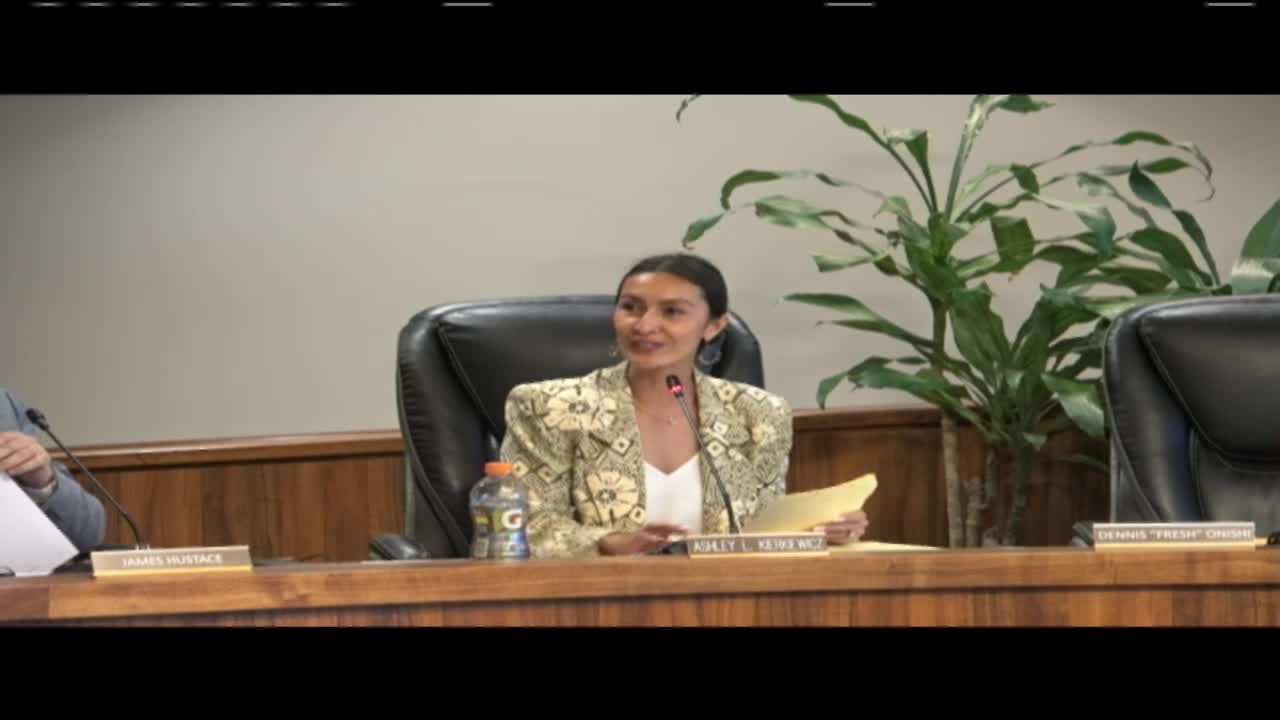
The Policy Committee on Planning, Land Use and Economic Development met in Hilo and Kona on July 9. Chair Ashley Kerkowitz said the draft plan, if adopted, would become “the law of the land” and noted it contains four chapters with 11 goals, 49 objectives and 398 actions.
The committee first took public testimony on Bill 66, then moved and seconded a motion to forward the bill to the full council with a favorable recommendation (motion moved by Councilmember Holaka Inaba; seconded by Councilmember Matt Keneili). The committee later voted to amend Bill 66 to include the contents of Communication 372.1 — a package the planning director transmitted that incorporates recommended edits from both Windward and Leeward planning commissions. The amendment, moved by Councilmember Heather Kimball and seconded by Inaba, carried on a 6‑0 voice vote; Councilmembers Michelle Galimba, Jennifer Kagiwara and Dennis Onishi were excused.
Why it matters: the general plan would set the county's long‑range direction on land use, conservation, agriculture, cultural stewardship and infrastructure; residents told the committee the draft as written could change the island's agricultural land base, restrict traditional hunting, fishing and gathering practices and lacks clear definitions and public notice.
Public testimony: dozens of speakers across Hilo, Kona and Zoom urged changes or rejection of the draft. Recurrent concerns included a lack of clear definitions for categories such as “natural,” potential conversion of agricultural land, and a perceived absence of enforceable game management provisions.
Donna Grama, a Hilo testifier, opened public testimony by saying she opposed the plan. “The general plan 2045 is not the usual general plan to talk about infrastructure and roads,” she said. “It could allow rezoning without community consent.”
Several speakers — including members of the Game Management Advisory Commission (GMAC) — urged explicit game‑management language in the plan. Robert Durr, identified in testimony as a District 1 GMAC commissioner, told the committee: “We need a game management plan. Currently, there's no management for game animals,” and urged glossary entries for terms such as “traditional and customary rights” and “sustainable practices.” Tayson Wong Chung, District 2 GMAC commissioner, said sustaining local food systems and protecting hunting, fishing and gathering access are priorities for community resilience.
Multiple testifiers, including Rebecca Melendez and Kimberly Hill, said the draft’s map categories would convert large tracts of extensive agricultural land to a “natural” designation without explaining what that would allow or prohibit. “What do they mean by natural?” Melendez asked. Several speakers said the planning department should retain agricultural lands for food production to reduce dependence on imports.
Other testimony raised procedural and notice problems. Chuck Flaherty, representing Sierra Club Hawaii Island Group, said the planning department had not sent informational update emails to registered participants and that draft 2 of the plan had not been clearly circulated. “No informational emails have been sent to participants,” he said, adding that short notice of the meeting reduced the public’s ability to prepare testimony.
Several speakers urged stronger incorporation of Native Hawaiian cultural practices and local decision‑making. April Lee said Hawaiian leadership and cultural protocols were not adequately represented in the draft. Multiple speakers also questioned the plan’s framing around climate change and said the county should not cede authority to outside entities they described as “stakeholders” without clearer local control language.
Committee response and next steps: Chair Kerkowitz acknowledged the scale of the document and the volume of public input, and said the committee will continue detailed review. Committee members agreed to reconvene July 29 at 9 a.m., when Planning Director Jeff Darrow and staff will present the plan’s introduction and first chapter and the committee will resume deliberations. The vote to amend Bill 66 to incorporate Communication 372.1 makes that version the working draft (draft 2) for upcoming discussions.
Actions recorded: the committee recorded a passed amendment to Bill 66 (to incorporate Communication 372.1) by a 6‑0 vote; three councilmembers were excused. An earlier motion to forward Bill 66 to the full council with a favorable recommendation was made (mover: Councilmember Holaka Inaba; seconder: Councilmember Matt Keneili) and remained on the floor as the committee moved to amend and continue deliberations.
The committee recessed until July 29 at 9 a.m. for the next presentation and discussion of the draft plan.