Get Full Government Meeting Transcripts, Videos, & Alerts Forever!
Get email alerts on the Land Use Replats Deed Restrictions topic
No spam. Unsubscribe anytime.
Planning commission denies Alberta Villas replat, defers Crossing Place after neighborhood deed-restriction disputes
Summary
The Houston Planning Commission on July 10 denied a replat for Alberta Villas after the city attorney’s office identified conflicts with separately filed deed restrictions, deferred a commercial replat at Crossing Place to give the applicant and neighbors more time to confer, and approved two replat applications on Mayflower Street despite resident objections.
The Houston Planning Commission on July 10 denied a replat for Alberta Villas after the city attorney’s office identified conflicts with separately filed deed restrictions, deferred a commercial replat at Crossing Place to give the applicant and neighbors more time to confer, and approved two replat applications on Mayflower Street despite opposition from residents.
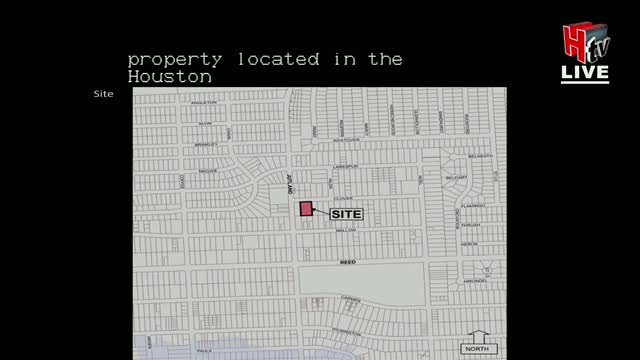
The commission’s action on Alberta Villas came after Lone Star Legal Aid attorney Amy Denn told commissioners that the proposed replat would subdivide an existing lot into six new lots with average sizes between about 2,100 and 4,000 square feet, below the minimum called out in the neighborhood’s restrictions. “We brought that to the attention of the planning commission in the hope that they will honor this subdivision’s restrictions and comply with Texas law,” Denn said. City legal staff told the commission late the day before that their review found the application violated those deed restrictions. After discussion, Commissioner Hines moved to disapprove the replat; the motion was seconded and the commission voted to deny the application.
Why it matters: neighbors and civic groups repeatedly raised the same theme across multiple replat cases — that separately filed deed restrictions established decades ago should limit new higher-density development. Commissioners and staff repeatedly told speakers that where legal review finds a restriction does not apply (for example, because lots were sold prior to the restriction being recorded), the commission’s authority to deny a plat is limited.
What the commission did and said - Alberta Villas replat (Item 72): Staff recommended a two-week deferral to allow additional legal review. After public comment and a legal opinion that the replat would violate separately filed restrictions, Commissioner Hines moved to disapprove; the motion was seconded and the application was denied. Legal staff advised that the application, as submitted, conflicted with the neighborhood’s recorded restrictions.
- Crossing Place / “Fowlville Crossing Place” (Item 73): Staff changed its initial recommendation from approval to deferral after residents raised concerns about notice, traffic, lighting, environmental impacts and preservation of mature trees. The commission ultimately voted to defer the item and left the public hearing open so neighbors could review revised materials and the applicant could meet with them.
- Mayflower Manor and Mayflower Residence (Items 74–75): Both replats generated lengthy public opposition from residents of East Sunnyside Court, who said their community has long-standing single-family restrictions and that new multiunit development would harm neighborhood character and safety. City legal staff reported these particular parcels did not violate applicable deed restrictions; the commission voted to approve Mayflower Manor and Mayflower Residence per staff recommendations (motions carried by recorded voice vote).
Community concerns and developer response Neighbors at multiple public hearings raised common concerns: insufficient notice of developments, loss of mature trees, potential groundwater risk from commercial uses (notably for proposed gas or retail sites), traffic and emergency-access impacts on narrow streets, and the cumulative effect of adding multifamily or higher-density housing to long-established single-family neighborhoods. Several residents urged stronger city processes to ensure developers identify and clear applicable deed restrictions before filing.
Applicants and their representatives said they were trying to design projects that would be compatible with existing neighborhoods. For example, the applicant for the Crossing Place replat said the plan would concentrate commercial frontage on the major road, avoid driveways onto the neighborhood street, and preserve trees where feasible. At the Alberta Villas hearing, legal counsel for the applicant was not present when the commission discussed the matter.
City planning response: deed restriction affidavit and process Earlier in the meeting City Planning and Development Director Von Tran announced a new deed restriction compliance affidavit that the planning department will require for certain administrative applications (amending plats, development plat variances, parking variances, and landscape variances). Tran said the affidavit “must be signed, notarized, and submitted with the applications” to help staff screen applications and speed administrative reviews. Planning staff and legal said the affidavit does not replace full legal review for replats that require public hearings; such replats remain subject to legal analysis of separately filed restrictions.
What’s next - Developers and neighbors in the Alberta Villas and Crossing Place matters were told the commission’s decisions and deferrals will give applicants the chance either to withdraw or to return with revised submittals and (where applicable) a clearer legal position about restrictions. - Planning staff said they will continue coordinating with the city legal department and district council offices and encouraged neighborhoods to pursue additional protective measures (such as minimum-lot-size or prevailing building-line requests) if they want to limit future subdivisions.
Ending: The commission handled more than a dozen plats and variances at the July 10 meeting; several land-use items were deferred for two weeks to allow additional legal review or applicant–neighborhood coordination.