Get Full Government Meeting Transcripts, Videos, & Alerts Forever!
Get email alerts on the Child Protection topic
No spam. Unsubscribe anytime.
First Judicial District CASA asks county to maintain funding to support child advocacy and visitation services
Summary
The First Judicial District CASA Association described its supervised visitation, child advocacy and forensic interview services and requested roughly $71,000 in county support to serve about 500 Leavenworth County clients last year.
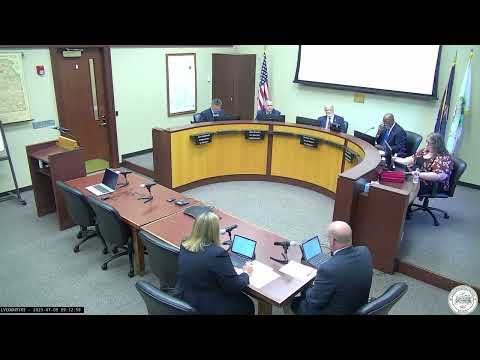
Kelly Meyer, executive director of the First Judicial District CASA Association, presented the organization's services and funding request to the Leavenworth County Commission, asking the county to continue its financial support for CASA’s child advocacy, supervised visitation and child-exchange programs.
Meyer described the child advocacy center in Leavenworth, which provides forensic interviews for children aged roughly 3 through 18 and records interviews for use by law enforcement, the Department for Children and Families and prosecutors. She said CASA provides on-site therapy through a partnership with the Guidance Center and coordinates medical exams with Children’s Mercy. CASA’s advocates also provide long-term case advocacy for children the court has identified as a “child in need of care,” often remaining assigned for the life of a case until permanency is achieved.
Financial request and scale Meyer said CASA’s request to the county was in the low $71,000s (presenter described the figure as approximately $71,000). She noted CASA served about 500 clients from Leavenworth County last year and described the per-client county support as roughly $130 for services that can include advocacy, supervised visitation, forensic interviews and referrals for medical or counseling needs.
Partnerships and outcomes Meyer said CASA trains volunteers using the National Children’s Advocacy Center curriculum and emphasized the program’s role as the judge’s “eyes and ears” — volunteers report to judges and attend training sessions that include visits from the chief judge. When asked about CASA’s relationship with law enforcement and the child-protection agency, Meyer said the county’s law-enforcement agencies and the Department for Children and Families participate on the multidisciplinary team and watch forensic interviews in real time. She also said CASA tracks outcomes and referral needs but warned that federal and regional grant funding has been reduced and that CASA’s state and federal funding streams may be uncertain going forward.
Commissioner questions focused on CASA’s caseload, overlap with juvenile-corrections services and funding risks. Meyer said CASA does not frequently recommend termination of parental rights — it is used as a last resort — and that Judge Loudon regularly reads CASA reports and engages with volunteers. Commissioners thanked CASA for its work and said they would consider the funding request during budget discussions.