Get Full Government Meeting Transcripts, Videos, & Alerts Forever!
Get email alerts on the Mental Health Services topic
No spam. Unsubscribe anytime.
Guidance Center seeks continued county funding as it expands under CCBHC model; commissioners ask for service and cost details
Summary
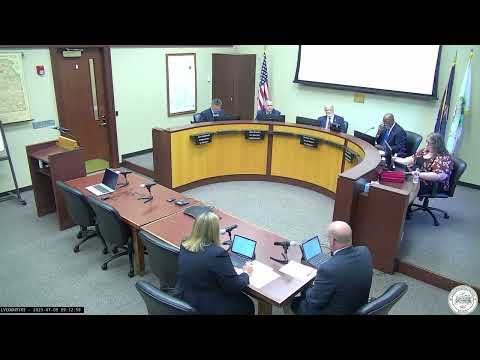
The Guidance Center told the Leavenworth County Commission it needs continued county funding as it expands under the state’s Certified Community Behavioral Health Clinic (CCBHC) model and plans to add staff and services across three counties.
The Guidance Center asked the Leavenworth County Commission to continue stable funding for its Leavenworth clinic and crisis stabilization services, describing a recent shift to the Certified Community Behavioral Health Clinic (CCBHC) model and plans to expand staff and services across Atchison, Leavenworth and Jefferson counties.
Stevie Durkin, chief executive officer of the Guidance Center, told the commission the CCBHC model brings new state funding that pays per service rather than via block grants and allows the center to expand services for uninsured residents. “We are still a community mental health center, but the organization that I came back to last year is now a certified community behavioral health clinic,” Durkin said.
Paul Slobodnick, the center’s chief financial officer, described the organization’s recent finances and program costs. He said the organization’s 2024 budget was roughly break-even, with an approximate $19.5 million budget and a small surplus. He identified two programs with notable costs: the crisis stabilization (scribe) center in Leavenworth, costing about $1.1 million (largely grant-funded), and public transportation costs around $983,000. Slobodnick said the CCBHC payment model should increase revenue as the organization expands services but that the Guidance Center remains dependent on county support to maintain solvency.
Service expansion and staffing Durkin and Slobodnick said the Guidance Center projects adding about 75 positions systemwide to meet CCBHC reporting and service requirements; the presenters said the majority of those positions would be community-facing (case management, hospital liaisons, clinicians) and that they expected most of the new roles to be located in Leavenworth County, with a follow-up breakdown to be provided to commissioners upon request.
Access and fees Commissioners asked how the center manages care for uninsured patients. Durkin said a sliding-fee discount is used and that the lowest fee currently can be as low as $15 when a patient provides financial documentation; she said the full fee for an appointment can be as high as $185 in some cases when documentation is not immediately available. Commissioners pressed for clarity on frequency and causes of complaints that appeared in public reviews; the center said it plans to institute ongoing patient feedback surveys and to invest in staff and electronic record tools to improve access and responsiveness.
Quality, partnerships and jail/field responses Durkin described existing models the Guidance Center operates or has supported, including a co-responder model with law enforcement and a jail liaison program providing therapy and linkage to care for incarcerated individuals. She said the center is building partnerships with medical providers and community organizations and noted progress in Kansas’s mental-health rankings since adoption of the CCBHC model.
Request and next steps Durkin asked the commission to consider continuing the same county funding level as last year to support the Leavenworth clinic and crisis stabilization services. Commissioners thanked the presenters and requested follow-up information: a county-specific breakdown of how many of the projected new positions will be placed in Leavenworth County; more detail on the sliding-fee schedule and how often full fees are charged; and additional quality metrics the Guidance Center will use to measure access and outcomes.