Get Full Government Meeting Transcripts, Videos, & Alerts Forever!
Get email alerts on the Charter Review topic
No spam. Unsubscribe anytime.
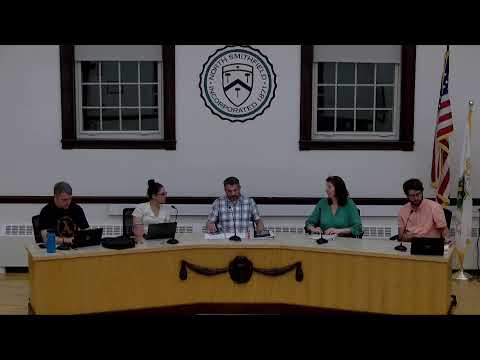
North Smithfield charter review committee recommends timeline, flags quorum, bond and wording issues
Summary
At its July 9 meeting the North Smithfield Charter Review Committee discussed modernization of the town charter, state-law cross-references, quorum and petition thresholds, budget timing, staggered terms and the elected vs. appointed town administrator. The committee voted to recommend a timeline for draft changes to the Town Council.
The North Smithfield Charter Review Committee on July 9 voted to recommend a timeline to the Town Council for drafting, public review and potential referendum questions to update the town charter.
Committee members spent the meeting reviewing Articles 1–5 and discussed several recurring issues: modernizing archaic language (for example references to faxing and newspaper notice), clarifying how the charter should reference state law, adding or tightening deadlines for budget submissions and audits, and whether petition and special meeting quorum thresholds (notably the charter’s 400- and 500-qualified-elector thresholds) remain practical. The committee also debated revisiting past ballot questions, including a failed 2018 proposal about changing the town administrator/manager structure and a voter-approved open-space bond from 02/2007 that committee members said has not been fully expended.
Why it matters: committee members said cleaning up legal language and adding clearer deadlines would reduce confusion for residents and for town departments, improve compliance with changing state law, and make local governance more transparent. They flagged multiple charter provisions that have not been modernized since adoption and that sometimes conflict in wording or practice with later state law or administrative practice.
Most important outcomes - The committee voted, by voice vote, to recommend a timeline to the Town Council to finalize proposed charter changes and, if needed, present referendum questions for the 2026 election cycle. The motion passed; the meeting record shows an affirmative voice vote but does not include a roll-call tally. - The committee identified several high-priority topics for follow-up: clarifying the charter’s relationship to state law, defining or consolidating terms (for example “qualified elector”), modernizing notice methods (website vs. newspaper), inserting clearer budget timetable requirements (including a suggestion to require budget “actuals” updated through May 30 for council deliberations), adding or clarifying audit language (change “may” to “shall” in audit provisions), and setting time frames for using voter-authorized bond proceeds.
Discussion details and examples - State-law cross-references: Members discussed using explicit statutory references (for example citing a relevant Rhode Island General Law section) so future legislative changes do not require repeated charter amendments. The committee noted General Code — the municipal code company referenced by the town solicitor — could identify state-law cross-references for the committee.
- Quorum and petition thresholds: The charter currently requires 500 qualified electors to place a question by petition and 400 qualified electors to constitute a quorum at a special town meeting in some sections. Members questioned whether North Smithfield has a single public facility to seat 400 people and suggested those numeric thresholds may be historical relics; they asked staff to investigate when and why those numbers were adopted.
- Budget timing and process: Committee members discussed Article 3 provisions on budget submission deadlines (for example, operating budget requests due “no later than the first Monday in February”) and said the council lacked up-to-date “actuals” during recent budget deliberations until late May. Several members suggested adding a charter requirement that budget “actuals” be updated through May 30 to give the council current figures before adoption.
- Town administrator vs. town manager and qualifications: The group reviewed prior ballot results. Members discussed resumed debate over whether the town should have an appointed manager or an elected administrator, how tightly to define qualifications, and how that choice would interact with term lengths for councilors. The minutes show the 2018 town-manager question was rejected (committee noted a roughly 66.5% reject / 33.5% approve result for a related measure), and members discussed using surveys and public education before reintroducing such a question.
- Bonds and timelines: Members cited a voter-approved open-space bond from February 2007 and a police-station bond from February 2014 as examples where voter-authorized funds had not been fully expended for many years. Multiple committee members urged adding language that requires reasonable time frames for implementing bond approvals so voters’ intent is not left indefinitely unfulfilled.
Votes and formal actions - Motion: "Recommend the draft timeline (as amended at the meeting) to the Town Council for adoption and to guide the committee's schedule for drafting, public outreach and final recommendations." Mover: not specified in the record. Second: not specified. Outcome: approved (voice vote; roll-call not taken). Note: at the meeting the chair moved, someone seconded and the minutes record “Aye” as the prevailing response. - Motion: Adjourn. Outcome: approved (voice vote).
Speakers and sources Speakers heard during the meeting included the committee chair (identified in the transcript as the meeting chair and speaker for procedural motions) and committee members identified by name during roll call: Mr. Burnap; Mrs. Newberry; Mrs. Cristoforo; Mr. Newton; and Rebecca (full name not recorded in the transcript excerpt). The transcript also referenced (as participants or external contacts) the town solicitor, former Charter Review Commission chairman Tony Gerten, Town Administrator/Gibbs (mentioned as a future participant for administration recommendations), Town Clerk Joanne, town planner Mark, and members of the Town Council including Kim, John and Claire. The committee discussed General Code (municipal code company) and the Secretary of State’s voter materials as sources for public-education materials. Quotations in this report are paraphrased unless specifically attributed to a named committee member listed in the meeting’s speaker roster.
Next steps and scheduling The committee set its next meeting for Wednesday, August 27 (date and year as on the meeting calendar) and agreed to continue work on Articles 1–5 and then move into Articles 6–10 in future sessions. The committee instructed staff to: (1) ask the town clerk or Secretary of State for historical referendum tallies (including the 2018 votes referenced in discussion); (2) follow up with the town solicitor on statutory cross-references and whether a single ballot question to "modernize language" would be legally permitted; and (3) request a cost estimate from General Code to perform a statutory compliance/code update review. The committee discussed preparing public-education materials and noted that budget for voter outreach should be considered in the 2026–27 town budget cycle.
Ending Committee members emphasized the goal of improving charter clarity, minimizing voter confusion, and preserving appropriate public accountability for budget and bond decisions. The meeting adjourned after the motions above were approved.