Get Full Government Meeting Transcripts, Videos, & Alerts Forever!
Get email alerts on the Animal Control Chickens topic
No spam. Unsubscribe anytime.
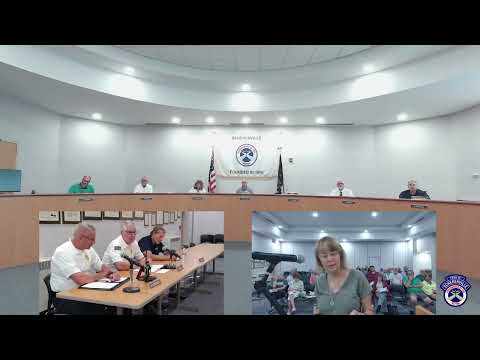
Schererville council denies ordinance to allow backyard chickens on 1‑acre lots after mixed public comment
Summary
The council voted to deny Ordinance 20‑27, which would have amended the town animal-control code to permit chickens and ducks on lots larger than one acre with setbacks and sanitary requirements. Residents offered both support and objections at the July 9 meeting.
The Schererville Town Council voted to deny Ordinance 20‑27, a proposed amendment to the town’s animal-control code that would have allowed chickens and ducks on parcels larger than one acre, after an extended public comment period and council debate at its July 9 meeting.
The ordinance as presented would have permitted poultry on one‑acre properties subject to restrictions including no roosters, a requirement that coops and runs remain sanitary, and setback rules that keep a coop and run 60 feet from neighboring living structures (reducible to 40 feet if screened by a minimum six‑foot privacy fence or natural screening). Town manager Jim Gorman summarized the measure during the meeting: "This ordinance will allow chickens and ducks in the area with larger than 1 acre of land with restrictions such as no roosters must remain 60 feet from the neighboring living structures... A coop and run must be provided and must remain in sanitary conditions."
Why it matters: supporters said modest, well‑regulated backyard flocks provide humane egg sources and educational opportunities; opponents raised concerns about noise, odor, disease risk, enforcement and property‑value impacts. The council’s decision means the existing code remains in effect and no amendments in the ordinance are adopted.
Public testimony was mixed. Residents who opposed the change cited nuisance, health and enforcement concerns. Kristine Nance Morovich, who identified herself as providing veterinary sources, raised disease‑spread concerns: "It is risky to raise multiple species of poultry... This is how deadly poultry diseases get started, such as the END and avian influenza." Several speakers described past problems with poultry wandering into neighboring yards and argued for registration, permitting and stronger distance requirements.
Other residents urged allowance for responsible owners. Kevin Dean said backyard chickens can be a humane alternative to some commercial production and noted other wildlife already present in town: "If someone wants to put chickens in my backyard because of this, I'd put them in my garage. ... Why are you picking on chickens because someone wants to be able to afford eggs?" Multiple speakers described coops they had visited with no odor or nuisance when properly kept.
Council members debated scope, enforcement and neighbor impacts. Councilman Tom Schmidt said the town serves about 31,000 residents and expressed concern that the ordinance would affect only a small portion of that population while altering residential character: "Cherryville is not a rural area... This ordinance, I feel, is a bad ordinance." Councilman Rob Getzloff also opposed the ordinance, saying constituent contact convinced him it was not in the townwide interest. Councilman Caleb Johnson and Councilman Kevin Connolly initially voted in favor of adoption, but after procedural clarification the council made and approved a motion to deny adoption. The final roll call on the motion to deny was Councilwoman Robin Arbonitis — yes; Councilman Tom Schmidt — yes; Councilman Rob Getzloff — yes; Councilman Caleb Johnson — no; Councilman Kevin Connolly — no. The motion to deny passed 3–2, and Ordinance 20‑27 was not adopted.
Council members asked for clearer enforcement language, permitting processes and monitoring responsibilities if the subject is reconsidered: several said the ordinance did not specify whether code enforcement or animal control would be responsible, or whether annual permits and inspections would be required.
The council president closed the discussion after the denial. There was no further action on animal‑control code changes at that meeting.