Lifetime Citizen Portal Access — AI Briefings, Alerts & Unlimited Follows
Workforce board hears Jobs First allocations, career‑passport funding and federal funding risks
Loading...
Summary
Staff updated the board on Jobs First allocations, a $25 million career‑passport initiative, $15 million for credit for prior learning, fire recovery pass‑throughs and contingency planning for possible federal funding cuts and new work requirements for Medi‑Cal and CalFresh.
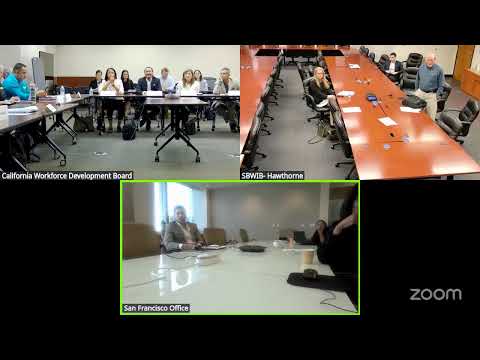
Board staff and agency designees briefed the California Workforce Development Board on state budget allocations, the Jobs First regional rollout, and federal policy risks that could reshape workforce funding.
Abby Sneed, the Labor and Workforce Development Agency designee, and other staff outlined items from the enacted budget and current program work: a $25 million allocation for a statewide career‑passport effort, $15 million one‑time (and a separate $5 million ongoing item) aimed at expanding credit for prior learning, regional Jobs First awards soon to be announced, and contingency planning for possible federal funding changes.
“Until I hear otherwise, status quo,” a staff member said about ongoing federal rules. But staff and board members emphasized the need to prepare for multiple scenarios, including a major block‑grant proposal from the federal administration that could consolidate or reduce WIOA funding and programs. The labor agency said it is assembling contingency plans and working with local boards to model impacts.
Key budget and program details discussed in the meeting included:
- $25,000,000 allocated for a career passport to record and transfer skills and credentials. The chancellor’s office will lead implementation, beginning with community colleges and eventually expanding to broader use.
- $15,000,000 one‑time for credit for prior learning and $5,000,000 ongoing to help scale recognition of skills earned outside traditional degree paths.
- Remaining California Jobs First discretionary funds: staff said roughly $80,000,000 is available to program this year and about $40,000,000 in the subsequent year. Staff flagged that the Jobs First investments will focus on “accelerate and bet” sectors such as advanced manufacturing, ag tech, life sciences, semiconductors/microelectronics and space/defense.
- A $20,000,000 pass‑through for a San Pedro training center (ports‑related training) and $5,000,000 in reduced pass‑through funding for LA and Ventura fire recovery (the item had previously been proposed at $50,000,000 and was reduced during budget negotiations).
Board members asked for summaries and 1‑page briefs to support outreach to federal policymakers and local partners. Several members urged the board to assemble talking points to explain the economic case for workforce investments to congressional offices if federal consolidations or cuts proceed.
The staff also updated the board on other initiatives tied to the master plan for career education: an ongoing $1.5 million allocation to support a state workforce and education council (a convener placed in the governor’s operations office), and philanthropic and consulting support for regional coordination pilots. Staff said 13 regional visits (a “roadshow”) will gather local best practices and employer intelligence to guide investments and contingency plans.
Abby Sneed and other agency speakers flagged two federal‑policy areas the board is tracking closely: (1) proposals to add work requirements for Medi‑Cal and CalFresh recipients (staff are discussing implementation approaches and exemptions with the Health and Human Services agency); and (2) potential federal restructuring of WIOA titles that could reduce funding by parts of the White House proposal.
Several board members volunteered to be more active in regional Jobs First site visits and asked staff to circulate agendas and short summaries so board members can plan participation.
No formal action was taken on these program updates during the meeting; staff said they will circulate materials and solicit participation for the regional engagements and the drafting work tied to the high‑road resolution.