Get Full Government Meeting Transcripts, Videos, & Alerts Forever!
Get email alerts on the City Innovation topic
No spam. Unsubscribe anytime.
City innovation director outlines pilots on clinics, homeownership aid, AI and receivables
Summary
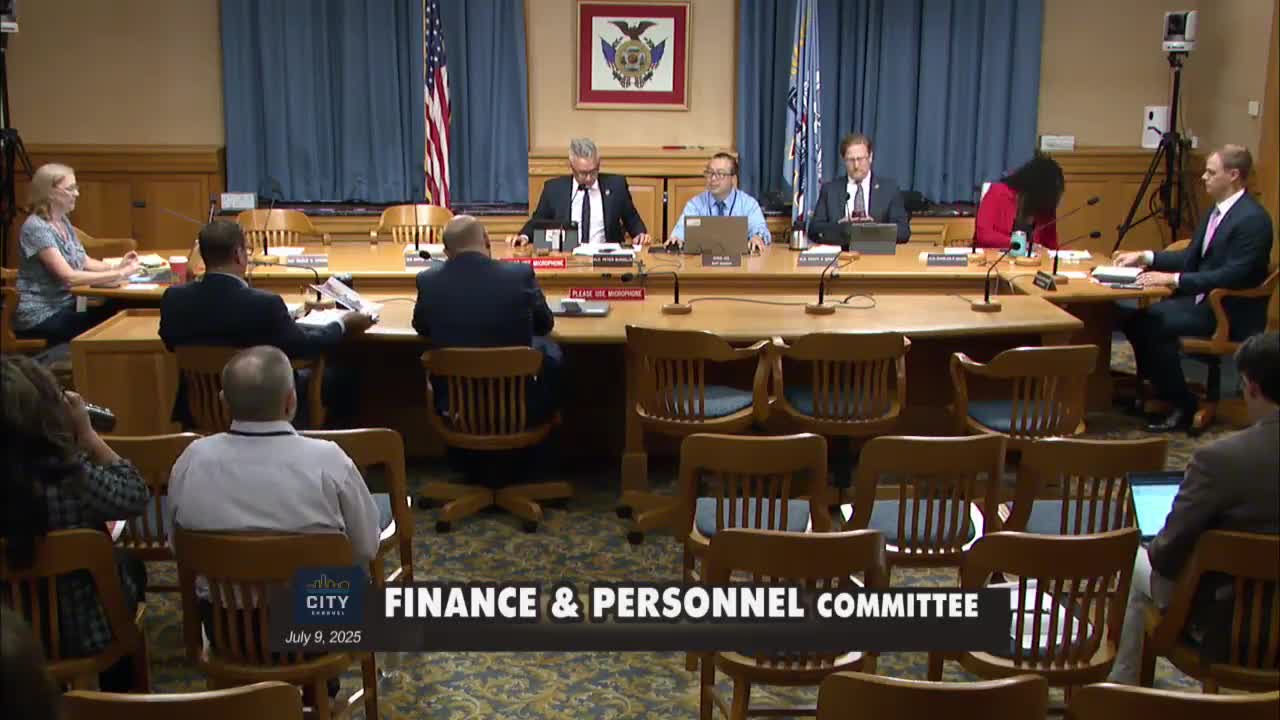
Jim Bull, the city’s innovation director, updated the Finance and Personnel Committee on projects ranging from employee health clinics and a possible home down‑payment advance program to AI pilots and efforts to collect outstanding receivables.
Jim Bull, director of the Office of Innovation in the Department of Administration, briefed the Finance and Personnel Committee on the office’s first year and a slate of initiatives the administration says aim to bolster revenue and produce operating efficiencies.
Bull said the position was created to pursue five broad priorities and described projects now underway or in early exploration, from expanding employee and “fast care” clinics to a proposal to advance city residency incentive payments to employees buying homes. "This position had probably 5 major buckets," Bull said, describing the job’s charge to pursue revenue generation, revenue saving and operational efficiency.
The update matters because the administration is working within a continuing structural budget shortfall and seeks low‑cost strategies that could reduce operating costs, generate revenue or increase service access. Several items Bull described could affect employees and residents directly—while others are intended to reduce long‑term costs.
Most of Bull’s examples were evolutionary changes to existing programs. He described the city’s employee health clinic network and discussions with Milwaukee County to expand access and reduce use of urgent care and emergency rooms. Bull also said he and policy staff are exploring an employee home down‑payment advancement program that would advance some or all of a multi‑year residency incentive (a 3% bonus) as a lienable, repayable advance to help city employees meet down‑payment thresholds. He framed the idea as “an advance on that to an employee who would be buying a home in the city of Milwaukee,” and said a cap like $10,000 had been discussed as an example.
Bull described other, smaller efforts and pivots. He said the city has legal authority for red‑light running cameras but found the enforcement model required under state law would have been “very complex” and likely not cost‑effective, adding that the city would instead pursue legislative change. "We have the authority to institute red light running cameras," Bull told the committee, but he said the state restriction on owner liability made implementation impractical without a statutory change.
The office has convened working groups on data and on facility planning, and Bull said the city is pursuing partnerships with academic institutions, including the University of Wisconsin La Follette School of Public Policy, UWM SARP and the Bloomberg Harvard initiative. He noted a capstone project with UW‑La Follette delivered recommendations on police recruitment and retention, and another cohort will examine emergency management services.
Bull also described several administration efforts to collect outstanding receivables, including parking citations and conduit/rights‑of‑way billing. He said the city has about $5.8 million in outstanding conduit revenues, with Charter and Verizon among the larger debtors, and that staff are proposing Chapter 98 reforms to tighten collection and referral procedures. "We have $5,800,000 in outstanding revenues that are owed the city," Bull said.
On technology, Bull said the city is piloting an enterprise AI large‑language‑model chatbot for internal use and exploring an AI‑enabled interactive voice response for the unified call center to improve accessibility in multiple languages. He described a 120‑day trial and said the product is intended to be contextualized for government needs with data protections.
Committee members asked for more structured, recurring updates from working groups. Several alderpersons expressed a preference for programmatic, policy approaches—such as the homeownership assistance idea—over revenue increases through fines and towing. Alderman Dimitrijevich said she preferred “more programmatic items” and welcomed the housing assistance idea. Bull said he would welcome committee input and suggested the office could provide more regular briefings.
Action: Alderwoman Charlene Moore moved to hold file 250240 for further consideration; by unanimous consent the chair ordered it held and to be brought back as needed.
The innovation director’s update covered multiple projects at various stages of development; Bull repeatedly characterized many items as exploratory or in early negotiation, and several efforts depend on intergovernmental agreements or state legislative changes.