Get Full Government Meeting Transcripts, Videos, & Alerts Forever!
Get email alerts on the Public Art Education topic
No spam. Unsubscribe anytime.
Reach Museum seeks city park site for ‘Artemis’ sycamore grown from seed that orbited Artemis I
Summary
Pauline Shaffer of the Reach Museum asked the Parks & Recreation Commission to consider hosting an ‘Artemis tree’ sapling (a sycamore grown from a seed that orbited Artemis I). The Museum and partners plan educational programming, citizen science monitoring and interpretive signage; the sapling currently is at a nursery in Pasco.
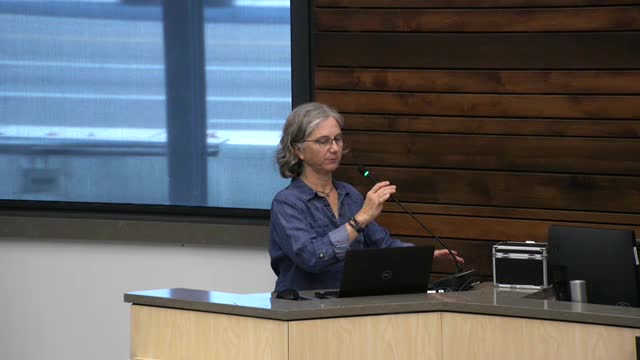
Pauline Shaffer, education manager at the Reach Museum, presented a proposal to the Parks and Recreation Commission on July 9 to plant an “Artemis tree” — a sycamore sapling grown from a seed that orbited the moon on NASA’s Artemis I mission.
Shaffer said the sapling is currently about seven feet tall and is being cared for at a nursery in Pasco while partners identify an appropriate planting site. The Reach Museum and partners (Silas Education and WSU Tri-Cities College of Education) initially approached Richland School District to host the tree at Richland High School to link the planting with local astronaut Kayla Barron’s connections. Because the district’s budget constraints limited their participation, Shaffer said the museum is working with Richland Parks instead and suggested possible locations including Howard Amon Park, Leslie Groves Park, John Dam Plaza and Jefferson Park.
Why it matters: Shaffer said the project is primarily educational and seeks to connect Richland’s science and engineering heritage to a community science program. The museum plans interpretive signage and a citizen science monitoring program (for example using NASA’s GLOBE Observer app) so students and community members can follow growth and changes over time.
Timing and logistics: Shaffer said the museum aims to select a site in the fall and could plant the sapling as early as next spring, though staff would consider waiting until fall planting if that improves tree establishment. The Reach Museum will lead outreach and programming with Silas Education; other local education groups would be consulted. Shaffer said she has discussed the idea with Parks Director Chris Waite and will pursue a Parks Partnership or similar grant process if the commission supports moving ahead.
Commission questions focused on site selection, vandalism risk and the tree’s biology. Shaffer said no unusual properties have been observed so far but that the project’s monitoring program is intended in part to document any distinctive growth or traits over time.
Next steps: Shaffer asked the commission to consider the idea and provide initial feedback; the Reach Museum plans to apply for a parks partnership grant and to work with staff on signage and site selection if the commission supports the concept.