Get Full Government Meeting Transcripts, Videos, & Alerts Forever!
Get email alerts on the Fire Station topic
No spam. Unsubscribe anytime.
Council hears plan for new Station 8; design‑build contract estimates $4.66 million and timeline of about 13 months
Summary
Fire chief and SLI Group presented a design‑build contract for Fire Station 8 with a preliminary estimate of $4.66 million, three apparatus bays, room for a reserve unit and a mid‑August 2026 projected occupancy if approved; council praised cost reductions and asked about change‑order protections.
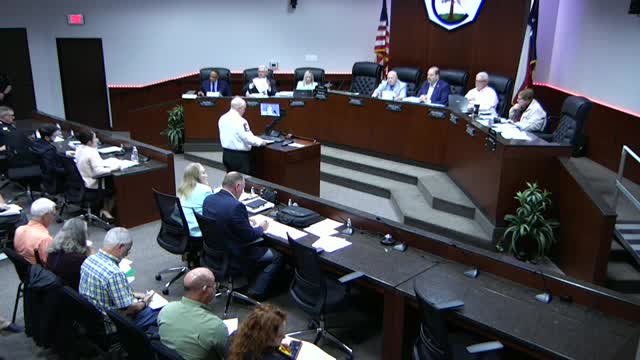
City officials presented a design‑build contract and preliminary plans for a new Fire Station 8 during the July 9 meeting, with a team from SLI Group and Fire Chief Sims outlining scope, schedule and budget.
The most newsworthy detail: the preliminary combined cost for design and construction is $4,660,000 and staff said, if approved, the full design and procurement process would take about 13 months with possible occupancy in mid‑August 2026.
Why it matters: the station is part of the department’s footprint and is intended to house at least three apparatus with space for a reserve unit; council members emphasized cost control and repeatability for future stations.
Chief Sims asked the council to approve contractual documents that would allow full design and subsequent subcontractor bidding; staff said the final guaranteed maximum price (GMP) and the design‑build amendment would return to council for approval, with that return expected in mid to late October. “If you approve this contract today ... we would begin the full design of the fire station and we expect that to have a lot of meetings associated with us,” Sims said.
SLI Group representative Brett Luxinger described the approach used to arrive at the $4.66 million estimate and explained a 10% downside guarantee in the design‑build arrangement: the number presented is framed with a worst‑case cap of the proposal plus 10% before final design, and Luxinger said many items were already hard‑bid with regular subcontractors.
Council members asked about change‑order exposure, doors and the information‑technology/data room cooling. Luxinger said most trade packages had been priced off the shown design and that the electrical and mechanical systems still needed full engineering; he said the firm has experience building fire stations and sought to hold firm margins on any later adjustments.
Sims and Luxinger addressed earlier public questions about furniture, fixtures and equipment (FF&E), the station’s apparatus complement, and the safety of specified exterior doors. The chief said some vehicles and equipment were already purchased through the capital improvement plan and are not part of this contract. Regarding the data closet, a mini‑split dedicated air conditioner will serve the room; Luxinger said plastic laminate doors are a common commercial application and a hollow metal door could be substituted if the city prefers.
The station plan includes sleeping quarters for four firefighters, space for a chief, and bays sized for three apparatus with room for an additional reserve vehicle; Sims said the station will relieve space pressure at existing facilities that currently lack storage for reserve units.
Council members responded positively to the lower estimate compared with earlier higher numbers. Councilman Harrell pressed SLI on historical change‑order practices and asked whether subcontractor margins would increase on any change orders; Luxinger said the design‑build model reduces the city’s risk because the design‑build amendment locks in the GMP and the firm avoids later contractor change‑order upcharges. The contract provides liquidated damages of $1,000 per day for delays, Luxinger said.
No final vote was recorded at the July 9 meeting; staff said the council would consider the design‑build amendment and final price later in the fall.