Get Full Government Meeting Transcripts, Videos, & Alerts Forever!
Get email alerts on the Public Works Fees topic
No spam. Unsubscribe anytime.
Public Works explains in‑lieu fees, says collected funds held for future CIP projects; legal review planned for re‑use options
Summary
Public Works presented to the Planning Commission on in‑lieu fees collected from recent commercial projects along Fifth Street and elsewhere, explained why collected funds were not yet used for a corridor‑wide widening, and said staff will consult legal counsel about whether funds may be reallocated to other high‑priority infrastructure projects.
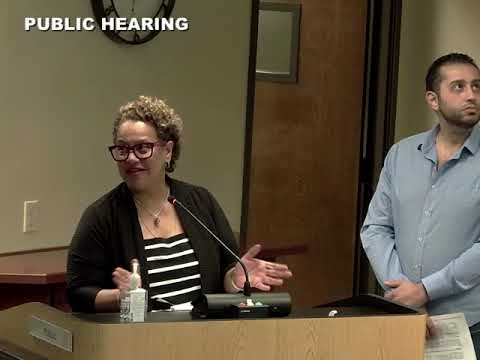
The City of San Bernardino Public Works Department briefed the Planning Commission on the status of in‑lieu fees it has collected from new commercial developments along Fifth Street and in other locations, responding to commissioner questions about why the funds have not yet been used for corridor improvements.
Public Works explained that in‑lieu fees are paid when a developer is allowed to pay the city rather than perform certain frontage or off‑site improvements; the money is held in a special account (fund/escrow account 772) and used when a city capital improvement project (CIP) is designed that can absorb that contribution. The city engineer said fees collected for two parcels on Fifth Street (Sonic: about $35,000; Quick Wok/QuickWag: about $42,000) reflect the developers’ frontage obligations and that those amounts are proportional to each parcel’s frontage. He said the sums collected to date are limited in scale relative to the cost of large corridor improvements (for example, full widening of a roadway or comprehensive street reconstruction), and staff typically accumulate contributions until they can fund or leverage a CIP project that addresses an entire block or corridor rather than piecemeal segments.
Commissioners pressed whether the city could compel earlier frontage work or require the original developer to complete corridor‑scale improvements; Public Works said in several cases original developers sold parcels to third parties and the city accepted in‑lieu fees when it was the approved alternative. Staff committed to research permit and condition histories for the Fifth Street parcels and to provide commissioners with a written response. The city engineer also said staff would consult the city attorney to determine whether any in‑lieu funds might be legally reallocated to other priority projects if a corridor project is not currently planned.
Public Works said the in‑lieu funds are held in a separate special revenue account and are not in the general fund; the department noted that engineering estimates for corridor improvements can exceed the collected amounts and that the city sometimes uses in‑lieu funds as part of a larger funding package to complete a CIP.
What’s next: Public Works will return to the commission with a follow‑up memo clarifying which projects’ conditions required in‑lieu fees, the amounts collected per parcel, and legal guidance on whether funds may be applied elsewhere if corridor projects are not practicable at present.