Get Full Government Meeting Transcripts, Videos, & Alerts Forever!
Get email alerts on the Recuperative Care topic
No spam. Unsubscribe anytime.
Planning commission approves recuperative‑care conversion of Motel 6 at Ostrom Way with reporting and beautification conditions
Summary
The commission approved a conditional use permit to convert the Motel 6 at 1960 Ostrom Way into a recuperative‑care facility, adding conditions requiring staff inspections, regular interdepartmental reporting and exterior/landscape improvements; the vote was 6‑1.
The Planning Commission voted 6‑1 to approve a conditional use permit (CUP 25‑05) to convert an existing Motel 6 at 1960 Ostrom Way into a short‑term recuperative care facility that will provide post‑hospital recuperative services and referrals to housing services.
Chantelle Choi, senior planner, described the project as a conversion of an approximately 1.79‑acre site now occupied by a Motel 6 into a facility offering short‑term recuperative care. Choi said the center would operate 24/7 with support staff and on‑site security; staff estimated about 200 beds, roughly 25 staff and 105 parking spaces (including five ADA stalls). She said the facility’s standard stay is up to 90 days, with an option to continue in a housing program for up to six months and partner agencies to assist with permanent housing placement. Choi also noted staff recommended the CUP approval and that the project qualified for a categorical exemption under CEQA Section 15301 for existing facilities.
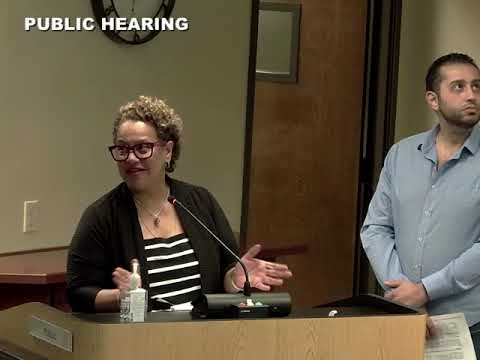
The hearing prompted extensive public comment and questioning from commissioners. Several commissioners and members of the public raised concerns about: the motel site’s condition and exterior maintenance; whether the facility would draw unhoused populations to the neighborhood; the facility’s ability to retain qualified staff (the applicant proposed about 25 staff for roughly 200 beds); which populations the program would accept (the applicant said it does not take people with severe and persistent mental illness who are not in treatment); and what happens when clients leave the program.
Paul Leon, senior representative for the applicant, said his organization has operated recuperative‑care programs in several California cities and provided outcome statistics; he said one partner site reported that 38 percent of clients moved into permanent housing and that the organization had local staff and plans for on‑site nursing and licensed mental‑health specialists. Leon and other applicant representatives said the program coordinates transportation to follow‑up medical appointments and shelters when appropriate, uses security and safety staff trained in de‑escalation, and partners with local colleges for staffing pipelines.
San Bernardino Police Department representatives told commissioners the department shares some of the concerns raised by commissioners—specifically that some recuperative‑care models can correlate with an uptick in ancillary crimes around a facility if clients are not adequately supervised or if the facility lacks sufficient services to stabilize clients. Commissioners asked whether the applicant would agree to periodic reviews.
The commission approved the project with these notable conditions: a schedule for staff and interdepartmental oversight (planning, police, fire and building) to visit or review operations; a requirement that staff prepare and submit reports to the commission every six months summarizing findings from regular meetings and site visits; a requirement for specified exterior improvements and landscaping to be implemented (planning staff and commissioners discussed a 90‑day window for landscaping and an additional 120 days for exterior painting/repairs); and the commission attached the ability to bring the CUP back for revocation proceedings if conditions are not met.
The vote: Chair Sherrick, Vice Chair Quill, Commissioners Lopez, Pratt, Carloni and Orlando Garcia voted yes; Commissioner Galante voted no.
What’s next: Staff will formalize the list of conditions, schedule the regular interdepartmental monitoring visits and report back to the commission at six‑month intervals. The facility may not operate until applicant satisfies required conditions and obtains any additional certifications or building approvals needed for occupancy.