Get Full Government Meeting Transcripts, Videos, & Alerts Forever!
Get email alerts on the Budget And Finance topic
No spam. Unsubscribe anytime.
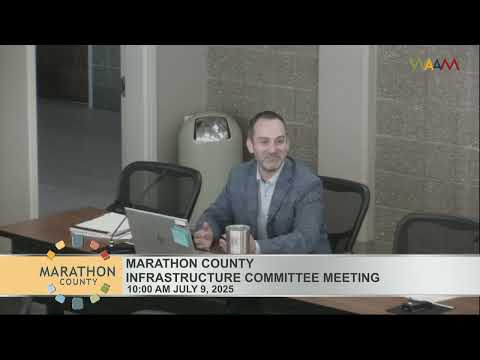
Marathon County infrastructure committee begins 2026 budget review, focuses on fees and service levels
Summary
The Marathon County Infrastructure Committee discussed the county's 2026 budget-development process, emphasizing mandatory vs. discretionary programs, service-level choices (including a PACER rating target), and using fees to reduce levy subsidies.
The Marathon County Infrastructure Committee on July 9 opened a multi-month review of the county's 2026 budget-development process, emphasizing decisions about which services are mandatory, what service levels to maintain and whether to increase fees to avoid greater levy subsidies.
Committee members and staff described a three-part policy framework the county will use during budget development: (1) identify which programs are mandated by state statute and which are discretionary; (2) set service levels and quality measures for mandated programs; and (3) review rates and fees where the county has authority to charge them.
Administrator Lance Leonard told the committee the mandatory/discretionary program document in the meeting packet is meant to help supervisors decide which services the county should continue to provide and which could be transitioned to private or nonprofit providers. He cited recent work by North Central Healthcare to move a vocational program operated in Marathon County to a local provider to reduce county losses and transfer staff to the provider.
Committee Chair Robinson said the county is separating the budget process into stages so supervisors can provide input early. He described two budgets the county manages: the administrator's proposed budget, which is developed using board-adopted assumptions and priorities, and the county board's budget, which is refined in committee, released for public notice and adopted in November.
Officials discussed service-level decisions that affect long-term costs. Leonard and committee members used the Highway Department's PACER pavement-rating target as an example: the board has adopted an average PACER rating of 7, and that target drives how many miles of roadway are rehabilitated each year. Leonard said lowering a PACER rating target would lengthen the roadway replacement schedule and could reduce short-term spending but potentially increase long-term reconstruction costs.
On fees, Leonard and committee members encouraged supervisors to examine fee schedules included in the packet and requested clearer revenue breakdowns for each fee. Commissioner Griesbach said Marathon County's highway fees are generally comparable to Portage County and noted the county does not charge other local municipalities for some services; that policy reduced revenue in at least one instance where a municipal tunneling project was not billed.
Leonard highlighted recent discussion at the Environmental Resources Committee about adding a maintenance fee for the county's personal on-site wastewater treatment system maintenance program, a mandated program that historically had no maintenance fee in Marathon County. That committee recommended further evaluation and project planning; staff estimated a fee could generate about $125,000 to fund the ongoing maintenance component.
Vice Chair Chris Dickinson asked for supplemental revenue detail tied to the fee schedules. Leonard said staff will work with the finance director to provide departmental revenue lines and to assess what level of fee increases might be needed to keep pace with rising wages and benefit costs.
Committee members asked how to compare program costs to service levels. Leonard said the county does not have a program-based budgeting system that allocates employee time and costs by service; implementing such a system would be complex and is not used widely by Wisconsin counties. He recommended that supervisors identify specific programs where they want staff to model the cost of a changed service level and staff will return with analyses.
The committee concluded the budget discussion with an instruction to staff to continue bringing fee and program information to upcoming meetings so supervisors can provide timely direction during the budget schedule that leads to adoption in November.