Get Full Government Meeting Transcripts, Videos, & Alerts Forever!
Get email alerts on the Higher Education Health Nursing topic
No spam. Unsubscribe anytime.
SIU Carbondale BSN program highlights clinical preceptor model, plans Springfield accelerated cohort
Summary
SIU Carbondale faculty and students described a preceptor-based Bachelor of Science in Nursing program, reported recent graduate and NCLEX pass-rate figures, and outlined a planned accelerated BSN cohort in Springfield that the university expects to begin in 2026.
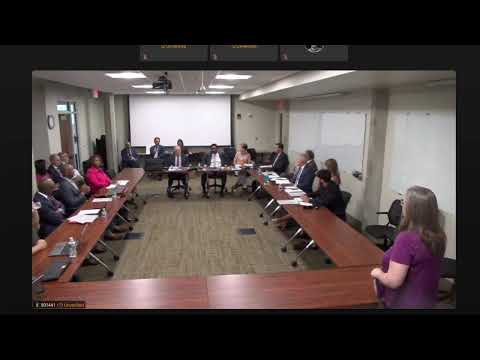
Provost Tucker introduced a presentation from SIU Carbondale nursing faculty and students to the Southern Illinois University Board of Trustees, detailing the BSN program's clinical model, recent outcomes and plans to open an accelerated cohort in Springfield.
The presentation emphasized the program's combination of clinical instructors and registered nurse preceptors, expanded experiential learning in community settings, and interprofessional training with other health disciplines. "Think about this ripple effect," said Kelly Whittington, founding program director for the Carbondale BSN program, describing how student experiences are intended to extend into regional patient care.
Whittington told trustees the program uses preceptors — trained registered nurses who work one-on-one with students in clinical settings — to increase hands-on practice and clinical judgment, rather than a traditional 1:10 instructor model. She said seniors also participate in community activities such as health fairs, Special Olympics health assessments, a nursing career camp, and first-aid coverage at local sporting events. Students described teaching medical and dental students practical skills and taking part in multidisciplinary community work.
Whittington reported that the program has produced 152 graduates to date; she said one cohort of 49 students was scheduled to graduate in May and that 27 students were poised to graduate in an August accelerated session. She also provided program pass-rate data for the NCLEX licensure exam, saying the program's pass rates have ranged from 87 percent at the low end to 92 percent at the high end and that those figures are above state and national averages.
On the program's origin and growth, Whittington said the Carbondale BSN launched during the COVID era (first cohort in August 2020) and has since run multiple traditional graduating classes. Provost Tucker and Whittington said the university is working to keep a majority of students in Southern Illinois; Whittington said about 60 percent of students come from Southern Illinois, with about 20 percent from the Chicago region and the rest from central Illinois.
University staff and Whittington outlined plans to expand an accelerated BSN cohort in Springfield aimed at students who already hold a bachelor's degree. The accelerated track requires a minimum of 80 college credits and is designed as an intensive program; Whittington said the Springfield curriculum would run roughly 15 months, mixing online didactic work with in-hospital clinicals so students can continue working. The university described an initial cohort target of about 20 students on the Springfield campus and said it is targeting a fall 2026 start after earlier aiming for spring 2026.
Students who spoke at the meeting described hands-on learning and mental-health supports integrated into the curriculum; one student said the preceptor model made her education "more holistic." Trustees congratulated the students and asked about student demographics and program metrics during a brief Q&A.
The presentation closed with trustees praising the program's regional workforce potential and the university's efforts to expand access to BSN education.