Get Full Government Meeting Transcripts, Videos, & Alerts Forever!
Get email alerts on the Agriculture topic
No spam. Unsubscribe anytime.
Cape Cod Cranberry Growers brief Lakeville board on industry, local conservation and economics
Summary
Karen Cahill of the Cape Cod Cranberry Growers Association told the Lakeville Select Board that cranberries remain a culturally important, economically significant food crop in southeastern Massachusetts and described production practices, environmental stewardship and workforce challenges.
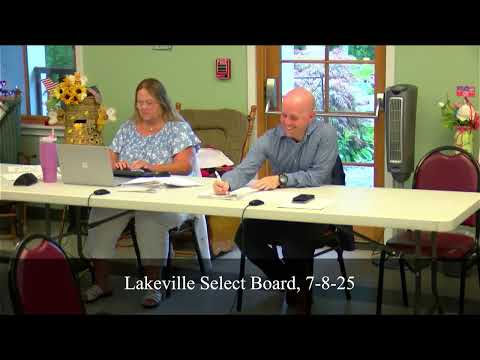
Karen Cahill, deputy executive director of the Cape Cod Cranberry Growers Association (doing business as Massachusetts Cranberries), gave the Select Board an overview of the cranberry industry in Massachusetts at the July 8 meeting.
Cahill said the Association represents roughly 200 family farms across Massachusetts (the group estimates 90–95% of the state industry) and that the state remains a globally important cranberry region. She highlighted that a cranberry barrel equals 100 pounds and that Massachusetts produces on the order of millions of barrels annually. Cahill also described how Massachusetts cranberry bogs are often irregular, shaped by local contours, and are paired with upland acreage that preserves open space unavailable for development.
Her presentation described key production practices that town residents commonly see and sometimes question: sand application to stimulate vine growth (typically every three to five years), winter ice/sand methods used to distribute sand over vines, wet and dry harvest methods (wet harvests provide fruit for processing; dry harvesting is necessary for fresh fruit), frost and heat protection using irrigation, and pest management that increasingly relies on integrated pest management backed by research from the UMass Cranberry Station.
Cahill said the industry faces an aging workforce and needs targeted workforce-development outreach; she described the Association’s work with local schools and Bristol County agricultural programs. Cahill also described efforts to renovate older plantings to newer, higher-yielding varieties (a costly multi-step process that can increase yield per acre) and to pursue restoration programs in partnership with conservation organizations where growers choose to retire bogs and return land to wetland habitat.
Select Board members thanked the Association for outreach and noted the local cultural importance of cranberry farming to Lakeville. The board and Cahill discussed export markets (Europe, India, China and South America were cited) and state-level research and support at the UMass Cranberry Station in Wareham.
The presentation was informational and no vote was required.