Get Full Government Meeting Transcripts, Videos, & Alerts Forever!
Get email alerts on the Online Gambling Regulation topic
No spam. Unsubscribe anytime.
Tribal leaders urge ban on dual‑currency sweepstakes casinos; social‑gaming companies oppose gut‑and‑amend text
Summary
AB 831 would bar online sweepstakes casinos that use a dual‑currency model and cash‑equivalent payouts. Tribal leaders said the platforms evade voter‑approved compacts and offer weak consumer protections; representatives of social‑gaming and sweepstakes firms urged more study and said many platforms already operate lawfully.
Assemblymember Valencia presented AB 831 as a measure to close a loophole used by some online sweepstakes casinos that employ dual‑currency models and cash‑equivalent payouts. Valencia and tribal leaders said such platforms replicate casino‑style gaming while evading state regulation and compact requirements agreed with California Indian tribes.
Johnny Hernandez, vice chairman of the Yocha Dehe Wintun Nation, and Isaiah Vivanco, chair of a tribal government association, told the committee illegal sweepstakes platforms are often run offshore, lack robust age verification, offer no responsible‑gaming protections and create avenues for money laundering. “These platforms lack essential safeguards, including money‑laundering protocols and responsible gaming safeguards,” Hernandez said.
Opponents said the bill’s recent gut‑and‑amend language was introduced with limited time for study and would sweep broadly, risking legitimate social‑gaming businesses and California tech jobs. Adam Pliska of WPT Enterprises and a coalition of social‑gaming companies urged more time to examine the market and possible tax approaches; Bill Gantz, a gaming lawyer, said sweepstakes operators have offered alternative compliance methods since 2012 and asked the Legislature to study the industry before a summary ban.
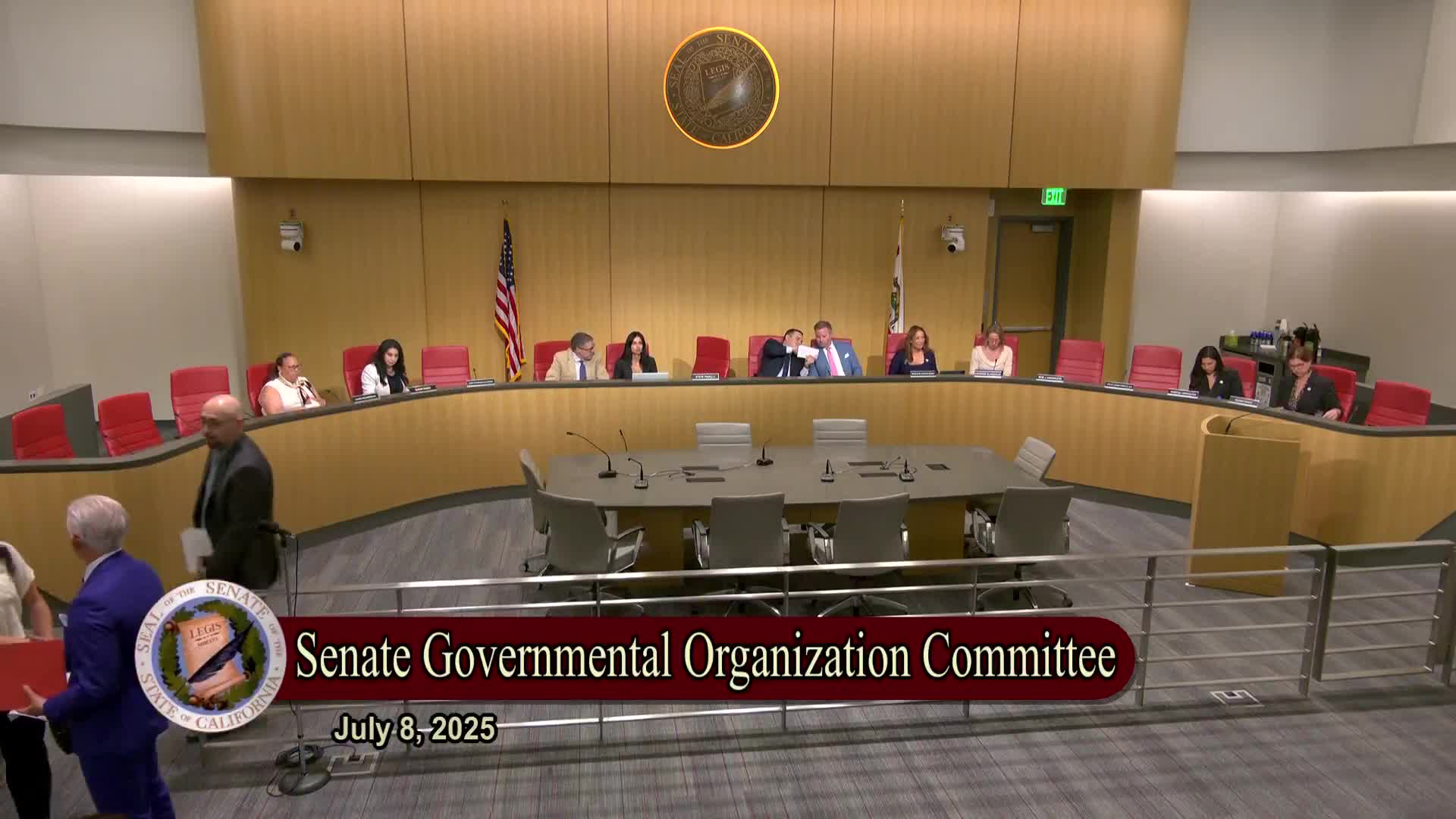
Committee members acknowledged tribal sovereignty concerns and the need to protect regulated tribal gaming. The author recorded a motion to send the bill to the Public Safety Committee; members asked for further stakeholder talks, including with card rooms and social‑gaming entities. The committee passed the motion and referred AB 831 for further review.
Why it matters: Tribal gaming compacts and voter decisions grant tribes exclusivity for certain gambling activities in California. Lawmakers and tribal leaders argue that unregulated online sweepstakes platforms undermine that system and lack consumer protections; opponents say some sweepstakes/social gaming companies operate lawfully and provide jobs, and urged careful study of regulatory options.
Next steps: AB 831 was referred to the Public Safety Committee and the author committed to further stakeholder conversations with tribes, card rooms and social‑gaming firms.