Get Full Government Meeting Transcripts, Videos, & Alerts Forever!
Get email alerts on the Artificial Intelligence Auditing topic
No spam. Unsubscribe anytime.
Panel hears bill to register AI auditors; business groups urge stronger standards
Summary
Assemblymember Bauer Kehan introduced AB 14‑05 to require third‑party AI auditors to enroll with the Government Operations Agency and meet basic transparency and ethical standards.
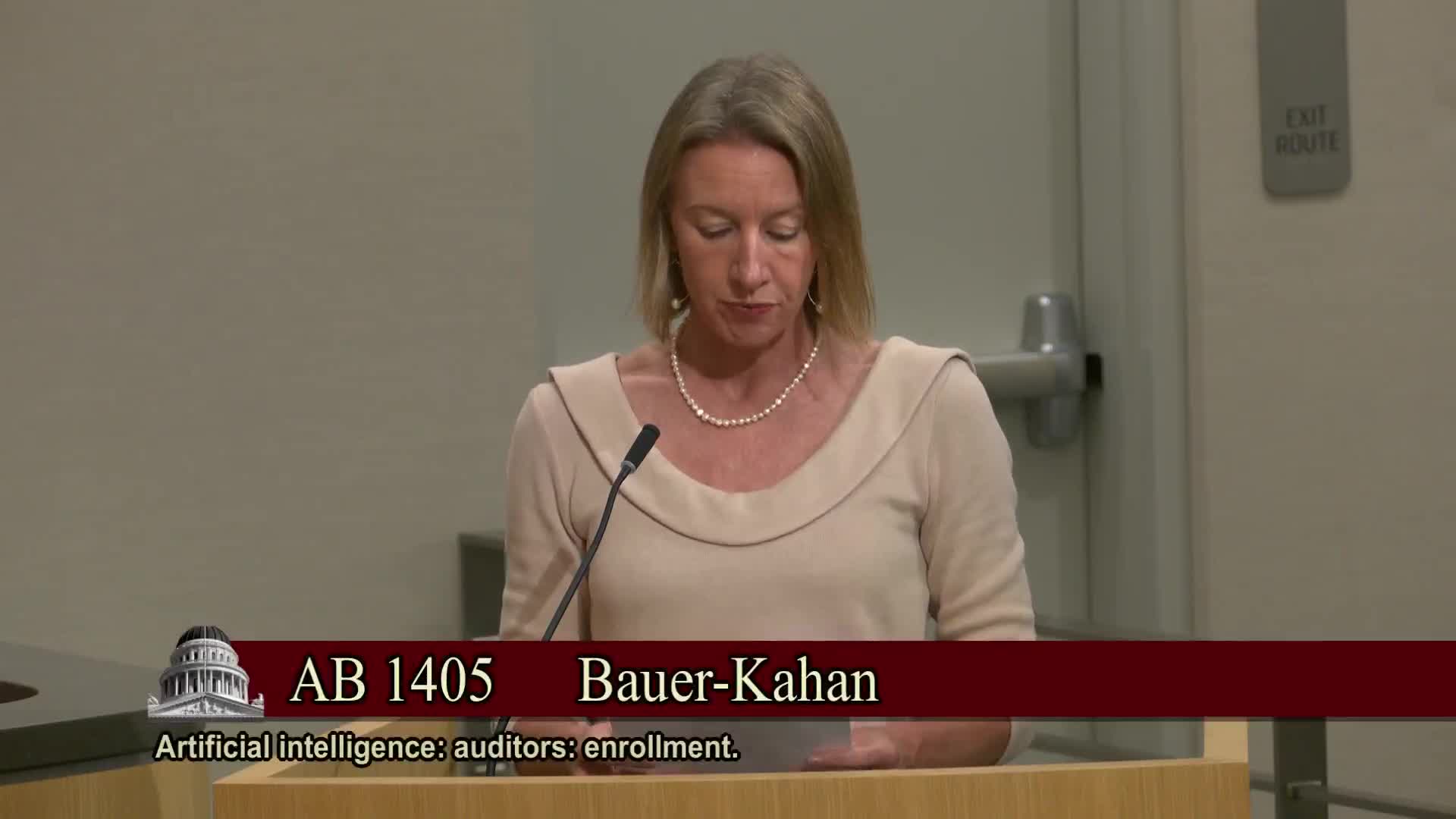
Assemblymember Bauer Kehan introduced AB 14‑05 on behalf of the author, saying the bill would require third‑party auditors who assess artificial intelligence systems to enroll with the state Government Operations Agency and to follow basic transparency and ethical standards. “AB 14 o 5 does not require auditing of AI systems and models. It simply creates accountability and transparency requirements for AI auditors that operate in California,” Bauer Kehan told the committee.
The bill’s supporters said a registry of auditors and a basic set of expectations are an early step toward public trust. Rob Ellerveld, chief executive officer of the Transparency Coalition, told senators that third‑party registered auditors are the accepted norm in other domains such as finance and cybersecurity and that AI needs a similar baseline of independent review. “There are two examples of where third‑party registered auditors give confidence and transparency and trust, that's badly needed,” Ellerveld said in support of the measure.
Opponents urged more caution. Laura Bennett of the California Chamber of Commerce said she and her members support accountability in principle but called the measure premature. Bennett said the bill lacks objective, enforceable standards to assess or certify AI auditors and risks creating a registry without a method to evaluate audit quality. “To establish a registry for AI auditors when we do not have standards to assess them again is premature and we believe will promote inconsistent or questionable audit quality and will breed distrust,” she said.
Committee members pressed the bill’s proponents about how the registration would be used and whether the registry would create a de facto certification. Legislative staff and the author’s office said the bill does not require auditing of systems themselves and that further stakeholder work can clarify standards and oversight. The bill was moved out of committee with the motion to send it on to the Appropriations Committee as amended; the clerk placed the item on call pending quorum.
Why it matters: State lawmakers are wrestling with dozens of AI bills; AB 14‑05 focuses on who is allowed to call themselves an AI auditor and what minimal public disclosures they must make. Supporters say a registration and transparency baseline can help buyers and regulators assess audit quality; business groups worry the law lags clear industry standards and could hinder innovation without professional credentialing.
Next steps: Committee action moved the measure to the Appropriations Committee for further consideration. The author and staff signaled willingness to continue stakeholder talks on professional standards and ethical obligations for auditors.