Get Full Government Meeting Transcripts, Videos, & Alerts Forever!
Get email alerts on the Diversity Equity Inclusion topic
No spam. Unsubscribe anytime.
Commission split on making community DEI task force permanent; staff told to return with structure, staffing and budget options
Summary
After the community DEI task force recommended becoming a permanent advisory committee, commissioners debated permanence, facilitation and funding. Staff told the commission to return with options for quarterly task force structure, staffing needs and budget implications; several commissioners volunteered to refine proposals with staff.
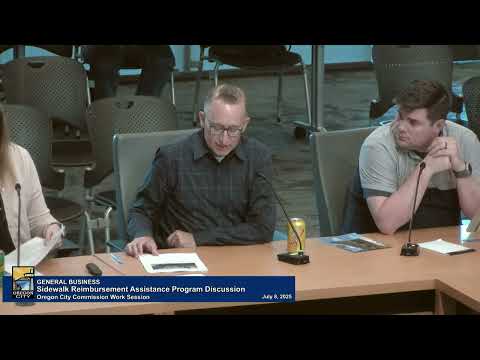
Oregon City – The city commission on July 8 received a report on the Community Diversity, Equity and Inclusion (DEI) Task Force and debated whether to convert the ad‑hoc task force into a permanent advisory committee, continue contracting a facilitator, or pursue lower‑cost, community‑facing programming instead.
Staff reported that the task force was re‑established for the city’s 2023–25 budget cycle to serve as a community voice on DEI issues, met six times with a contracted facilitator (Lamont Brown, Triangle Consulting Group), and issued recommendations including making the task force a standing advisory committee, continuing professional facilitation, and appointing a dedicated staff liaison. City staff told the commission that the adopted budget does not include funds for ongoing facilitation or a dedicated liaison, and that existing DEI allocations ($125,000 cited for other DEI commitments) are already committed to internal training and organizational culture work.
Staff said: “Staff does not currently have the capacity to support a new standing advisory committee without additional resources or additional direction,” and asked the commission for guidance on whether and how to proceed.
Commissioners split. Mayor Denise McGriff and several commissioners argued in favor of continuing the group’s community work, with changes: holding quarterly meetings, focusing on community‑facing events such as cultural programming and listening sessions, and seeking grant or partner funding rather than continuing paid facilitation. Commissioner Adam Marl suggested the task force could contribute to a community cultural calendar and partner with the library and existing nonprofit networks for events.
Other commissioners expressed caution about creating a permanent committee. Commissioner Mike Mitchell said the city’s core responsibilities are limited and that the commission should not create standing committees to address all societal issues; he favored public‑facing events and embedding DEI work into city operations rather than a new formal advisory board. Commissioner Scott Wilson said staff’s internal DEI work and programs — leadership training, mandatory staff training, and recruitment improvements — should continue and need not be coupled to a permanent advisory committee.
Several commissioners nonetheless favored continuing community engagement in some form and asked staff to propose options. Commissioner Rocky Smith and Commissioner Adam Marl volunteered to work with staff to draft a concept for an external group that could operate quarterly or on an ad‑hoc basis, lay out staffing needs, and identify funding options (including grants and partnerships with organizations such as Coalition of Communities of Color and Friends of Trees where relevant). Some commissioners recommended clarifying the term “task force” versus “committee,” and defining the staff support that would be required for a standing advisory body.
Outcome and next steps: The commission did not unanimously adopt a permanent advisory committee at the July 8 work session. Instead, by consensus the commission asked staff to return with options comparing three models: (a) continue the DEI body as a community task force meeting quarterly and operating with no dedicated staff FTE but a staff liaison as capacity permits; (b) create a standing advisory committee with a defined staff liaison and modest budget for facilitation and programming (staff to estimate costs); or (c) maintain DEI activity through targeted community events and grants without formal committee status. Commissioners requested that proposals include staffing needs, facilitation cost estimates (if any), proposed meeting cadence, and suggested public‑facing deliverables (cultural calendar, listening sessions, community events). Several commissioners also volunteered to meet with staff to refine recommendations.
Speakers and sources: staff presentation (city staff member and facilitator Lamont Brown, Triangle Consulting Group) and commission debate during the July 8, 2025 work session. No formal vote was taken; the commission provided staff direction to develop options for a future meeting.
Why it matters: DEI activity touches internal municipal culture, hiring and service delivery as well as external community engagement and public events. Commissioners emphasized the difference between internal actions (staff training, recruitment practices) that staff can continue with current resources and external community engagement that will likely require decisions about facilitation and staffing. Staff plans to return with costed options for the commission to consider.