Get Full Government Meeting Transcripts, Videos, & Alerts Forever!
Get email alerts on the Licensing And Zoning topic
No spam. Unsubscribe anytime.
Resident raises licensing, zoning and grant concerns about TGI facility during public comment
Summary
A public commenter alleged that TGI’s facility operating at 1660 Third Street lacks required residential care licenses, mischaracterizes ‘‘medical respite’’ to avoid licensing and improperly accessed grant funding; the commenter asked the council and legal staff to investigate.
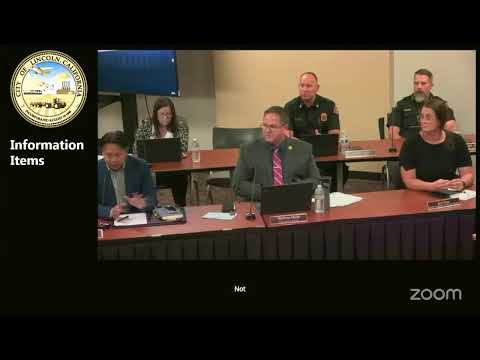
During public comment on July 8, a local podcaster and community watchdog, Mike Fuller, addressed the council with a series of allegations about a local facility run by an organization he identified as TGI. Fuller asserted the facility lacks required community care licensing for the grant category under which it received a state grant, said the organization describes its operation inconsistently in grant materials and public statements, and alleged zoning and public‑notification shortcomings.
Fuller told the council that the facility at 1660 Third Street was previously licensed as a memory‑care residential care facility for the elderly (RCFE) but that licensing records showed no active license as of June 30, 2025. He said the TGI grant application dated July 28, 2022, applied under a category that requires a licensed RCFE but that the applicant also described its services as ‘‘medical respite’’ (which Fuller contended typically requires different licensing). He claimed the federal MPI registry listed TGI as case management only and said TGI had admitted to providing transportation to medical appointments using its own vehicle — which Fuller described as nonemergency medical transportation that requires separate licensing.
Fuller asked the council and its legal staff to review the grant, licensing and zoning compliance and said he would share documents with the city attorney. The mayor and council thanked him for placing the materials on record. The remarks were part of public comment and did not trigger immediate council action; the council did not discuss or vote on the allegations at the meeting.
Why it matters: Fuller’s comments raise questions about licensing, grant eligibility and zoning compliance for a facility serving vulnerable populations. City staff or the city attorney may choose to review records or respond in a formal way if follow‑up is requested.
What was decided: no council action at this meeting; Fuller said he would share documentation with the city legal team for review.
Next steps: Fuller offered documents to the city attorney and legal staff; the council did not set a formal agenda item or direct staff to open an investigation during the meeting.