Toledo council debates winter averaging, pool credit and expanded customer aid as sewer bills spike
Loading...
Summary
Council members and utilities officials debated proposals to end winter sewer averaging, a one-time $50 sewer credit for residential pool fills and expanded customer-assistance measures as summer water use drives higher sewer charges.
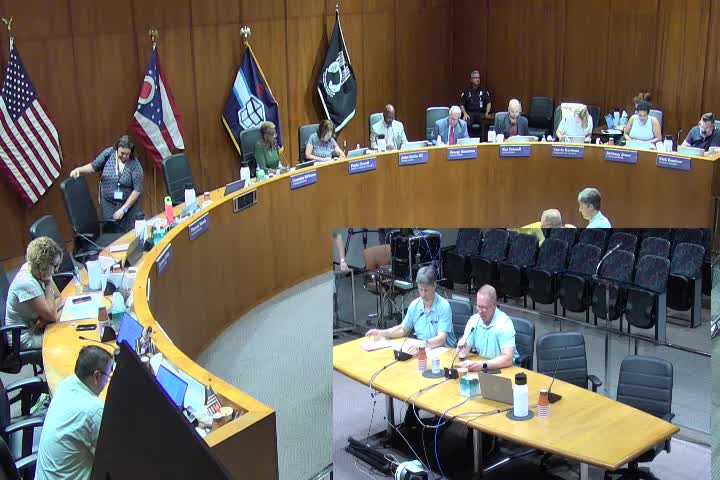
Toledo City Council and Department of Public Utilities officials spent more than an hour on July 8 discussing whether to reinstate, alter or abandon 'winter sewer averaging' and how to respond to higher summer sewer bills.
The discussion centered on two near-term proposals: a one-time $50 sewer credit for residents who fill private pools between May 1 and July 31, and an internal review of winter averaging that staff said they will complete with the city
rate consultant by year end. Department of Public Utilities Director Doug Stevens described the proposed pool credit as a narrowly targeted approach: residents would apply online, provide the service address and DPU account number and meet eligibility rules (resident customers only; no commercial pools). "We'd give a $50 credit on anyone who filled up a pool one time a year between May 1 and July 31," Stevens told council members. "You have to be a City of Toledo water and sewer customer because the credit is on the sewer side." (Doug Stevens, Director, Department of Public Utilities)
Council members pressed officials on affordability, collections and alternatives. Councilwoman Vanice Williams said she was deeply concerned that any policy that subsidizes pool-filling would shift costs to low-income residents. "I don't care about pools," Williams said bluntly. "I got people that can't afford basic water needs. If you can fill a pool and I got people that can't fill their toilet, I don't give a **** about winter averages." (Councilwoman Vanice Williams)
Councilman Pete Komia pointed to existing code that allows homeowners to install private wastewater discharge meters at their own expense (Toledo Municipal Code 9.29.07), a pathway some residents use to avoid sewer charges tied to water usage. "Toledo Municipal Code 9.29.07 allows for folks to install their own wastewater discharge sewer meters at their own expense," Komia said, noting that the option exists but is not widely used because of cost and complexity. (Councilman Pete Komia)
Department officials and several council members said they plan to wait and review summer data before making a final policy choice. Councilman Tyrone Sarantu recommended collecting and analyzing consumption and collection data through December and reviewing it with the rate consultant in early 2026. "I think we owe it to all of the ratepayers to look at that," Sarantu said. "Six, seven months down the road ... we'll have a pretty good idea of what's happened out there." (Councilman Tyrone Sarantu)
Officials also described multiple parallel customer-assistance measures. Stevens and others said the administration will expand outreach on a 25% senior discount, make payment-plan enrollment easier and run a targeted campaign to connect vulnerable customers to help. Councilman Robert Martinez said the administration drafted legislation to provide short-term assistance funds for households facing imminent shutoff and that staff prepared ZIP-code-level lists of accounts at risk to help council members target outreach.
Why it matters: Sewer billing policy affects all customers and ties into capital planning and rate-setting. Staff warned that eliminating winter averaging could require larger rate increases later: consultants estimated a roughly 3.75% planned increase would have to rise toward 10% to cover lost revenue without other offsets. Council members said they want more data about summer consumption, payment-plan uptake and collections before deciding whether to reinstate winter averaging, grant a pool credit, or expand targeted aid.
Council next steps: Utilities staff said they will analyze usage and collection trends through the rest of the year, provide ZIP-code-level shutoff and payment-plan data to council, and review those findings with the rate consultant in early 2026. Several members asked the department to send materials about the proposed $50 pool credit details and the pending short-term assistance legislation.