Get Full Government Meeting Transcripts, Videos, & Alerts Forever!
Get email alerts on the Land Use Quarry topic
No spam. Unsubscribe anytime.
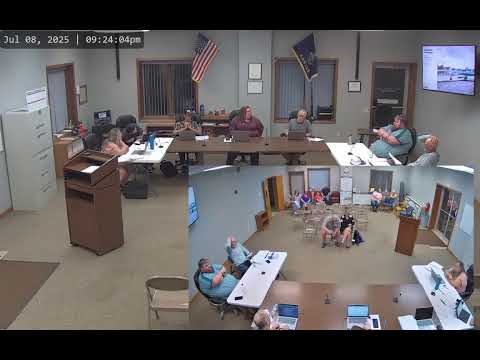
Linn County planning commission approves Mulberry Limestone quarry permit with conditions
Summary
The Linn County Planning Commission approved a conditional use permit for Mulberry Limestone to develop a limestone quarry at 22779 East 2400 Road, adding conditions on setbacks, road coordination, pre‑blast surveys and a five‑year renewal requirement after public comment and technical presentations on blasting, noise and environmental controls.
The Linn County Planning Commission voted to approve a conditional use permit (CUP) for Mulberry Limestone Inc. to operate a limestone quarry on the property commonly known as 22779 East 2400 Road in LaCene, Kansas, subject to conditions including confirmed ingress/egress on 2400 Road, a truck/road management plan with public works, pre‑blast surveys for nearby residents within 1,000 feet paid by the company, evergreen plantings on the west berm and a five‑year permit renewal requirement.
The decision followed a presentation from the applicant and technical experts about site suitability, blasting controls and environmental permitting, and more than an hour of public comment from nearby residents and local stakeholders about noise, dust, traffic and long‑term impacts.
Jake Wade, who said he owns the property where Mulberry Limestone is proposing the pit, described the proposal and mitigation steps. “Our goal is to do this the right way, safe way, compliant, and community minded,” Wade said, adding that the mapped mining area would be phased and that berms, setbacks and vegetation would be used to reduce visibility and noise.
The applicant presented technical detail about the rock ledge, the planned phasing (the proposal maps roughly 48 acres to be mined in phases), and operational controls. Matt Lassen, owner of Mulberry Limestone, said hours would be Monday–Friday, 7 a.m.–5 p.m., and described the plan to operate crushers and stockpiles primarily within a pit to reduce off‑site impacts. Dean Manuel of Austin Powder Company, the blasting contractor, outlined blasting design and monitoring and said the company would deploy third‑party seismographs for every shot. “We seismograph every shot no matter what. We want that database of history,” Manuel said.
Triad Environmental Services engineer Dennis Meyer summarized regulatory steps and permitting that will be required beyond the county CUP, including state mining permits, stormwater management, threatened and endangered species surveys, archeological review and federal water/wetland coordination where applicable. Meyer said much of the downstream water management would be concentrated in the proposed pit and discharge to constructed ponds.
Residents who live near the proposed pit raised objections during the public‑comment period. Stephanie Walker, whose property is near the northwest corner shown in the applicant’s map, said many neighbors opposed the proposal: “None of us are wanting it. None of the landowners in the area are in favor,” Walker said. Zach Walker, who lives northeast of the proposed site, said he was concerned about noise from crushing and blasting, dust and wear on local roads. YouthFront executive vice president Topher Fillgreen asked the commission to consider heavy truck traffic on 2400 Road because his organization runs frequent bus and van traffic for camps on adjoining property.
Commissioners and staff discussed conditions to address those concerns. The approved conditions, added to staff recommendations, require the applicant to coordinate a road management plan with the county public‑works director, make permits and required state/federal approvals available to the Linn County planning office, maintain operating hours of 7 a.m.–5 p.m. with heavy‑equipment restrictions, provide pre‑blast surveys at the company’s expense to residents within 1,000 feet who request them, plant evergreens on the west side of the berms along the highway corridor, limit on‑site storage of explosives (no storage on property), and return for a CUP renewal review in five years to allow the county to verify compliance and address issues.
The commission made the motion to approve with the listed conditions and it passed unanimously. The chair instructed staff to keep copies of required state and federal permits on file and asked the applicant to provide signature pages after the meeting.
The company and its consultants repeatedly emphasized that blasting, hauling and crushing are regulated by state and federal agencies and that the operation would follow those regulations and monitoring best practices. Commissioners noted the project history — the proposal had been reviewed previously and was the subject of prior administrative and legal steps — and framed the county permit as one step in a broader regulatory process.
The CUP approval does not relieve the applicant of other required permits: a state mining permit, air and stormwater permits, any required Corps of Engineers or state water/wetland approvals, and other state inspections and registrations. The planning office and the applicant will follow up on documentation and the road management plan before substantial operations begin.