Get Full Government Meeting Transcripts, Videos, & Alerts Forever!
Get email alerts on the Charter Amendments topic
No spam. Unsubscribe anytime.
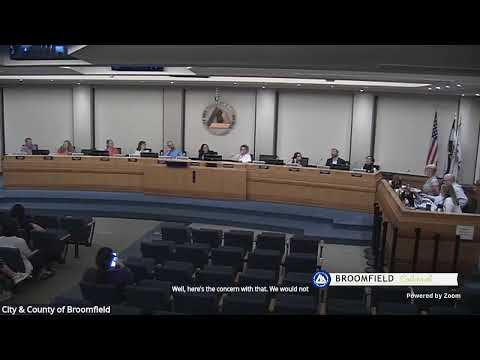
Council approves first readings of six charter amendment questions for November ballot after debate over vacancies and IGA authority
Summary
Broomfield City Council voted July 8 to place six charter amendments on the November ballot, covering housekeeping updates, council qualifications, vacancy procedures, a required code of ethics, emergency-ordinance timing and intergovernmental-agreement rules.
Broomfield City Council voted July 8 to place six proposed charter amendments on the Nov. 2025 ballot. Council held an extended discussion on several items — especially vacancy rules and intergovernmental agreements — and approved the ordinances on first reading by the votes shown below. Second readings and a return to council for final action are scheduled for Aug. 12; voters will make the final decision in November.
Summary of the six proposed charter questions (first-reading outcomes): - General cleanup (Ordinance 2276): updates language to reflect Broomfield as a city and county and modernizes outdated wording — passed first reading 9-0. - Council qualifications (Ordinance 2277): adds a charter provision prohibiting an elected Broomfield official from holding another publicly elected office simultaneously — passed first reading 9-0. - Vacancies and mayoral succession (Ordinance 2278): revises vacancy definitions and procedures, extends the council appointment window from 30 to 60 days, and changes mayoral vacancy filling (mayor pro tem serves until the next election). Council struck a proposed attendance-based vacancy rule (a 50% attendance trigger) after debate; the amended ordinance passed first reading 9-0. - Code of ethics (Ordinance 2279): requires council to adopt and maintain a code of ethics meeting Amendment 41 standards — passed first reading 8-1. - Emergency ordinances (Ordinance 2280): changes emergency ordinances so they take effect immediately on passage rather than eight days later; supporters cited public-safety and reimbursement reasons (e.g., wildfire and disaster response) — passed first reading 9-0. - Intergovernmental agreements (Ordinance 2281): would allow IGAs to be approved by a majority vote rather than a two‑thirds vote and clarifies the council’s ability to delegate signature authority; the ordinance also asks that IGAs be posted on the city website “when practical and feasible.” The ordinance passed first reading 8-1.
Discussion highlights: - Vacancy attendance rule: the Charter Review Commission had proposed that a council vacancy be created when an elected official misses at least 50% of council meetings in a 12‑month rolling period. Council debated whether to include that attendance trigger in the charter or leave attendance-related rules to council code; after extended discussion and an amendment from Council Member Ward to remove that automatic 50% vacancy language, council adopted the ordinance without the attendance trigger (9-0 first-reading vote). Several members said attendance rules can be weaponized if they are not carefully defined; others said voters and constituents deserve a remedy if a member stops attending meetings. - Emergency ordinances: supporters said the eight-day delay in the charter originated when newspaper publication was the norm; moving to immediate effect can help respond quickly in disasters and speed reimbursement processes for emergencies. - Intergovernmental agreements: council discussed whether IGAs should require a supermajority in some cases (for example where bonded debt or large commitments are involved) and whether a majority rule with the option to require higher thresholds by ordinance would be preferable. Council ultimately approved a change to permit majority approval and to allow delegation of signature authority, while asking staff to publish IGAs on the website when practical.
All six ordinances will return for a required second reading and public hearing Aug. 12; if council approves them again, the measures will go to voters in November.